📑 Table of Contents
- Introduction to Sarvangasana – Shoulderstand
- Step-by-Step Guide to Practice
- Alignment and Drishti Points
- Benefits of Sarvangasana – Shoulderstand
- Common Mistakes and How to Avoid Them
- Modifications and Variations
- Contraindications and Safety Guidelines
- Muscles Worked in Shoulderstand
- Chakras and Energetic Benefits
- Preparatory and Follow-Up Poses
- Final Thoughts
1. Introduction to Sarvangasana – Shoulderstand
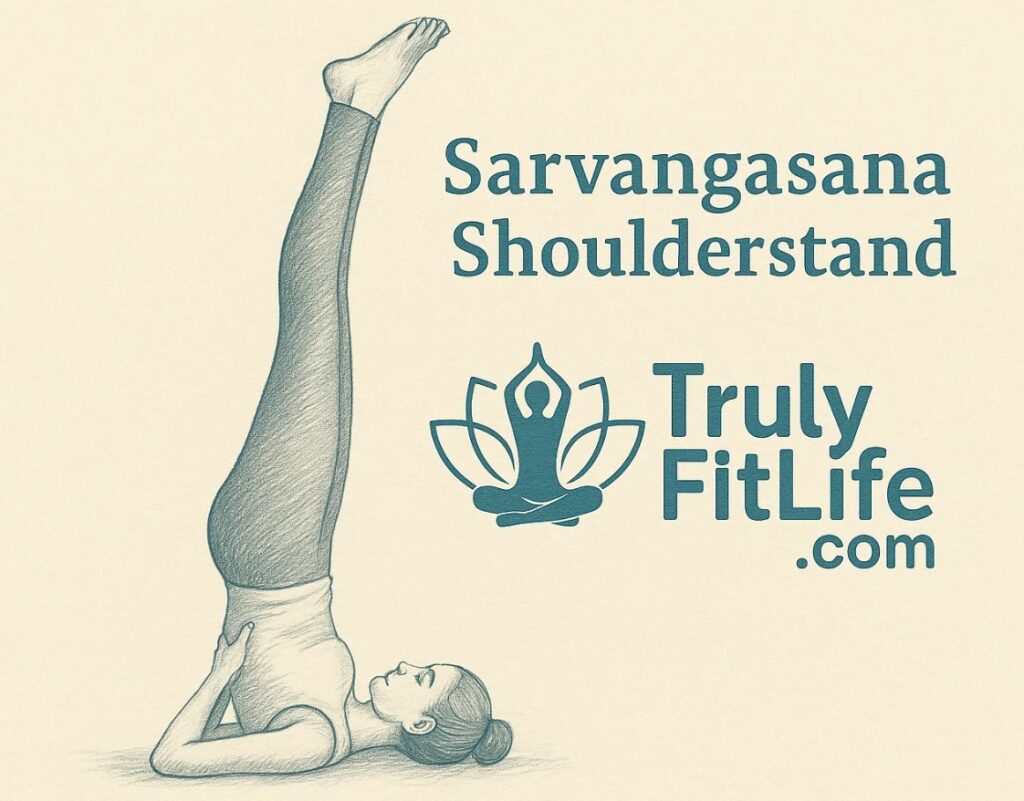
Sarvangasana – Shoulderstand is known as the “Queen of Asanas” in yoga because of its vast benefits for the body and mind. The Sanskrit word Sarva means “all,” Anga means “limb,” and Asana means “pose.” Thus, Sarvangasana translates to the pose that benefits all parts of the body.
This inverted posture reverses normal gravity flow, sending blood toward the upper body, revitalizing organs, and improving circulation. It is often taught after sufficient warm-up and preparatory poses.
2. Step-by-Step Guide to Practice
- Start Supine: Lie flat on your back with arms by your sides.
- Lift Legs: Inhale, raise both legs to 90°.
- Support Lower Back: Exhale, press palms into the floor, lift hips, and support lower back with hands.
- Raise Torso: Slowly bring torso and legs vertical, stacking hips over shoulders.
- Adjust Balance: Keep elbows shoulder-width apart, fingers supporting back firmly.
- Align Body: Legs straight, chin gently tucked toward chest (Jalandhara Bandha).
- Breathe & Hold: Stay 30 seconds to 3 minutes, breathing steadily.
- Release Pose: Lower legs slowly, vertebra by vertebra, and rest in Shavasana.
3. Alignment and Drishti Points
- Shoulders & Elbows: Firmly pressed into the floor.
- Back: Supported with hands, weight evenly distributed.
- Neck: Relaxed, no turning side to side.
- Legs: Together, straight, and active.
- Drishti (gaze): Toward chest or toes.
4. Benefits of Sarvangasana – Shoulderstand
- Improves blood circulation and stimulates the thyroid gland.
- Strengthens shoulders, arms, and core.
- Calms the mind, reducing anxiety and insomnia.
- Enhances digestion and relieves constipation.
- Boosts energy, relieves fatigue, and combats depression.
- Improves balance and concentration.
5. Common Mistakes and How to Avoid Them
- ❌ Weight on neck → Fix: Keep weight on shoulders, not cervical spine.
- ❌ Elbows spread out → Fix: Keep elbows shoulder-width apart.
- ❌ Collapsed back → Fix: Actively press spine upward with hand support.
- ❌ Knees bent → Fix: Engage thighs and point toes upward.
6. Modifications and Variations
- Beginner’s Shoulderstand: Perform near a wall for support.
- Half Shoulderstand (Ardha Sarvangasana): Keep legs at 45° for easier practice.
- Supported Shoulderstand: Place a folded blanket under shoulders for comfort.
7. Contraindications and Safety Guidelines
- Avoid during pregnancy, menstruation, high blood pressure, glaucoma, or serious neck/back injury.
- Beginners should practice under supervision.
- Always follow Shoulderstand with a counterpose like Matsyasana (Fish Pose).
8. Muscles Worked in Shoulderstand
- Primary: Shoulders, arms, core, hip flexors.
- Secondary: Legs, glutes, back muscles.
9. Chakras and Energetic Benefits
- Stimulates the Visuddha (Throat Chakra) → improves communication and thyroid health.
- Balances the Sahasrara (Crown Chakra) → promotes clarity and spiritual growth.
- Calms nervous system and restores energy balance.
10. Preparatory and Follow-Up Poses
- Preparatory Poses: Halasana (Plow Pose), Viparita Karani (Legs-Up-the-Wall), Bridge Pose.
- Follow-Up Poses: Matsyasana (Fish Pose), Savasana, Child’s Pose.
11. Final Thoughts
Sarvangasana – Shoulderstand is a powerful inversion that truly benefits the whole body. While beginners may find it challenging at first, consistent practice under safe guidance unlocks its healing potential. Remember to always practice with awareness and counterbalance with gentle backbends.
🧘 Related Yoga Poses You May Like
- ➤ Halasana – Plow Pose: Steps, Benefits, and Complete Yoga Guide
- ➤ Niralamba Sarvangasana – Unsupported Shoulderstand
- ➤ Karnapidasana – Knee Ear Pose Complete Yoga Guide for Relaxation & Flexibility
- ➤ Viparita Karani – Legs Up the Wall Pose Complete Guide
- ➤ Sirsasana – Headstand Pose Complete Guide
- ➤ Setu Bandhasana – Bridge Pose: Steps, Benefits, and Complete Yoga Guide