📑 Table of Contents
- Introduction to Chaturanga Dandasana – Four Limbed Staff Pose
- How to Practice Step by Step
- Key Alignment and Drishti Points
- Benefits of Chaturanga Dandasana
- Common Mistakes and How to Avoid Them
- Modifications and Variations
- Contraindications and Safety Guidelines
- Muscles Worked in Four Limbed Staff Pose
- Chakras and Energetic Effects
- Preparatory and Follow-Up Poses
- Final Thoughts
1. Introduction to Chaturanga Dandasana – Four Limbed Staff Pose
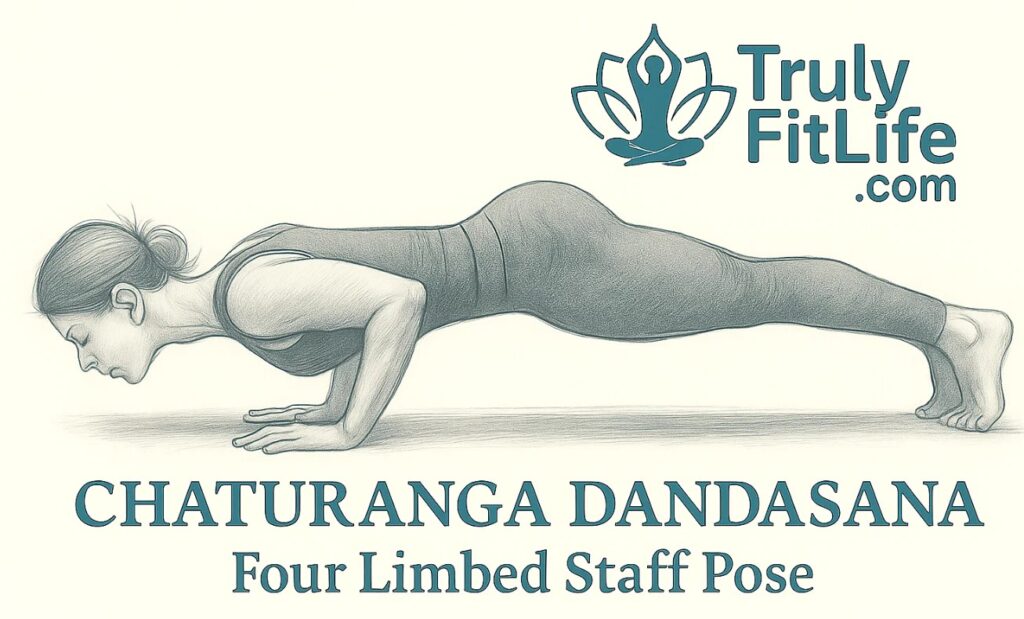
Chaturanga Dandasana – Four Limbed Staff Pose is a foundational arm balance and core-strengthening pose in yoga. It often appears as part of Sun Salutations and Vinyasa flows. The name comes from Sanskrit:
- Chatur = Four
- Anga = Limbs
- Danda = Staff
- Asana = Pose
At its essence, Chaturanga is a low plank position, where the body is held parallel to the ground, supported by the hands and toes. This posture builds strength, stability, and endurance, making it a gateway to advanced arm balances and inversions.
2. How to Practice Step by Step
- Start in Plank Pose: Keep shoulders over wrists, body straight like a plank.
- Engage Core: Draw the navel toward the spine, firm the thighs, and press heels back.
- Exhale & Lower: Slowly bend elbows to a 90° angle, keeping them close to the ribs.
- Align Shoulders: Keep shoulders at the same height as elbows, not dipping lower.
- Gaze Forward: Maintain neutral neck, looking slightly ahead.
- Hold the Pose: Stay for 1–3 breaths, then release into Upward-Facing Dog or Cobra Pose.
3. Key Alignment and Drishti Points
- Wrists under shoulders.
- Elbows hugging ribs.
- Shoulders in line with elbows.
- Core fully engaged.
- Drishti (gaze): Slightly forward on the mat to keep the neck neutral.
4. Benefits of Chaturanga Dandasana – Four Limbed Staff Pose
- Builds upper body strength (arms, shoulders, chest).
- Strengthens core muscles and improves stability.
- Prepares body for arm balances and inversions like Crow Pose and Handstand.
- Enhances discipline, focus, and endurance in Vinyasa practice.
- Improves posture and spinal alignment.
5. Common Mistakes and How to Avoid Them
- ❌ Dropping shoulders below elbows → Strains rotator cuff.
- ❌ Sagging hips → Causes lower back pain.
- ❌ Flaring elbows outward → Reduces strength and risks injury.
- ✅ Fix: Keep body in a straight line, elbows tucked, and engage the core.
6. Modifications and Variations
- Knee Chaturanga: Drop knees to the floor for beginner-friendly support.
- Half Chaturanga Holds: Lower halfway and hold briefly to build endurance.
- Block Support: Place yoga blocks under shoulders to prevent over-lowering.
7. Contraindications and Safety Guidelines
- Avoid if you have wrist, elbow, or shoulder injuries.
- Pregnant practitioners should avoid prolonged holds.
- Always warm up with plank and gentle stretches before attempting.
8. Muscles Worked in Four Limbed Staff Pose
- Primary: Triceps, pectorals, deltoids.
- Secondary: Core muscles, quadriceps, glutes.
9. Chakras and Energetic Effects
- Manipura Chakra (Solar Plexus): Boosts willpower, determination, and inner fire.
- Helps release stagnant energy in the upper body.
10. Preparatory and Follow-Up Poses
- Preparatory Poses: Plank Pose, Cobra Pose, Low Push-up variations.
- Follow-Up Poses: Upward-Facing Dog, Downward-Facing Dog, Child’s Pose.
11. Final Thoughts
Chaturanga Dandasana – Four Limbed Staff Pose is more than just a push-up style exercise. It is a gateway pose that builds discipline, physical power, and energetic balance. Practicing with awareness helps prevent injury and makes your yoga practice more sustainable.


