📌 Table of Contents
- Introduction
- Step-by-Step Guide
- Alignment & Tips
- Benefits of Parivrtta Ardha Chandrasana
- Physical Benefits
- Mental & Emotional Benefits
- Contraindications & Precautions
- Modifications & Variations
- Muscles Engaged
- Chakra Activation
- Drishti (Gaze Point)
- Preparatory & Counter Poses
- Conclusion
1. Introduction
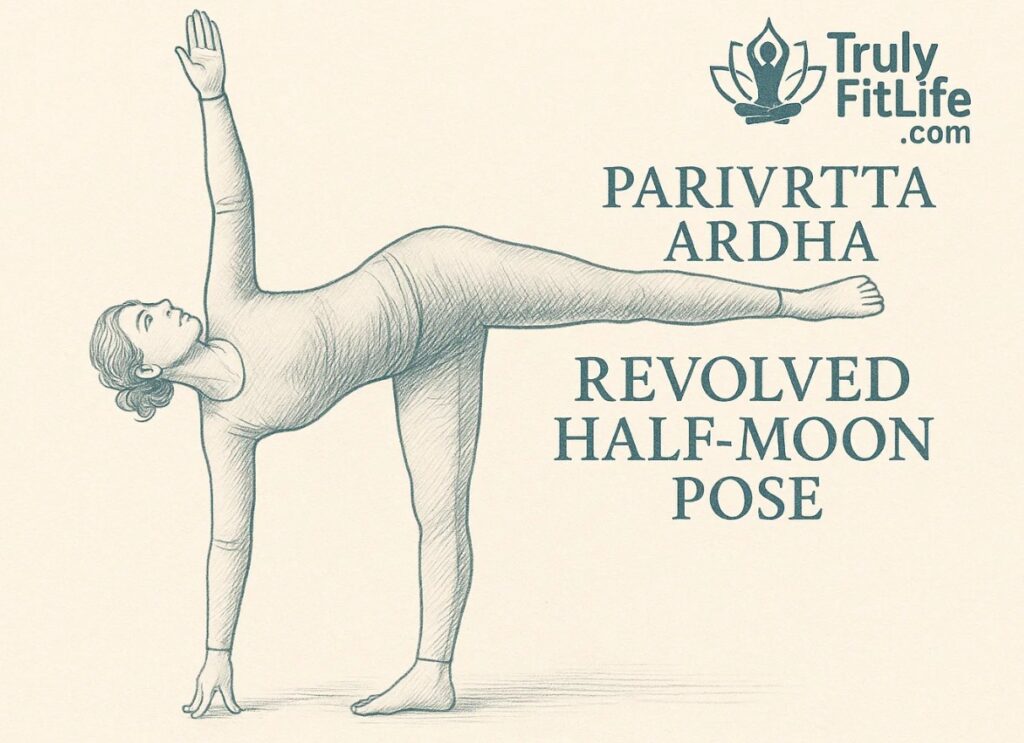
Parivrtta Ardha Chandrasana (Revolved Half Moon Pose) is a challenging standing balance posture that combines strength, stability, and spinal rotation. The Sanskrit word Parivrtta means “revolved” or “twisted,” Ardha means “half,” and Chandra means “moon.” This pose is a powerful variation of Ardha Chandrasana (Half Moon Pose) that introduces a deep twist, engaging both the body and mind.
Practiced in styles like Hatha, Vinyasa, and Ashtanga Yoga, it requires balance, flexibility, and focus. According to Yoga Journal, this pose improves digestion, strengthens the legs, and enhances concentration.
2. Step-by-Step Guide to Parivrtta Ardha Chandrasana
- Start in Uttanasana (Standing Forward Bend): Place hands on the floor.
- Transition to Lunge: Step the left foot back into a low lunge.
- Enter Ardha Chandrasana: Shift weight onto the right foot, lifting the left leg parallel to the floor.
- Revolve the torso: Rotate the chest toward the lifted leg.
- Extend arms: Place the right hand on the floor (or block) and reach the left arm upward.
- Balance & align: Engage the core, press through the standing leg, and lengthen the spine.
- Drishti: Gaze upward toward the extended hand.
- Hold: Stay for 20–30 seconds with steady breaths.
- Release: Exhale, return to Uttanasana, and repeat on the other side.
3. Alignment & Tips
- Keep hips aligned and avoid letting the lifted leg rotate outward.
- Engage core muscles to protect the lower back.
- Use a yoga block under the supporting hand for stability.
- Keep standing knee micro-bent if hamstrings are tight.
4. Benefits of Parivrtta Ardha Chandrasana (Revolved Half Moon Pose)
Physical Benefits
- Strengthens thighs, calves, and ankles.
- Stretches hamstrings, groin, and spine.
- Improves balance and coordination.
- Stimulates digestion through spinal twist.
- Enhances core stability and strength.
Mental & Emotional Benefits
- Increases concentration and awareness.
- Builds patience through balancing challenge.
- Promotes grounding and mental clarity.
- Reduces stress and tension.
5. Contraindications & Precautions
- Avoid if you have serious knee, ankle, or hip injuries.
- People with herniated discs or spinal issues should practice cautiously.
- Pregnant women should avoid deep twists.
- Always warm up before attempting this pose.
6. Modifications & Variations
- Beginner option: Keep bottom hand on a block instead of the floor.
- Wall support: Practice with the lifted foot against a wall for balance.
- Advanced variation: Extend both arms parallel to the floor for more intensity.
- Dynamic variation: Flow between Ardha Chandrasana and Parivrtta Ardha Chandrasana.
7. Muscles Engaged
- Hamstrings
- Quadriceps
- Glutes
- Core muscles (obliques, abdominals)
- Spinal extensors
- Shoulders and arms
8. Chakra Activation
- Solar Plexus Chakra (Manipura): Core engagement and digestive stimulation.
- Heart Chakra (Anahata): Opens chest and encourages emotional balance.
9. Drishti (Gaze Point)
- Upward toward extended fingertips (Urdhva Drishti).
- Beginners may gaze downward for stability.
10. Preparatory & Counter Poses
Preparatory Poses:
- Parivrtta Trikonasana (Revolved Triangle Pose)
- Virabhadrasana III (Warrior III Pose)
- Ardha Chandrasana (Half Moon Pose)
Counter Poses:
- Uttanasana (Standing Forward Bend)
- Balasana (Child’s Pose)
- Supine Twist (Supta Matsyendrasana)
11. Conclusion
Parivrtta Ardha Chandrasana (Revolved Half Moon Pose) is a powerful combination of balance, strength, and flexibility. By integrating a spinal twist into a standing balance, it challenges both body and mind, improving focus and stability. Practiced consistently, this pose enhances digestion, builds core strength, and encourages mindfulness.