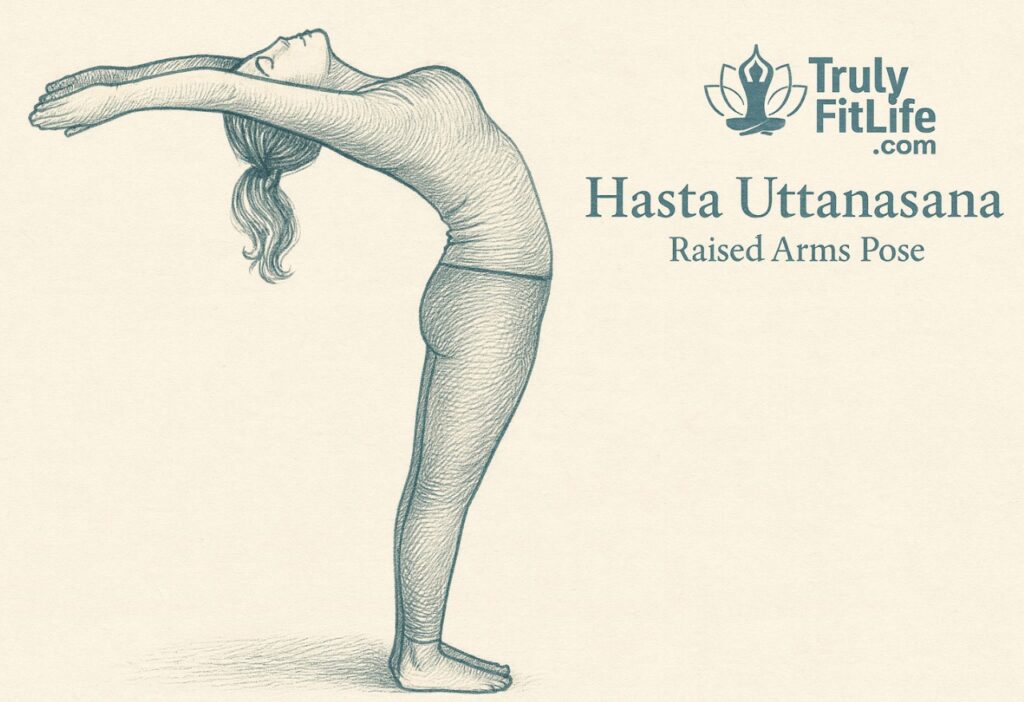
Hasta Uttanasana (Raised Arms Pose) is a foundational standing posture in yoga and is part of the Sun Salutation (Surya Namaskar) sequence. The Sanskrit word Hasta means “hands,” Uttana means “stretching,” and Asana means “pose.” This asana involves standing tall, lifting the arms overhead, and extending the spine upward and slightly back.
It is considered one of the simplest yet most powerful poses for improving posture, flexibility, and lung expansion. According to Yoga Journal
, raising the arms overhead elongates the spine and prepares the body for deeper backbends and forward folds.
2. Step-by-Step Guide to Hasta Uttanasana (Raised Arms Pose)
Start in Tadasana (Mountain Pose): Stand tall with feet together, arms by your sides.
Inhale deeply: Raise both arms overhead with palms facing each other.
Lengthen spine: Stretch upward through fingertips while grounding feet.
Optional backbend: Gently arch backward by lifting the chest and extending through the upper spine (avoid collapsing lower back).
Engage core: Keep abdominal muscles active for stability.
Drishti (gaze): Look toward the thumbs or upward without straining the neck.
Hold: Stay for 20–30 seconds, breathing evenly.
Release: Exhale, bring arms down to sides, and return to Tadasana.
3. Alignment & Tips
Keep weight evenly distributed between both feet.
Avoid overarching the lower back; focus on lifting the sternum.
Keep shoulders relaxed, not hunched toward ears.
If balance is an issue, keep gaze straight ahead instead of upward.
4. Benefits of Hasta Uttanasana (Raised Arms Pose)
Physical Benefits
Improves posture and spinal alignment.
Stretches shoulders, arms, and chest.
Expands lung capacity and supports better breathing.
Strengthens thighs, calves, and core muscles.
Prepares body for deeper backbends and forward folds.
Mental & Emotional Benefits
Energizes the body and reduces fatigue.
Encourages mindfulness through breath awareness.
Promotes feelings of openness and positivity.
Helps relieve stress and mild anxiety.
5. Contraindications & Precautions
Avoid deep backbend if you have lower back pain or injury.
People with high blood pressure should practice without arching backward.
Pregnant practitioners should avoid backward extension; simply raise arms.
Beginners should not hold breath—maintain natural breathing.
6. Modifications & Variations
Beginner modification: Keep hands shoulder-width apart for comfort.
Wall support: Practice with back against a wall for better alignment.
Advanced variation: Interlace fingers, stretch palms upward, and deepen the backbend.
Chair option: Practice seated with arms raised overhead for accessibility.
Heart Chakra (Anahata): Opens chest and promotes love & compassion.
Throat Chakra (Vishuddha): Enhances expression and communication.
Solar Plexus Chakra (Manipura): Boosts confidence and vitality.
9. Drishti (Gaze Point)
Angusthamadhya Drishti (toward the thumbs) for upward gaze.
Forward gaze for beginners or those with neck sensitivity.
Hasta Uttanasana (Raised Arms Pose) is a gentle yet energizing posture that builds awareness of spinal alignment, enhances lung capacity, and fosters inner balance. As part of Sun Salutations or practiced on its own, it prepares the body for more complex asanas while also promoting mental clarity and relaxation.
This pose is suitable for beginners and advanced yogis alike, making it a versatile and essential addition to any daily yoga practice.