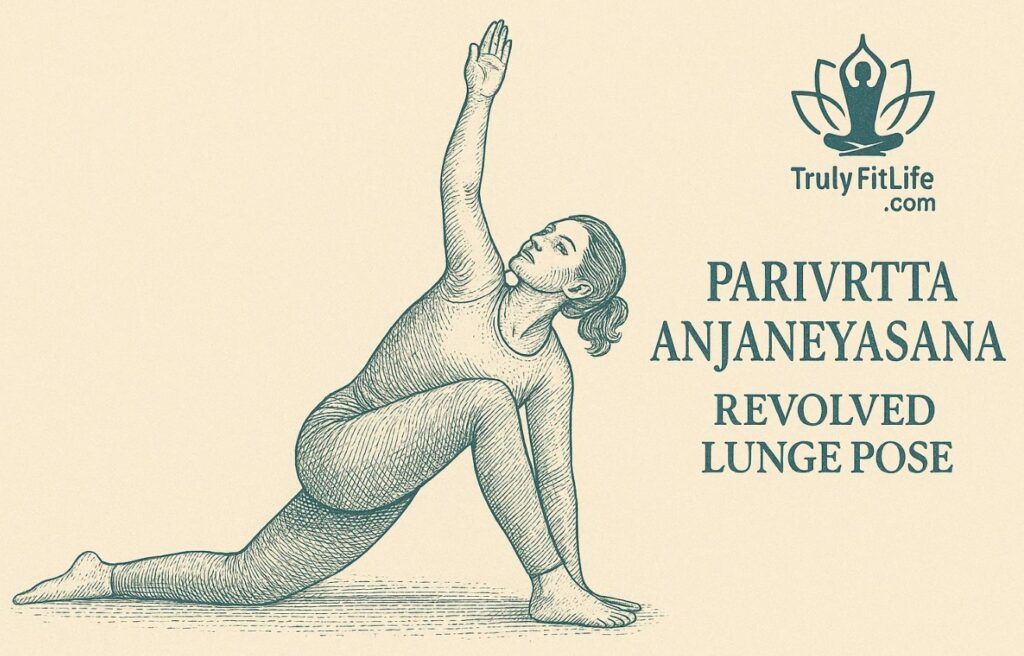
Parivrtta Anjaneyasana – Revolved Lunge is a powerful standing yoga pose that combines the stability of a deep lunge with the detoxifying twist of the torso. It builds strength, flexibility, balance, and mental focus, making it an excellent posture for intermediate practitioners. In this guide, we will cover everything you need to know: detailed step-by-step instructions, benefits, variations, precautions, and practice tips.
Table of Contents
- What is Parivrtta Anjaneyasana?
- How to Do Parivrtta Anjaneyasana – Step by Step Guide
- Benefits of Parivrtta Anjaneyasana – Revolved Lunge
- Muscles and Joints Engaged
- Breathing, Drishti, and Chakras
- Common Mistakes and How to Avoid Them
- Variations and Modifications
- Contraindications & Safety Tips
- Practice Suggestions
- Related Yoga Poses
- Conclusion
1. What is Parivrtta Anjaneyasana?
The Sanskrit term Parivrtta means revolved or twisted, while Anjaneya is another name for Lord Hanuman, symbolizing strength and devotion. In yoga practice, Parivrtta Anjaneyasana – Revolved Lunge is a variation of the classic low lunge (Anjaneyasana) that introduces a deep spinal twist.
This posture represents balance between grounding strength and dynamic rotation. It is often practiced in Vinyasa Flow sequences, detox routines, and core strengthening yoga classes.
2. How to Do Parivrtta Anjaneyasana – Step by Step Guide
- Start in Tadasana (Mountain Pose). Stand tall, feet together, shoulders relaxed.
- Step into a Lunge. Inhale, step your right foot forward, bend the right knee at 90°, and stretch your left leg back with the toes tucked under.
- Place Hands in Prayer (Anjali Mudra). Bring palms together at the center of the chest.
- Twist the Torso. On an exhale, rotate your torso to the right, hooking your left elbow outside the right thigh. Keep the spine long and chest lifted.
- Engage the Core. Draw the navel inward, maintain balance by pressing the back heel strongly into the floor.
- Hold the Pose. Stay for 20–40 seconds, breathing steadily, deepening the twist on every exhalation.
- Release Slowly. Inhale, return to center, step back into Mountain Pose, and repeat on the other side.
3. Benefits of Parivrtta Anjaneyasana – Revolved Lunge
Practicing Parivrtta Anjaneyasana – Revolved Lunge regularly can offer a wide range of physical, physiological, and mental benefits:
- Strengthens legs and glutes – builds stability in thighs and hips
- Enhances digestion and detoxification – twist stimulates abdominal organs
- Improves spinal flexibility – increases range of motion in the back
- Tones abdominal muscles – engages core for balance
- Improves posture – aligns spine and shoulders
- Boosts balance and coordination – enhances mind-body connection
- Reduces stress and anxiety – promotes mindful breathing
(According to Yoga Journal, twists like Revolved Lunge are highly effective for building core awareness and aiding digestion.)
4. Muscles and Joints Engaged
- Quadriceps, hamstrings, and calves
- Glutes and hip flexors
- Abdominal obliques and transverse abdominis
- Spinal extensors and erector spinae
- Shoulder girdle and arms (for balance)
- Knee and hip joints for stability
5. Breathing, Drishti, and Chakras
- Breathing: Inhale to lengthen the spine, exhale to deepen the twist
- Drishti (gaze): Look over the top shoulder (upward or sideways)
- Chakras: Activates Manipura Chakra (Solar Plexus), related to willpower and digestion
6. Common Mistakes and How to Avoid Them
- Collapsing the chest → Keep spine lifted
- Knee beyond ankle → Align knee directly above heel
- Holding breath → Maintain steady rhythmic breathing
- Twisting only shoulders → Initiate twist from the abdomen
7. Variations and Modifications
- Beginner: Keep back knee on the mat for more stability
- Advanced: Extend arms in opposite directions (one up, one down)
- With Props: Use a yoga block under the back heel for balance
- Partner Variation: Practice twists back-to-back for mutual support
8. Contraindications & Safety Tips
Avoid Parivrtta Anjaneyasana – Revolved Lunge if:
- You have recent spinal, hip, or knee injuries
- You suffer from high blood pressure or vertigo
- Pregnant women should avoid deep twists
Always warm up with gentle poses (Cat-Cow, Low Lunge) before attempting.
9. Practice Suggestions
- Best practiced in the morning on an empty stomach
- Hold for 20–40 seconds per side, 2–3 rounds
- Include in detox yoga flows and core strength sequences
10. Related Yoga Poses
- Anjaneyasana – Low Lunge
- Parivrtta Trikonasana – Revolved Triangle Pose
- Parivrtta Utkatasana – Revolved Chair Pose
11. Conclusion
Parivrtta Anjaneyasana – Revolved Lunge is more than just a twisting pose; it’s a full-body challenge that strengthens, detoxifies, and revitalizes your body. With regular practice, you will notice improved digestion, stronger legs, and greater mental clarity. Always practice mindfully, respecting your body’s limits, and enjoy the inner balance this pose cultivates.