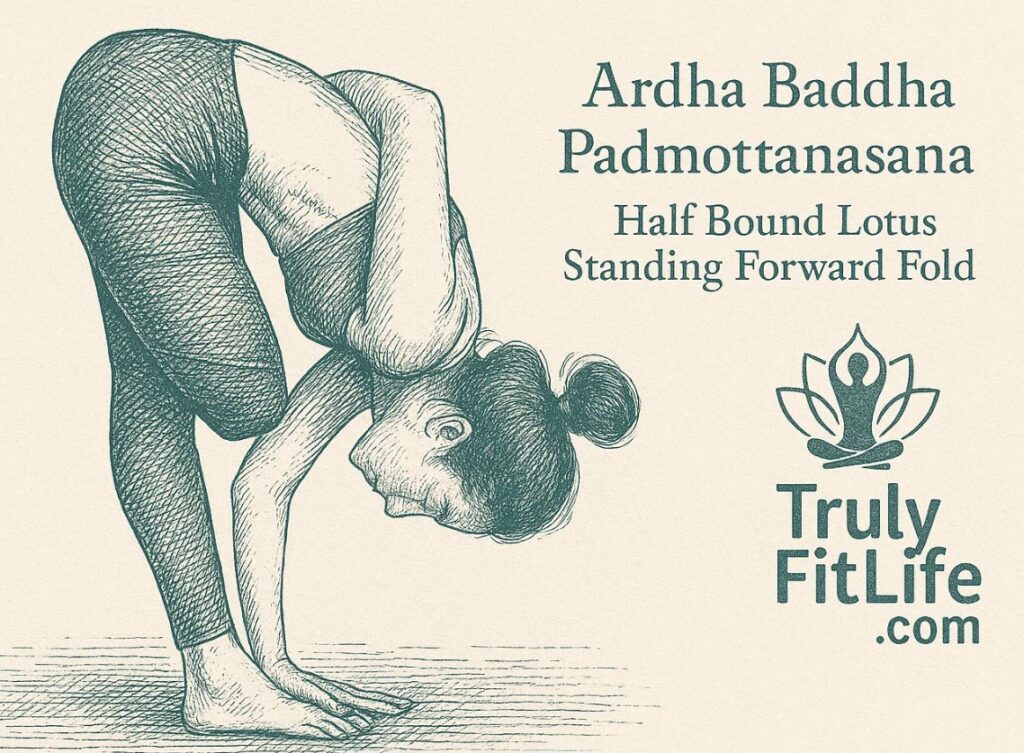
Ardha Baddha Padmottanasana – Half Bound Lotus Standing Forward Fold is a graceful yet challenging yoga pose that combines the hip-opening qualities of Padmasana (Lotus Pose) with the grounding forward fold of Uttanasana. It builds balance, flexibility, and focus while strengthening the legs and improving concentration.
This pose is often practiced in Ashtanga Yoga Primary Series and advanced Hatha flows. It requires patience and preparation, making it ideal for intermediate practitioners.
🗂️ Table of Contents
- What is Ardha Baddha Padmottanasana?
- Step-by-Step Guide to Ardha Baddha Padmottanasana – Half Bound Lotus Standing Forward Fold
- Benefits of Ardha Baddha Padmottanasana – Half Bound Lotus Standing Forward Fold
- Muscles and Joints Engaged
- Breathing, Drishti, and Chakras
- Common Mistakes and How to Avoid Them
- Variations and Modifications
- Contraindications and Safety Tips
- Practice Suggestions and Sequences
- Related Yoga Poses
- Conclusion
1. What is Ardha Baddha Padmottanasana?
The Sanskrit breakdown:
- Ardha – half
- Baddha – bound
- Padma – lotus
- Uttana – intense stretch or forward fold
- Asana – posture
Thus, Ardha Baddha Padmottanasana translates to Half Bound Lotus Standing Forward Fold Pose.
Symbolically, this posture teaches patience, surrender, and balance. It unites grounding stability with introspection, making it a meditative forward bend with hip-opening benefits.
2. Step-by-Step Guide to Ardha Baddha Padmottanasana – Half Bound Lotus Standing Forward Fold
- Start in Tadasana (Mountain Pose). Stand tall with feet hip-width apart.
- Move into Half Lotus. Lift the right foot and place it on the left thigh in Half Lotus. Ensure the sole faces upward.
- Bind the hand. Reach the right arm behind the back and catch the right big toe (if possible). Keep left hand on hip for balance.
- Begin forward fold. Inhale, lengthen spine; exhale, fold forward from hips while maintaining balance.
- Support with left hand. Place the left palm on the floor beside left foot for stability.
- Hold the posture. Stay for 15–30 seconds, breathing steadily. Keep gaze (drishti) toward the nose or floor.
- Release carefully. Inhale, rise back to standing, release the bind, and return foot to floor. Repeat on the other side.
3. Benefits of Ardha Baddha Padmottanasana – Half Bound Lotus Standing Forward Fold
Practicing Ardha Baddha Padmottanasana regularly can bring many benefits:
- ✅ Opens hips deeply – stretches hip flexors and groin.
- ✅ Strengthens legs and ankles – builds balance and grounding.
- ✅ Improves focus and concentration – balancing aspect trains mental clarity.
- ✅ Enhances digestion – forward fold stimulates abdominal organs.
- ✅ Stretches hamstrings and spine – increases flexibility.
- ✅ Calms the mind – forward bend promotes introspection and relaxation.
👉 According to Yoga Journal, this asana combines hip opening with balance, making it unique among forward folds.
4. Muscles and Joints Engaged
- Hip flexors and external rotators
- Quadriceps and hamstrings
- Gluteus muscles
- Ankle stabilizers
- Spinal extensors and lower back
- Shoulders and arms (through the bind)
5. Breathing, Drishti, and Chakras
- Breathing: Inhale to extend spine, exhale to fold deeper.
- Drishti (gaze): Look at the nose (Nasagra Drishti) or floor.
- Chakras: Stimulates Muladhara Chakra (Root) for stability and Manipura Chakra (Solar Plexus) for energy and digestion.
6. Common Mistakes and How to Avoid Them
❌ Collapsing forward → ✅ Maintain spine length before folding.
❌ Forcing Half Lotus leg → ✅ Prepare hips with poses like Ardha Padmasana.
❌ Losing balance → ✅ Keep gaze steady and core engaged.
❌ Straining knee → ✅ Never force the lotus leg if you feel sharp pain.
7. Variations and Modifications
- Beginner: Hold foot in Half Lotus without folding forward.
- Intermediate: Use a strap if hand doesn’t reach the bound toe.
- Advanced: Fold fully and bring forehead to shin.
- Chair variation: Sit on a chair, place one ankle on opposite thigh, and fold forward for a gentler version.
8. Contraindications and Safety Tips
Avoid or modify Ardha Baddha Padmottanasana if you have:
- Knee injuries or hip problems
- Lower back issues or herniated discs
- Poor balance (practice near a wall for safety)
Always warm up with hip openers like Pigeon Pose or Baddha Konasana before attempting.
9. Practice Suggestions and Sequences
- Practice in the morning with an empty stomach.
- Hold for 20–30 seconds on each side, 2–3 repetitions.
- Include in Ashtanga Primary Series or hip-opening flows.
- Pair with Tree Pose, Warrior III, and Uttanasana for balance-focused practice.
10. Related Yoga Poses
- Padmasana – Lotus Pose
- Uttanasana – Standing Forward Bend
- Ardha Padmasana – Half Lotus Pose
- Natarajasana – Dancer Pose
(Use internal links to connect with your existing yoga pose posts.)
11. Conclusion
Ardha Baddha Padmottanasana – Half Bound Lotus Standing Forward Fold is a unique blend of balance, flexibility, and mindfulness. It challenges both body and mind, encouraging patience and focus.
By combining hip opening with a grounding forward fold, it strengthens legs, improves digestion, and enhances inner awareness. With steady practice, this asana can become a meditative posture that deepens your yoga journey.


