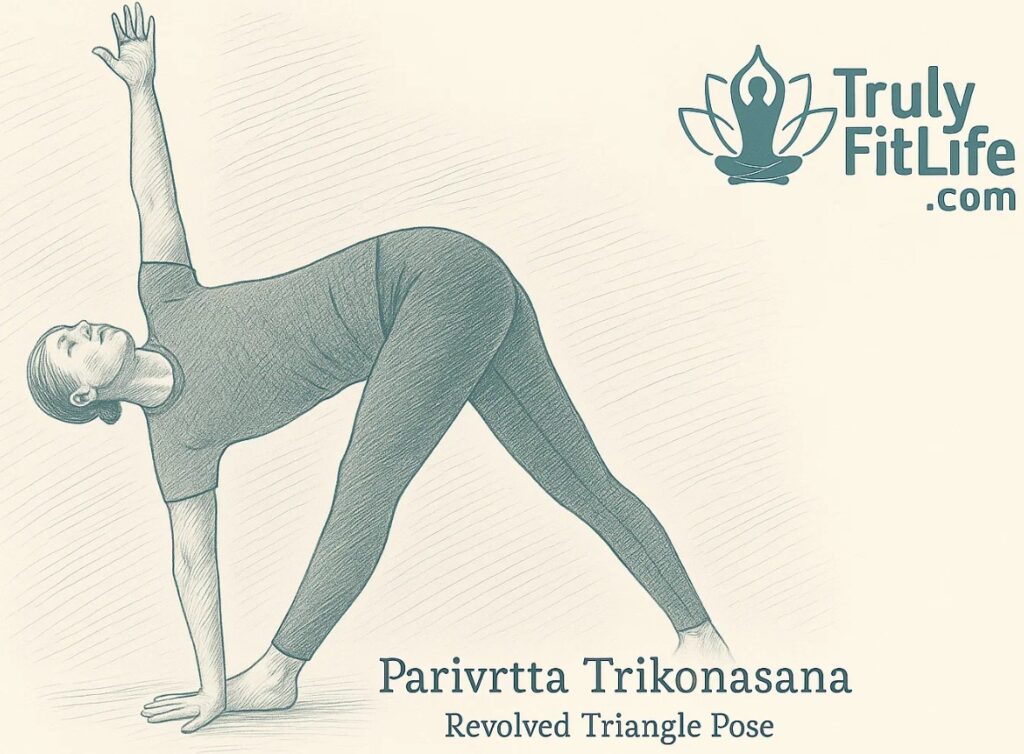
Parivrtta Trikonasana – Revolved Triangle Pose is a powerful standing twist that strengthens the legs, improves flexibility, and stimulates digestion. Known for combining balance, spinal rotation, and a deep hamstring stretch, it is often included in Hatha, Ashtanga, and Vinyasa yoga practices.
This pose is both energizing and grounding, helping practitioners detoxify, focus, and cultivate stability. In this detailed guide, we’ll cover steps, benefits, variations, and precautions to practice Parivrtta Trikonasana safely and effectively.
🗂️ Table of Contents
- What is Parivrtta Trikonasana?
- Step-by-Step Guide to Parivrtta Trikonasana – Revolved Triangle Pose
- Benefits of Parivrtta Trikonasana – Revolved Triangle Pose
- Muscles and Joints Engaged
- Breathing, Drishti, and Chakras
- Common Mistakes and How to Correct Them
- Variations and Modifications
- Contraindications and Safety Tips
- Practice Suggestions and Sequences
- Related Yoga Poses
- Conclusion
1. What is Parivrtta Trikonasana?
The Sanskrit name breaks down into:
- Parivrtta – revolved or twisted
- Trikona – triangle
- Asana – posture
Thus, Parivrtta Trikonasana translates to Revolved Triangle Pose.
Symbolically, this pose represents balance between opposites: grounding and expansion, strength and flexibility, outer stability and inner detoxification.
2. Step-by-Step Guide to Parivrtta Trikonasana – Revolved Triangle Pose
- Start in Tadasana (Mountain Pose). Stand tall, feet together.
- Step wide. Inhale, step feet 3–4 feet apart.
- Form triangle base. Turn right foot outward 90°, left foot slightly inward.
- Square hips. Align hips forward toward the right leg.
- Extend arms. Inhale, stretch arms out at shoulder level.
- Twist forward. Exhale, hinge at the hips and rotate torso toward right leg.
- Place hand down. Rest left hand on floor, block, or shin outside right foot.
- Extend top arm. Stretch right arm upward, stacking shoulders.
- Engage legs and core. Keep spine long and hips square.
- Hold pose. Stay 20–40 seconds, breathing steadily.
- Release. Inhale, rise slowly, and repeat on the other side.
3. Benefits of Parivrtta Trikonasana – Revolved Triangle Pose
Regular practice of Parivrtta Trikonasana offers many benefits:
- ✅ Strengthens legs and glutes – builds endurance and stability.
- ✅ Stretches hamstrings and hips – increases flexibility.
- ✅ Improves spinal rotation – enhances posture and mobility.
- ✅ Stimulates abdominal organs – supports digestion and detox.
- ✅ Boosts balance and focus – enhances mental clarity.
- ✅ Energizes the body – invigorates circulation and breath.
👉 According to Yoga Journal, this pose is a core standing twist that strengthens and detoxifies simultaneously.
4. Muscles and Joints Engaged
- Quadriceps and hamstrings
- Glutes and hip stabilizers
- Abdominal obliques and transverse abdominis
- Spinal erectors and multifidus
- Shoulders and arms
- Ankles and knee joints for balance
5. Breathing, Drishti, and Chakras
- Breathing: Inhale to lengthen the spine, exhale to deepen the twist.
- Drishti (gaze): Look upward toward extended hand or forward for stability.
- Chakras: Activates Manipura Chakra (Solar Plexus) for digestion and willpower, and Anahata Chakra (Heart) for openness.
6. Common Mistakes and How to Correct Them
❌ Collapsing chest → ✅ Keep chest broad, rotate from mid-spine.
❌ Rounding back → ✅ Lengthen spine before twisting.
❌ Front knee bending → ✅ Keep front leg straight and engaged.
❌ Weight dumping into lower hand → ✅ Use core strength and blocks if needed.
7. Variations and Modifications
- Beginner: Place lower hand on block or shin instead of floor.
- Intermediate: Bring palm to outer edge of foot.
- Advanced: Wrap lower arm behind shin for a deeper bind.
- Wall support: Practice near wall to stabilize hips.
8. Contraindications and Safety Tips
Avoid Parivrtta Trikonasana – Revolved Triangle Pose if you have:
- Spinal injuries or severe back pain
- Herniated discs or sciatica (modify with props)
- High or low blood pressure (avoid looking up)
Always warm up with hip openers and hamstring stretches before practicing.
9. Practice Suggestions and Sequences
- Best practiced in morning after Sun Salutations.
- Hold each side for 20–40 seconds, repeat 2–3 times.
- Include in standing flow with Warrior I, Triangle, and Revolved Side Angle.
- Excellent prep for seated twists and inversions.
10. Related Yoga Poses
- Trikonasana – Triangle Pose
- Utthita Parshvakonasana – Extended Side Angle Pose
- Parivrtta Anjaneyasana – Revolved Lunge Pose
- Ardha Matsyendrasana – Half Lord of the Fishes Pose
(Use internal links to your site’s existing posts.)
11. Conclusion
Parivrtta Trikonasana – Revolved Triangle Pose is a powerful combination of strength, balance, and detoxifying twist. It stretches the hamstrings, strengthens the legs, and stimulates digestion while calming the mind.
By practicing with patience and alignment, you’ll gain physical flexibility, inner focus, and renewed energy. This asana teaches us to stay rooted while expanding, symbolizing both balance and transformation.