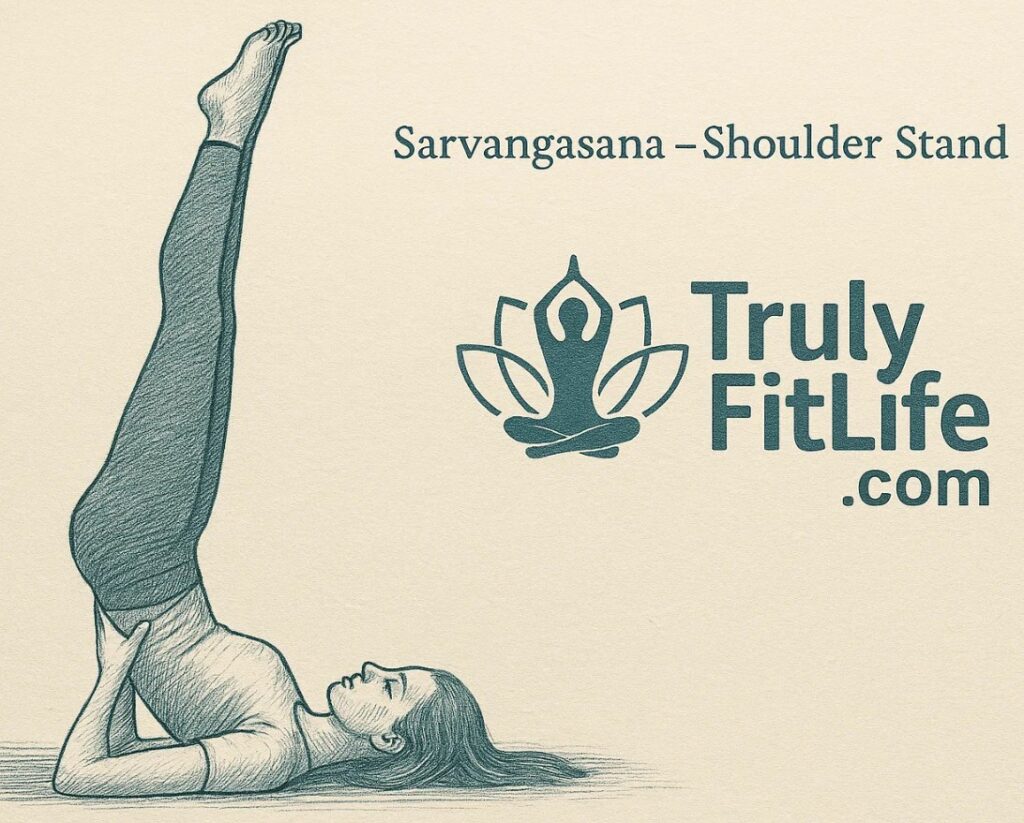
Sarvangasana – Shoulder Stand Pose is often called the queen of asanas because of its profound benefits for the body and mind. By inverting the body and placing weight on the shoulders, it stimulates blood circulation, improves balance, and calms the nervous system.
This classical yoga posture has been practiced for centuries in Hatha Yoga traditions and is recommended in modern yoga for its therapeutic effects. It is considered a slightly advanced posture that should be approached with preparation and awareness.
🗂️ Table of Contents
- What is Sarvangasana?
- Step-by-Step Guide to Sarvangasana – Shoulder Stand Pose
- Benefits of Sarvangasana – Shoulder Stand Pose
- Muscles and Joints Engaged
- Breathing, Drishti, and Chakras
- Common Mistakes and How to Correct Them
- Variations and Modifications
- Contraindications and Safety Tips
- Practice Suggestions and Sequences
- Related Yoga Poses
- Conclusion
1. What is Sarvangasana?
The Sanskrit breakdown:
- Sarva – entire or whole
- Anga – body or limbs
- Asana – posture
Sarvangasana means “Posture of the Whole Body”, highlighting its holistic benefits. In this inversion, the body is supported on the shoulders with legs extended upward, engaging the whole system.
2. Step-by-Step Guide to Sarvangasana – Shoulder Stand Pose
- Start in Savasana. Lie flat on your back, arms at sides.
- Lift legs. Inhale, raise legs to 90 degrees.
- Push hips upward. Exhale, use core strength to lift hips off the floor.
- Support back. Place palms on lower back for support, elbows grounded.
- Extend legs. Point legs upward, keeping them straight and aligned.
- Adjust posture. Keep chest pressing toward chin and spine long.
- Hold the pose. Stay for 30–60 seconds with steady breathing.
- Release slowly. Exhale, lower back gently to the floor, and rest.
3. Benefits of Sarvangasana – Shoulder Stand Pose
Practicing Sarvangasana – Shoulder Stand Pose regularly offers multiple benefits:
- ✅ Boosts blood circulation – improves oxygen flow to brain and heart.
- ✅ Strengthens shoulders and arms – supports body weight safely.
- ✅ Improves digestion – inversion stimulates abdominal organs.
- ✅ Reduces stress and anxiety – calms nervous system.
- ✅ Balances hormones – stimulates thyroid and parathyroid glands.
- ✅ Enhances focus and clarity – promotes inner calm and awareness.
👉 According to Yoga Journal, Shoulder Stand is considered one of the most beneficial inversions for balance and vitality.
4. Muscles and Joints Engaged
- Core muscles (abdominals, obliques)
- Shoulders and upper arms
- Quadriceps and hamstrings
- Gluteus muscles
- Spine stabilizers
- Neck and cervical region (with caution)
5. Breathing, Drishti, and Chakras
- Breathing: Slow, deep inhalations and exhalations to calm mind.
- Drishti (gaze): Focus toward the chest or nose tip.
- Chakras: Activates Vishuddha Chakra (Throat) for communication and Sahasrara Chakra (Crown) for spiritual awareness.
6. Common Mistakes and How to Correct Them
❌ Placing weight on neck → ✅ Keep weight on shoulders, support back with hands.
❌ Legs not aligned → ✅ Keep legs straight, feet pointing upward.
❌ Elbows sliding outward → ✅ Keep elbows shoulder-width apart.
❌ Rushing into pose → ✅ Enter and exit slowly to avoid strain.
7. Variations and Modifications
- Beginner: Practice with legs supported on wall (Viparita Karani).
- Intermediate: Try Half Shoulder Stand with legs at 45°.
- Advanced: Move into Plow Pose (Halasana) or Lotus in Shoulder Stand.
- Prop support: Use folded blankets under shoulders for neck safety.
8. Contraindications and Safety Tips
Avoid Sarvangasana – Shoulder Stand Pose if you have:
- High blood pressure or heart conditions
- Glaucoma or eye pressure issues
- Neck or cervical spine injuries
- Pregnancy (not recommended after first trimester)
Always practice under guidance if you are new to inversions.
9. Practice Suggestions and Sequences
- Practice Sarvangasana near the end of yoga sessions.
- Hold for 30–60 seconds, gradually increasing to 3–5 minutes.
- Follow with counterposes like Fish Pose (Matsyasana) to release the neck.
- Combine with Halasana, Viparita Karani, and Headstand for an inversion sequence.
10. Related Yoga Poses
- Halasana – Plow Pose
- Matsyasana – Fish Pose
- Sirsasana – Headstand Pose
- Viparita Karani – Legs Up the Wall
(Use internal links to connect to these posts on your site.)
11. Conclusion
Sarvangasana – Shoulder Stand Pose is one of the most powerful yoga inversions, engaging the whole body and mind. It improves circulation, balances hormones, and reduces stress, making it an essential part of a well-rounded yoga practice.
With steady practice, Sarvangasana enhances vitality, focus, and emotional stability. It truly embodies its name: the Posture of the Whole Body.