
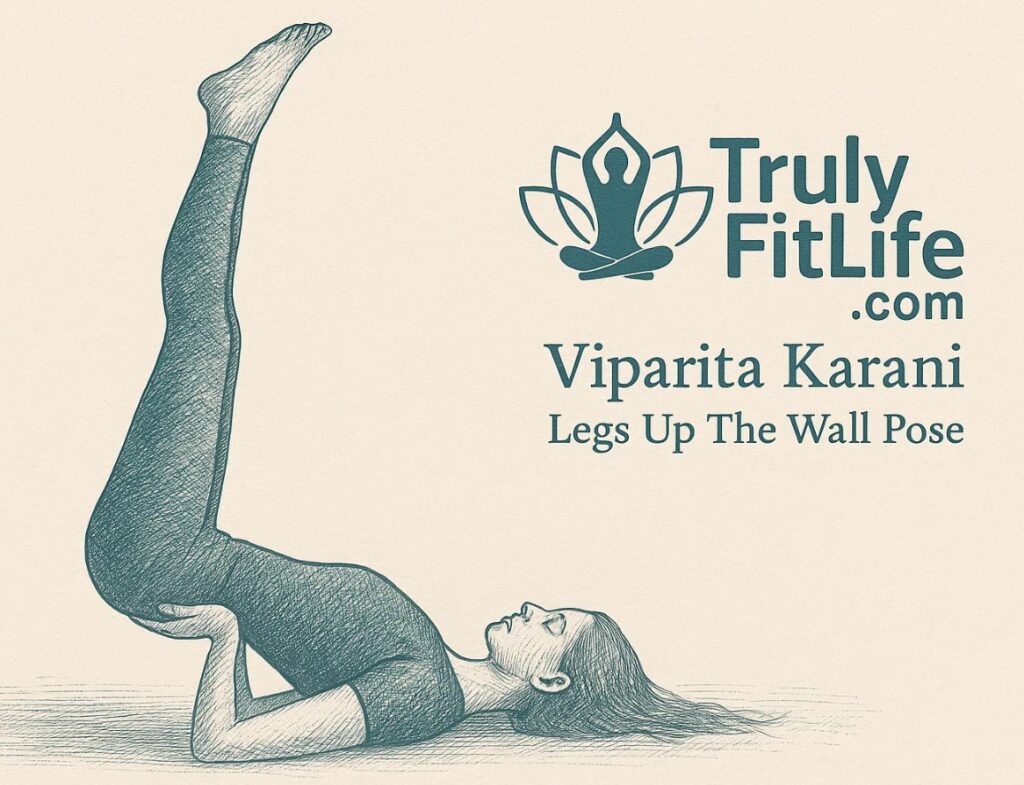
Viparita Karani – Legs Up the Wall Pose is a deeply restorative yoga posture known for its calming and healing effects. Unlike more intense inversions such as Shoulder Stand, this gentle inversion is accessible to all levels, including beginners, seniors, and those recovering from fatigue.
This asana improves circulation, relieves tension in the legs, and promotes relaxation of the nervous system. Often practiced at the end of a yoga sequence or before bedtime, Viparita Karani is considered one of the best yoga poses for relaxation and rejuvenation.
🗂️ Table of Contents
- What is Viparita Karani?
- Step-by-Step Guide to Viparita Karani – Legs Up the Wall Pose
- Benefits of Viparita Karani – Legs Up the Wall Pose
- Muscles and Joints Engaged
- Breathing, Drishti, and Chakras
- Common Mistakes and How to Correct Them
- Variations and Modifications
- Contraindications and Safety Tips
- Practice Suggestions and Sequences
- Related Yoga Poses
- Conclusion
1. What is Viparita Karani?
The Sanskrit breakdown:
- Viparita – inverted
- Karani – action or doing
Thus, Viparita Karani means Inverted Action Pose, commonly referred to in English as Legs Up the Wall Pose.
This pose belongs to the group of restorative asanas. Unlike other inversions that require strength, Viparita Karani gently elevates the legs using a wall, making it highly accessible and therapeutic.
2. Step-by-Step Guide to Viparita Karani – Legs Up the Wall Pose
- Choose a wall space. Sit sideways with one hip touching the wall.
- Swing legs up. Gently lie back while lifting legs and placing them vertically against the wall.
- Adjust hips. Move hips closer or further from the wall depending on comfort.
- Relax arms. Place arms by your sides, palms facing upward.
- Soften breath. Close eyes and breathe slowly, allowing body to relax.
- Hold the posture. Stay in Viparita Karani for 5–15 minutes.
- Release gently. Bend knees, roll to one side, and sit up slowly.
3. Benefits of Viparita Karani – Legs Up the Wall Pose
Practicing Viparita Karani – Legs Up the Wall Pose provides numerous physical and mental benefits:
- ✅ Reduces stress and anxiety – calms nervous system and promotes relaxation.
- ✅ Relieves tired legs – reduces swelling and improves circulation.
- ✅ Eases back tension – gentle inversion releases spinal stress.
- ✅ Improves digestion – aids relaxation of abdominal organs.
- ✅ Supports better sleep – helps treat insomnia and restlessness.
- ✅ Balances blood flow – improves circulation toward the upper body.
👉 According to Yoga Journal, this asana is one of the most effective restorative poses for stress relief and circulation.
4. Muscles and Joints Engaged
- Hamstrings (gently stretched)
- Lower back muscles
- Hips and pelvis
- Calves and ankles
- Neck and shoulders (relaxed, not strained)
5. Breathing, Drishti, and Chakras
- Breathing: Slow, deep, diaphragmatic breathing for relaxation.
- Drishti (gaze): Eyes closed or soft gaze at the heart center.
- Chakras: Activates Sahasrara Chakra (Crown) for calm and Anahata Chakra (Heart) for emotional release.
6. Common Mistakes and How to Correct Them
❌ Hips too far from wall → ✅ Adjust so legs can comfortably rest upward.
❌ Straining neck → ✅ Keep neck and shoulders relaxed.
❌ Holding breath → ✅ Focus on slow, steady breathing.
❌ Overstretching legs → ✅ Keep knees slightly bent if hamstrings are tight.
7. Variations and Modifications
- Beginner: Place a folded blanket under hips for support.
- Restorative: Use bolster under hips for deeper inversion.
- Advanced: Practice without wall support (free Legs-Up-the-Wall).
- Therapeutic: Place a strap around thighs to keep legs together.
8. Contraindications and Safety Tips
Avoid Viparita Karani – Legs Up the Wall Pose if you have:
- Severe glaucoma or eye conditions
- Uncontrolled high blood pressure
- Serious neck or back injuries
- Late-stage pregnancy (without support modifications)
Always exit slowly to avoid dizziness.
9. Practice Suggestions and Sequences
- Ideal as a restorative pose at end of practice.
- Hold for 5–15 minutes daily for maximum benefits.
- Pair with meditation, deep breathing, or Yoga Nidra.
- Follow with gentle seated postures like Sukhasana (Easy Pose).
10. Related Yoga Poses
- Sarvangasana – Shoulder Stand Pose
- Halasana – Plow Pose
- Savasana – Corpse Pose
- Supta Baddha Konasana – Reclining Bound Angle Pose
(Use internal links to your site’s related posts.)
11. Conclusion
Viparita Karani – Legs Up the Wall Pose is one of the most accessible and deeply restorative yoga asanas. It improves circulation, relieves tired legs, reduces stress, and promotes calmness.
Whether you are a beginner or advanced yogi, this posture can be your go-to pose for relaxation and rejuvenation. Regular practice helps improve sleep quality, restore energy, and balance body and mind.


