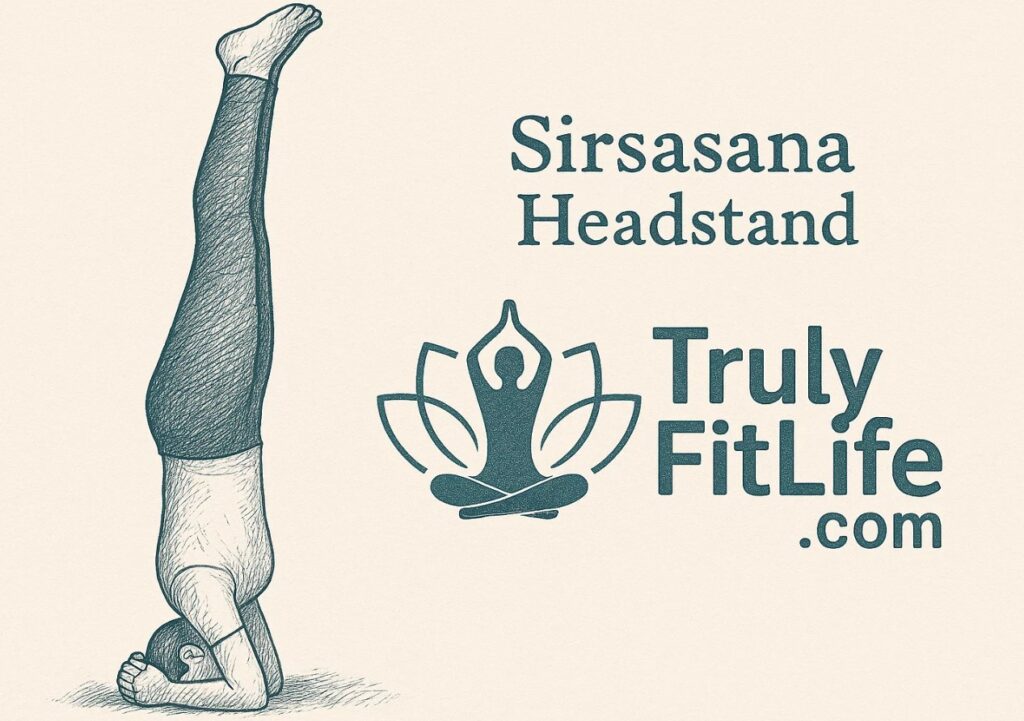
Sirsasana – Headstand Pose is one of the most iconic yoga inversions, often referred to as the “King of Asanas.” By balancing on the head with support from the arms, practitioners develop strength, concentration, and courage. While advanced, Sirsasana can be safely practiced with preparation, alignment, and proper guidance.
This asana symbolizes mental clarity and inner stillness. It is widely practiced in Hatha and modern yoga traditions, helping to improve circulation, enhance focus, and build resilience.
🗂️ Table of Contents
- What is Sirsasana?
- Step-by-Step Guide to Sirsasana – Headstand Pose
- Benefits of Sirsasana – Headstand Pose
- Muscles and Joints Engaged
- Breathing, Drishti, and Chakras
- Common Mistakes and How to Correct Them
- Variations and Modifications
- Contraindications and Safety Tips
- Practice Suggestions and Sequences
- Related Yoga Poses
- Conclusion
1. What is Sirsasana?
The Sanskrit breakdown:
- Sirsa – head
- Asana – posture
Thus, Sirsasana translates to Headstand Pose, where the entire body is inverted and balanced on the head with arm support.
Often called the King of Asanas, Sirsasana is believed to rejuvenate both body and mind, promoting balance, confidence, and concentration.
2. Step-by-Step Guide to Sirsasana – Headstand Pose
- Prepare in Vajrasana. Sit on your heels, relax, and breathe deeply.
- Form a tripod base. Interlace fingers, place forearms on the floor, and create a stable triangle with hands.
- Place the crown. Rest the crown of the head gently on the mat, cradled by interlocked fingers.
- Lift hips. Straighten legs and walk feet closer until hips align above shoulders.
- Lift legs. Gently tuck knees into chest, then slowly extend legs upward.
- Find balance. Engage core, press forearms firmly, and maintain steady breathing.
- Hold the pose. Stay for 10–60 seconds, building duration gradually.
- Exit safely. Lower legs slowly back to the mat, rest in Child’s Pose.
3. Benefits of Sirsasana – Headstand Pose
Practicing Sirsasana – Headstand Pose provides many physical and mental benefits:
- ✅ Strengthens core and shoulders – builds stability and endurance.
- ✅ Improves circulation – blood flow to brain enhances oxygen supply.
- ✅ Boosts focus and concentration – trains mental clarity.
- ✅ Calms the mind – relieves stress and anxiety.
- ✅ Enhances digestion – inversion stimulates abdominal organs.
- ✅ Develops confidence – conquering fear of inversion builds resilience.
👉 According to Yoga Journal, Headstand is a powerful inversion for strength, balance, and inner calm.
4. Muscles and Joints Engaged
- Core muscles (abdominals, obliques)
- Shoulders and upper arms
- Neck (stabilized carefully)
- Glutes and hip flexors
- Quadriceps and hamstrings
- Wrists and elbow joints (secondary support)
5. Breathing, Drishti, and Chakras
- Breathing: Inhale deeply to maintain length, exhale to stabilize.
- Drishti (gaze): Focus softly on nose tip or closed eyes for inward focus.
- Chakras: Stimulates Sahasrara Chakra (Crown) for higher awareness and Ajna Chakra (Third Eye) for focus.
6. Common Mistakes and How to Correct Them
❌ Placing weight on head → ✅ Distribute weight onto forearms and shoulders.
❌ Arching back → ✅ Engage core, keep body in straight line.
❌ Kicking up forcefully → ✅ Enter slowly with control.
❌ Holding breath → ✅ Breathe steadily throughout.
7. Variations and Modifications
- Beginner: Practice Dolphin Pose or Half Headstand near a wall.
- Intermediate: Raise legs bent, then extend upward.
- Advanced: Try variations like Lotus Headstand or Bound Angle Headstand.
- Restorative: Practice near a wall for support.
8. Contraindications and Safety Tips
Avoid Sirsasana – Headstand Pose if you have:
- Neck or cervical spine injuries
- High blood pressure or glaucoma
- Heart conditions
- Pregnancy (unless very experienced)
Always warm up shoulders and core before attempting. Beginners should practice under supervision.
9. Practice Suggestions and Sequences
- Best practiced mid-session after warming up.
- Hold 10–60 seconds, gradually increase with practice.
- Follow with counterposes like Child’s Pose or Shoulder Stand.
- Combine with inversions like Sarvangasana and Viparita Karani.
10. Related Yoga Poses
- Sarvangasana – Shoulder Stand Pose
- Pincha Mayurasana – Forearm Stand
- Adho Mukha Vrksasana – Handstand
- Dolphin Pose
(Link internally to your site’s related posts.)
11. Conclusion
Sirsasana – Headstand Pose is a transformative yoga inversion that strengthens the body, sharpens the mind, and uplifts the spirit. Known as the King of Asanas, it requires discipline, courage, and mindful alignment.
With consistent practice, Sirsasana improves balance, builds focus, and promotes a sense of calm strength. Practiced safely, it becomes not only a posture but also a symbol of stability and inner power.