📑 Table of Contents
- Introduction to Ganda Bherundasana – Chin Stand
- Step-by-Step Guide to Practice
- Alignment and Drishti Points
- Benefits of Ganda Bherundasana – Chin Stand
- Common Mistakes and How to Avoid Them
- Modifications and Variations
- Contraindications and Safety Guidelines
- Muscles Worked in Chin Stand Pose
- Chakras and Energetic Benefits
- Preparatory and Follow-Up Poses
- Final Thoughts
1. Introduction to Ganda Bherundasana – Chin Stand
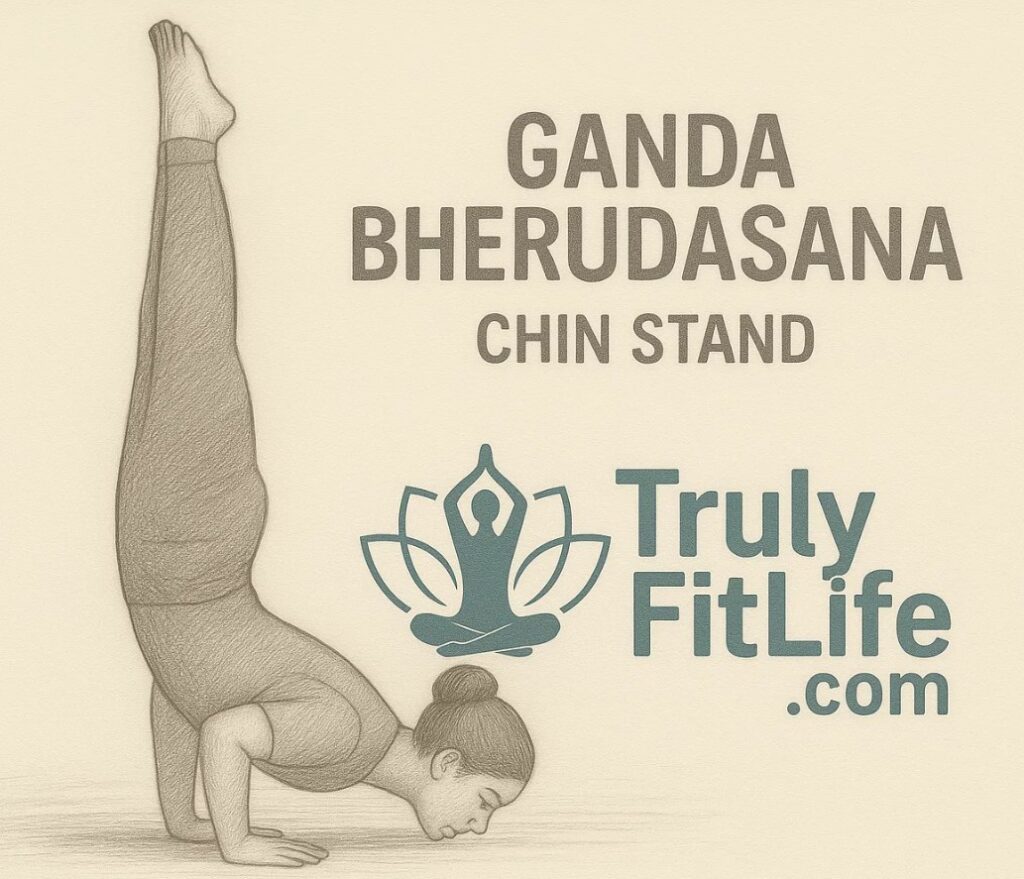
Ganda Bherundasana – Chin Stand Pose is an advanced arm balance and deep backbend. The Sanskrit words Ganda means “chin,” Bherunda refers to a mythical powerful bird, and Asana means “pose.” This posture resembles balancing on the chin while the body lifts and extends gracefully upward.
It demands a blend of strength, flexibility, balance, and courage. Practicing Chin Stand helps yogis advance toward mastery of arm balances and enhances confidence in inversion postures.
2. Step-by-Step Guide to Practice
- Start in Downward Dog: Warm up shoulders, wrists, and spine.
- Shift to Plank: Slowly move forward into plank pose.
- Lower Chin and Chest: Lower body down, bringing chin and chest to the mat while keeping elbows bent close to ribs.
- Engage Core & Lift Legs: Kick legs up slowly, engaging core and glutes.
- Balance on Chin: Rest chin gently on the floor, keep shoulders stable, and raise legs overhead.
- Find Alignment: Legs active, toes pointing up, hips stacked over shoulders.
- Hold the Pose: Breathe deeply and stay for 10–20 seconds.
- Exit Safely: Lower legs with control and release into Child’s Pose.
3. Alignment and Drishti Points
- Hands: Firm grip on mat, elbows close to body.
- Chin: Rested lightly, not pressing forcefully.
- Shoulders: Drawn back and stable, not collapsed.
- Legs: Straight and active, toes extended.
- Drishti (gaze): Forward or slightly upward.
4. Benefits of Ganda Bherundasana – Chin Stand
- Builds arm, shoulder, and wrist strength.
- Deeply stretches spine, chest, and hip flexors.
- Improves balance, focus, and concentration.
- Strengthens core and improves body alignment.
- Boosts confidence in advanced yoga practice.
5. Common Mistakes and How to Avoid Them
- ❌ Dumping weight into chin/neck → Fix: Distribute weight evenly across arms and shoulders.
- ❌ Elbows splayed outward → Fix: Keep elbows hugging ribs.
- ❌ Kicking legs too forcefully → Fix: Lift with core engagement instead of momentum.
- ❌ Collapsed chest → Fix: Maintain strong shoulder engagement.
6. Modifications and Variations
- Wall Support: Practice near a wall to prevent falling backward.
- One-Leg Chin Stand: Keep one leg on floor, lift only the other.
- Props: Place a folded blanket under chin for cushioning.
7. Contraindications and Safety Guidelines
- Avoid if you have neck, wrist, or back injuries.
- Not suitable for beginners, pregnant women, or those with high blood pressure.
- Always warm up before attempting and practice under guidance.
8. Muscles Worked in Chin Stand Pose
- Primary: Shoulders, triceps, forearms, chest.
- Secondary: Core muscles, glutes, hamstrings, spinal extensors.
9. Chakras and Energetic Benefits
- Activates the Vishuddha (Throat Chakra) → enhances communication and self-expression.
- Stimulates the Anahata (Heart Chakra) → opens chest, builds courage, and emotional balance.
- Energizes the Manipura (Solar Plexus Chakra) → boosts willpower and inner strength.
10. Preparatory and Follow-Up Poses
- Preparatory Poses: Bhujangasana (Cobra Pose), Adho Mukha Svanasana (Downward Dog), Chaturanga Dandasana (Four Limbed Staff Pose).
- Follow-Up Poses: Balasana (Child’s Pose), Matsyasana (Fish Pose), Ustrasana (Camel Pose).
11. Final Thoughts
Ganda Bherundasana – Chin Stand Pose is a challenging and beautiful posture that requires both physical power and mental focus. It should be approached gradually with proper preparation. When practiced safely, it enhances balance, strength, and courage, making it a rewarding addition to an advanced yoga practice.
🧘 Related Yoga Poses You May Like
- ➤ Handstand – Adho Mukha Vrksasana: Master the Powerful Yoga Inversion
- ➤ Sirsasana – Headstand Pose Complete Guide
- ➤ Chaturanga Dandasana – Four Limbed Staff Pose (Complete Guide)
- ➤ Plank Arm Raises – Powerful Core Stability Exercise
- ➤ Dolphin Pose (If Exists Skip Else Ignore)
- ➤ Urdhva Prasarita Eka Padasana – Standing Split Pose Complete Guide