
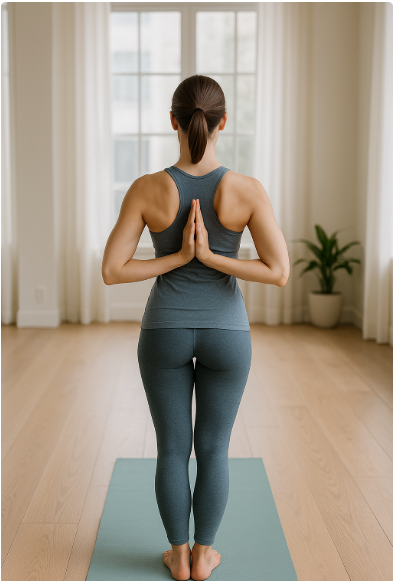
What Is Reverse Prayer Mountain Pose?
Reverse Prayer Mountain Pose – Viparita Namaskar Tadasana combines the grounding strength of Mountain Pose with a deep shoulder and chest opener. By placing the hands in Reverse Anjali Mudra behind the back, it enhances thoracic extension, posture, and inner focus. This pose also opens the heart chakra, making it both physically and emotionally expansive.
Step-by-Step Instructions
- Foundation: Stand in Tadasana, feet hip-width apart. Distribute weight evenly across feet.
- Legs & Pelvis: Engage thighs, gently lift kneecaps, and keep a soft bend in knees. Neutralize pelvis by drawing the tailbone down.
- Torso & Spine: Lengthen spine upward from the tailbone to the crown of the head. Soften ribs inward.
- Arms & Shoulders: Extend arms behind your back. Bend elbows and press palms together in reverse prayer, fingers pointing upward. Broaden collarbones and draw shoulder blades down.
- Head & Breath: Keep chin level. Inhale to lift the chest; exhale to relax shoulders and deepen the breath.
- Hold: Stay in the pose for 30–60 seconds with deep nasal breathing. Release mindfully.
Alignment Tips
- Don’t force the palms together if shoulders are tight—modify.
- Keep elbows lifted without scrunching.
- Maintain a neutral neck.
- Soften knees to protect joints.
Health Benefits
Physical Benefits
- Expands thoracic spine and strengthens upper back
- Enhances shoulder mobility and stretches chest and biceps
- Improves upright posture and reduces rounded shoulders
- Activates core and leg stability
Mental & Energetic Benefits
- Opens Anahata (heart) chakra, enhancing compassion and self-love
- Encourages mindfulness through breath and bind coordination
- Relieves stress and anxiety by activating the parasympathetic system
Modifications & Variations
- Elbow Hold: Grasp opposite elbows if palms don’t meet.
- Yoga Strap: Hold a strap behind the back to bridge shoulder distance.
- Wall Support: Practice against a wall to refine alignment.
Contraindications & Safety Tips
- Avoid if you have shoulder, elbow, or wrist injuries
- Don’t overstrain to achieve the bind
- Those with high blood pressure should skip deep chest compression if it restricts breath
When to Practice
- During Standing Sequences – Especially after poses that involve forward shoulders
- Before Pranayama or Meditation – Prepares posture and breath
- As a Reset Pose – Re-establishes alignment and awareness between flows
