📑 Table of Contents
- Introduction to Baddha Konasana – Bound Angle Pose
- Step-by-Step Guide to Practice
- Benefits of Baddha Konasana – Bound Angle Pose
- Physical Benefits
- Mental & Emotional Benefits
- Spiritual Benefits
- Muscles and Body Systems Involved
- Drishti (Gaze Point) and Breathing Pattern
- Preparatory and Counter Poses
- Modifications and Variations
- Common Mistakes and Safety Tips
- Contraindications – Who Should Avoid This Pose?
- Therapeutic Applications
- Baddha Konasana in Yoga Styles
- Final Thoughts
1. Introduction to Baddha Konasana – Bound Angle Pose
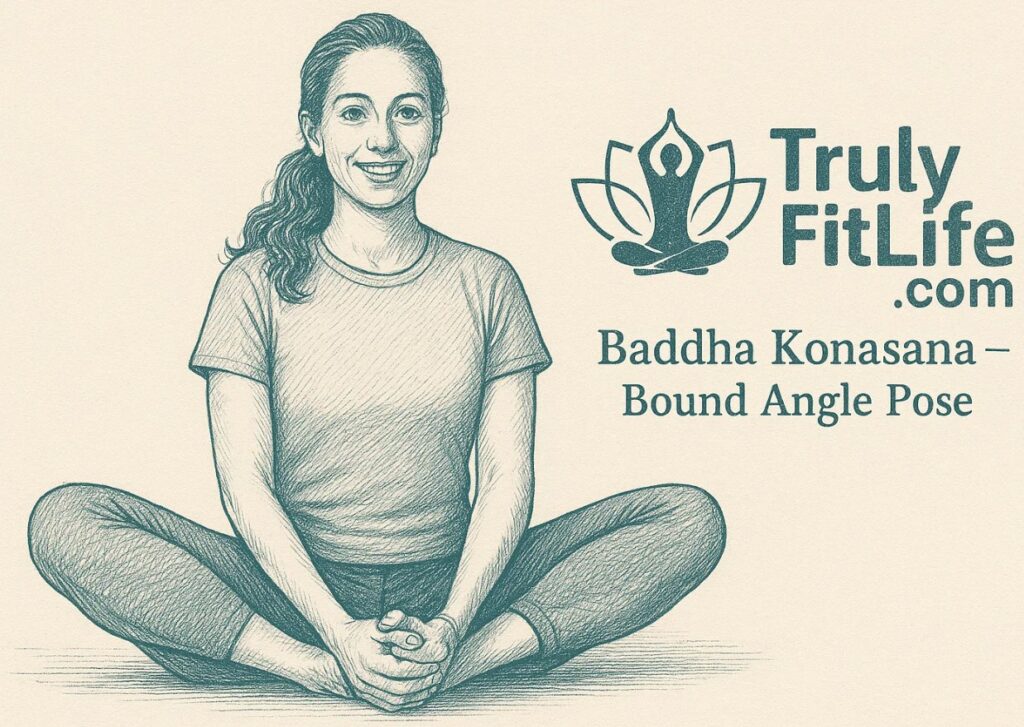
Baddha Konasana – Bound Angle Pose is a classic seated yoga posture also known as the Cobbler’s Pose or Butterfly Pose. The Sanskrit name comes from three words:
- Baddha = Bound
- Kona = Angle
- Asana = Pose
This pose is widely practiced in Hatha Yoga, Iyengar Yoga, and Restorative Yoga traditions. It stretches the hips, groins, and thighs while calming the nervous system. Traditionally, yogis use Baddha Konasana to prepare for long seated meditations and pranayama.
2. Step-by-Step Guide to Practice Baddha Konasana – Bound Angle Pose
Follow these detailed steps for correct alignment:
- Start in Dandasana (Staff Pose):
Sit with legs extended straight in front of you, spine tall. - Bend the knees:
Draw your knees outward and bring the soles of your feet together. - Hold the feet:
Interlace your fingers around your toes or hold your ankles. - Bring heels closer:
Pull the heels gently toward your groin while keeping knees dropping to the sides. - Engage the spine:
Sit tall, lengthen the back, and avoid rounding shoulders. - Option to fold forward:
With exhalation, hinge from hips and fold slightly forward while maintaining a long spine. - Hold & breathe:
Stay for 30–60 seconds, gradually extending up to 5 minutes in restorative practice. - Release:
Inhale, return to upright position, and extend legs back into Dandasana.
3. Benefits of Baddha Konasana – Bound Angle Pose
🔹 Physical Benefits
- Improves hip flexibility and mobility.
- Stretches inner thighs, groins, and knees.
- Stimulates abdominal organs, aiding digestion.
- Increases blood circulation in pelvic region.
- Supports healthy reproductive system.
- Relieves sciatic pain and reduces stiffness in lower back.
🔹 Mental & Emotional Benefits
- Induces relaxation and stress relief.
- Reduces anxiety and fatigue.
- Enhances focus for meditation.
🔹 Spiritual Benefits
- Activates Muladhara (Root Chakra) and Svadhisthana (Sacral Chakra).
- Encourages grounding and emotional balance.
4. Muscles and Body Systems Involved
- Primary muscles: Adductors, groin, hip flexors.
- Secondary muscles: Gluteus medius, hamstrings, lower back muscles.
- Body systems affected: Digestive, reproductive, and circulatory systems.
5. Drishti (Gaze Point) and Breathing Pattern
- Drishti: Nasagra (tip of nose) or softly gaze forward.
- Breathing: Inhale deeply into chest; exhale to relax hips and knees toward floor.
6. Preparatory and Counter Poses
Preparatory Poses:
- Sukhasana (Easy Pose)
- Upavistha Konasana (Wide-Angle Seated Pose)
- Virasana (Hero Pose)
Counter Poses:
- Dandasana (Staff Pose)
- Paschimottanasana (Seated Forward Bend)
- Setu Bandhasana (Bridge Pose)
7. Modifications and Variations
- Support under knees: Place blocks or cushions to reduce strain.
- Wall support: Practice with back against wall to maintain upright spine.
- Reclined Baddha Konasana: Lie on your back with feet together and knees wide, supported by bolsters.
8. Common Mistakes and Safety Tips
- Forcing knees down – may injure ligaments.
- Rounding spine – keep chest open and spine tall.
- Pulling feet too close – listen to body flexibility.
- Holding breath – always breathe deeply.
9. Contraindications – Who Should Avoid This Pose?
- Severe knee or hip injury.
- Post-surgery recovery in groin/pelvic area.
- Sciatica (if not supported properly).
- During menstruation, avoid deep forward fold.
10. Therapeutic Applications
- Helps women during prenatal stages by opening hips.
- Used in fertility yoga to stimulate reproductive health.
- Supports digestion and detoxification.
- Recommended for those with stress and insomnia.
11. Baddha Konasana in Yoga Styles
- Iyengar Yoga: Props used for alignment.
- Restorative Yoga: Reclined variation for deep relaxation.
- Ashtanga Yoga: Part of seated sequence after standing poses.
12. Final Thoughts
Baddha Konasana – Bound Angle Pose is a versatile posture suitable for beginners, intermediate, and advanced practitioners. It combines physical flexibility, mental calmness, and spiritual grounding. Whether practiced actively or restoratively, it remains one of the best hip-opening and meditative asanas.
🧘 Related Yoga Poses You May Like
- ➤ Supta Baddha Konasana – Reclined Bound Angle Pose: Steps, Benefits, and Relaxation Guide
- ➤ Ananda Balasana – Happy Baby Pose: Steps, Benefits, and Relaxation Guide
- ➤ Gomukhasana – Cow Face Pose
- ➤ Pigeon Pose (Chair Yoga)
- ➤ Sucirandhrasana – Eye of the Needle Pose: Steps, Benefits, and Complete Yoga Guide
- ➤ Vajrasana – Thunderbolt Pose