Table of Contents
- Introduction to Supta Paschimottanasana
- How to Practice Supta Paschimottanasana – Step-by-Step Guide
- Benefits of Supta Paschimottanasana
- Physical Benefits
- Mental & Emotional Benefits
- Spiritual Benefits
- Anatomy and Muscles Engaged in Supta Paschimottanasana
- Contraindications & Precautions
- Variations and Modifications of Supta Paschimottanasana
- Preparatory and Counter Poses
- Supta Paschimottanasana in Yoga Philosophy
- Common Mistakes to Avoid in Supta Paschimottanasana
- Final Thoughts
Introduction to Supta Paschimottanasana
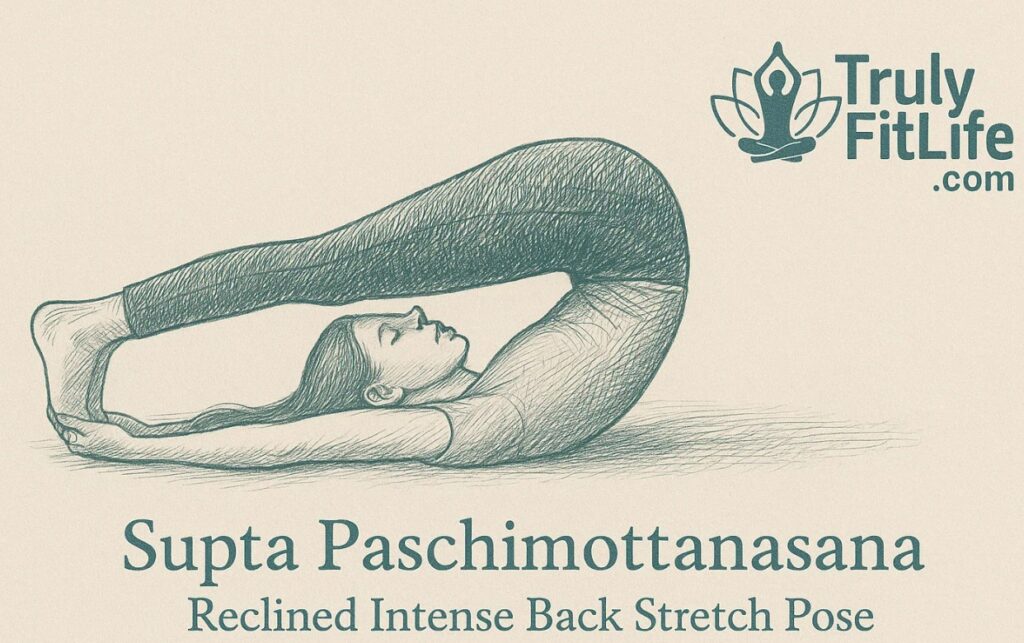
Supta Paschimottanasana (pronounced SOOP-tah PAHSH-chee-moh-tah-NAH-sah-nah) is a reclining variation of the classical Paschimottanasana (Seated Forward Bend). The Sanskrit word Supta means “reclined” or “supine,” while Paschimottanasana means “stretching the west side of the body,” referring to the spine and back muscles.
Unlike the seated version, Supta Paschimottanasana is performed lying on the back while holding the feet and drawing the legs overhead, creating an intense stretch through the spine, hamstrings, and shoulders. It is considered an advanced yoga pose that enhances flexibility, detoxifies the body, and improves circulation.
How to Practice Supta Paschimottanasana – Step-by-Step Guide
Here’s a safe and structured way to perform Supta Paschimottanasana:
- Lie down flat on your back in Supta Tadasana (Reclined Mountain Pose) with arms alongside the body.
- Exhale and bring both knees toward the chest in Apanasana (Knees-to-Chest Pose).
- Hold your big toes with both hands using the yogic toe lock (Padangustha grip).
- Slowly straighten your legs upward, guiding them toward the floor above your head.
- Keep your spine long and shoulders grounded on the mat.
- Your chin should naturally tuck slightly, promoting a Jalandhara Bandha (throat lock).
- Hold the pose for 20–60 seconds, breathing deeply and evenly.
- Release by bending the knees and gently lowering the legs back to the floor.
👉 Tip: Beginners can use a yoga strap around the feet for support.
Benefits of Supta Paschimottanasana
Physical Benefits
- Provides a deep stretch to the entire posterior chain – hamstrings, calves, glutes, spine, and shoulders.
- Enhances spinal flexibility and relieves stiffness in the lower back.
- Stimulates abdominal organs, aiding in digestion and detoxification.
- Improves circulation and oxygen supply to the head and brain.
- Strengthens and lengthens the hip flexors.
Mental & Emotional Benefits
- Calms the mind and reduces restlessness.
- Relieves fatigue and anxiety through deep breathing.
- Encourages introspection and mindfulness.
- Helps release built-up stress from the nervous system.
Spiritual Benefits
- Activates the Muladhara (Root Chakra) and Manipura (Solar Plexus Chakra).
- Encourages pratyahara (withdrawal of senses), preparing for meditation.
- Symbolically represents surrender, humility, and inward focus.
Anatomy and Muscles Engaged in Supta Paschimottanasana
Key muscle groups activated in Supta Paschimottanasana include:
- Hamstrings & calves – deep stretch.
- Spinal extensors & erector spinae – elongation and flexibility.
- Shoulders & arms – engagement while holding toes.
- Abdominals – core strength to maintain leg position.
- Neck muscles – subtle stretch with chin tucked.
This makes the pose an excellent full-body forward-bend stretch.
Contraindications & Precautions
Avoid or practice under guidance if you have:
- Herniated disc or chronic spinal issues.
- Severe sciatica or hamstring injury.
- Neck problems (avoid tucking chin deeply).
- Pregnancy (this pose is not recommended).
Safety Tips:
- Warm up before attempting this pose.
- Do not force legs to touch the ground if flexibility is limited.
- Keep breathing steady and avoid holding the breath.
Variations and Modifications of Supta Paschimottanasana
- Beginner Variation: Use a yoga strap around the feet to reduce strain.
- Advanced Variation: Try to bring toes all the way to the floor above the head while keeping the legs straight.
- Restorative Variation: Perform the pose against a wall to support legs and back.
Preparatory and Counter Poses
Preparatory Poses:
- Supta Padangusthasana (Reclined Big Toe Pose)
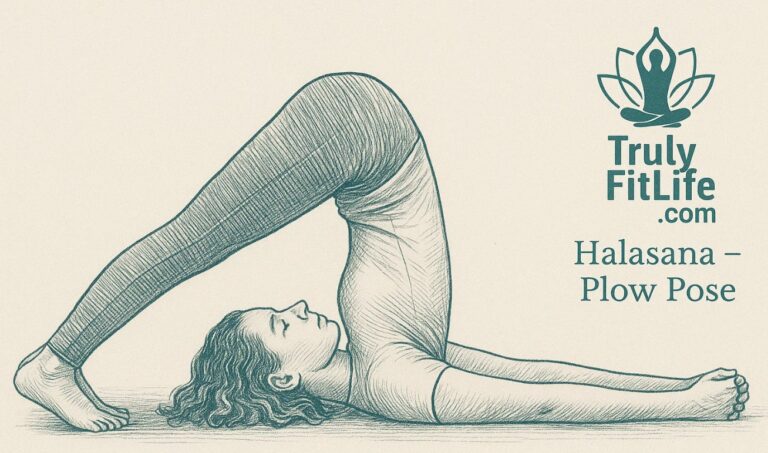
- Halasana (Plow Pose)
- Paschimottanasana (Seated Forward Bend)
Counter Poses:
- Setu Bandhasana (Bridge Pose)
- Matsyasana (Fish Pose)
- Savasana (Corpse Pose)
Supta Paschimottanasana in Yoga Philosophy
In traditional Hatha Yoga, forward bends symbolize surrender and humility. Supta Paschimottanasana intensifies this symbolism by reclining, allowing gravity to guide the stretch.
This pose is associated with introspection, letting go of ego, and turning awareness inward. By stimulating the root and solar plexus chakras, it harmonizes grounding energy with personal power.
Common Mistakes to Avoid in Supta Paschimottanasana
- Rounding the back excessively and collapsing chest.
- Overstretching hamstrings without warming up.
- Forcing toes to the ground, risking injury.
- Holding breath or creating tension in the face.
Final Thoughts
Supta Paschimottanasana is a challenging yet rewarding yoga pose that strengthens, lengthens, and revitalizes the body while calming the mind. With consistent practice, it enhances flexibility, supports digestion, and nurtures inner stillness.
Whether you are exploring advanced yoga practice or seeking deeper forward bends, Supta Paschimottanasana – Reclined Forward Bend Pose offers profound physical, emotional, and spiritual benefits.
🧘 Related Yoga Poses You May Like
- ➤ Uttanasana (Standing Forward Bend) – Steps, Benefits & Complete Guide
- ➤ Ardha Uttanasana (Half Standing Forward Bend) – Steps, Benefits & Guide
- ➤ Dandasana – Staff Pose Complete Yoga Guide for Posture & Alignment
- ➤ Paschimottanasana (If Exists Skip Else Ignore)
- ➤ Ananda Balasana – Happy Baby Pose: Steps, Benefits, and Relaxation Guide
- ➤ Supta Baddha Konasana – Reclined Bound Angle Pose: Steps, Benefits, and Relaxation Guide