Table of Contents
- Introduction to Supta Baddha Konasana – Reclined Bound Angle Pose
- How to Practice Supta Baddha Konasana – Step-by-Step Guide
- Benefits of Supta Baddha Konasana – Reclined Bound Angle Pose
- Physical Benefits
- Mental & Emotional Benefits
- Spiritual Benefits
- Anatomy and Muscles Engaged in Supta Baddha Konasana
- Contraindications & Safety Precautions
- Variations and Modifications of Supta Baddha Konasana – Reclined Bound Angle Pose
- Preparatory and Counter Poses
- Supta Baddha Konasana in Yoga Philosophy and Tradition
- Common Mistakes to Avoid in Supta Baddha Konasana
- Final Thoughts
1. Introduction to Supta Baddha Konasana – Reclined Bound Angle Pose
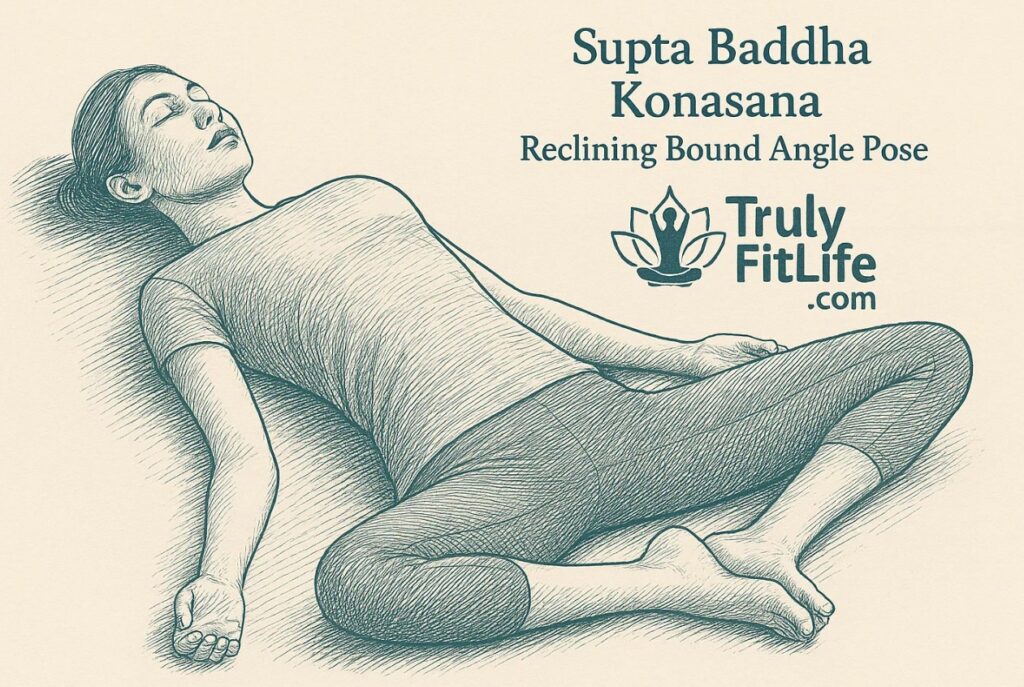
Supta Baddha Konasana – Reclined Bound Angle Pose is a deeply restorative posture that combines gentle hip opening with complete relaxation. The Sanskrit breakdown is: Supta (reclined), Baddha (bound), and Kona (angle). In this pose, the practitioner reclines on the back with the soles of the feet together and knees opened wide, supported by the floor or props.
This pose is popular in Restorative Yoga, Yin Yoga, and prenatal yoga practices for its calming effects on the body and mind. It allows the hips to soften, chest to open, and breath to deepen, making it one of the most therapeutic and accessible postures for beginners and advanced yogis alike.
2. How to Practice Supta Baddha Konasana – Step-by-Step Guide
Follow these steps to practice Supta Baddha Konasana – Reclined Bound Angle Pose safely:
- Begin seated on your mat in Dandasana (Staff Pose).
- Bend your knees and bring the soles of your feet together, letting knees fall outward.
- Slowly recline backward onto your mat, supporting yourself with your hands and elbows.
- Allow your back, shoulders, and head to rest comfortably on the ground.
- Place arms relaxed by your sides with palms facing upward.
- Keep heels close to the pelvis or farther away depending on comfort.
- Close your eyes, breathe deeply, and stay in the pose for 1–5 minutes (longer in restorative practice).
- To exit, bring knees together gently and roll to one side before sitting up.
👉 Tip: Use cushions, yoga blocks, or bolsters under your knees and back for extra support.
3. Benefits of Supta Baddha Konasana – Reclined Bound Angle Pose
3.1 Physical Benefits
- Stretches inner thighs, groin, and hips.
- Relieves lower back and pelvic tension.
- Improves circulation in the abdominal and pelvic region.
- Eases menstrual discomfort and supports prenatal health.
- Encourages healthy posture and spinal alignment.
3.2 Mental & Emotional Benefits
- Promotes deep relaxation and stress relief.
- Calms the nervous system and reduces anxiety.
- Improves focus by encouraging mindful breathing.
- Helps release emotional blockages stored in the hips.
3.3 Spiritual Benefits
- Activates the Svadhisthana (Sacral Chakra) and Anahata (Heart Chakra).
- Enhances prana flow, aiding in meditation and inner stillness.
- Encourages surrender, openness, and self-compassion.
4. Anatomy and Muscles Engaged in Supta Baddha Konasana
This pose works gently on the following muscle groups:
- Hip adductors and inner thighs – gentle stretch.
- Pelvic floor muscles – relaxation and softening.
- Lower back and spinal extensors – supported release.
- Diaphragm and intercostals – deep breathing expansion.
5. Contraindications & Safety Precautions
Avoid or modify Supta Baddha Konasana if you have:
- Recent groin or hip injury.
- Severe lower back pain.
- Knee injuries without support.
Safety Tips:
- Always use props for comfort if joints feel strained.
- Do not push knees toward the floor—let gravity work naturally.
- Pregnant practitioners should elevate the torso with a bolster for support.
6. Variations and Modifications of Supta Baddha Konasana – Reclined Bound Angle Pose
- Supported Variation: Use bolsters under knees and back for restorative yoga.
- Dynamic Variation: Place hands on thighs and gently press to increase hip opening.
- Prenatal Variation: Recline at an incline with cushions for safe practice.
7. Preparatory and Counter Poses
Preparatory Poses:
- Baddha Konasana (Bound Angle Pose)
- Sukhasana (Easy Pose)
- Supta Padangusthasana (Reclined Big Toe Pose)
Counter Poses:
- Apanasana (Knees-to-Chest Pose)
- Savasana (Corpse Pose)
- Supta Matsyendrasana (Reclined Twist)
8. Supta Baddha Konasana in Yoga Philosophy and Tradition
In yoga philosophy, hip-opening poses like Supta Baddha Konasana are linked with emotional release and openness. By activating the sacral chakra, this asana encourages creativity, joy, and emotional balance.
It is also considered a restorative posture that allows practitioners to embrace stillness and surrender—qualities essential for meditation and mindfulness practices.
9. Common Mistakes to Avoid in Supta Baddha Konasana
- Forcing knees down instead of letting them relax naturally.
- Arching the lower back excessively.
- Skipping props even when support is needed.
- Holding tension in shoulders instead of relaxing arms.
10. Final Thoughts
Supta Baddha Konasana – Reclined Bound Angle Pose is one of the most calming and restorative yoga poses. Its combination of gentle hip opening, heart expansion, and deep relaxation makes it ideal for stress relief, flexibility, and emotional well-being.
By practicing regularly, yogis can develop patience, compassion, and inner peace, making it a valuable addition to both beginner and advanced routines.
🧘 Related Yoga Poses You May Like
- ➤ Baddha Konasana – Bound Angle Pose: A Complete Guide for Flexibility & Relaxation
- ➤ Ananda Balasana – Happy Baby Pose: Steps, Benefits, and Relaxation Guide
- ➤ Viparita Karani – Legs Up the Wall Pose Complete Guide
- ➤ Supta Matsyendrasana – Reclining Spinal Twist: Steps, Benefits, and Relaxation Guide
- ➤ Mindful Breathing Before Bed — A Powerful Practice for Deep Sleep
- ➤ Breathing Meditation for Sleep – A Powerful Guide to Restful Nights