Table of Contents
- Introduction to Ananda Balasana – Happy Baby Pose
- How to Practice Ananda Balasana – Step-by-Step Guide
- Benefits of Ananda Balasana – Happy Baby Pose
- Physical Benefits
- Mental & Emotional Benefits
- Spiritual Benefits
- Anatomy and Muscles Engaged in Ananda Balasana
- Contraindications & Safety Precautions
- Variations and Modifications of Ananda Balasana – Happy Baby Pose
- Preparatory and Counter Poses
- Ananda Balasana in Yoga Philosophy and Tradition
- Common Mistakes to Avoid in Ananda Balasana – Happy Baby Pose
- Final Thoughts
1. Introduction to Ananda Balasana – Happy Baby Pose
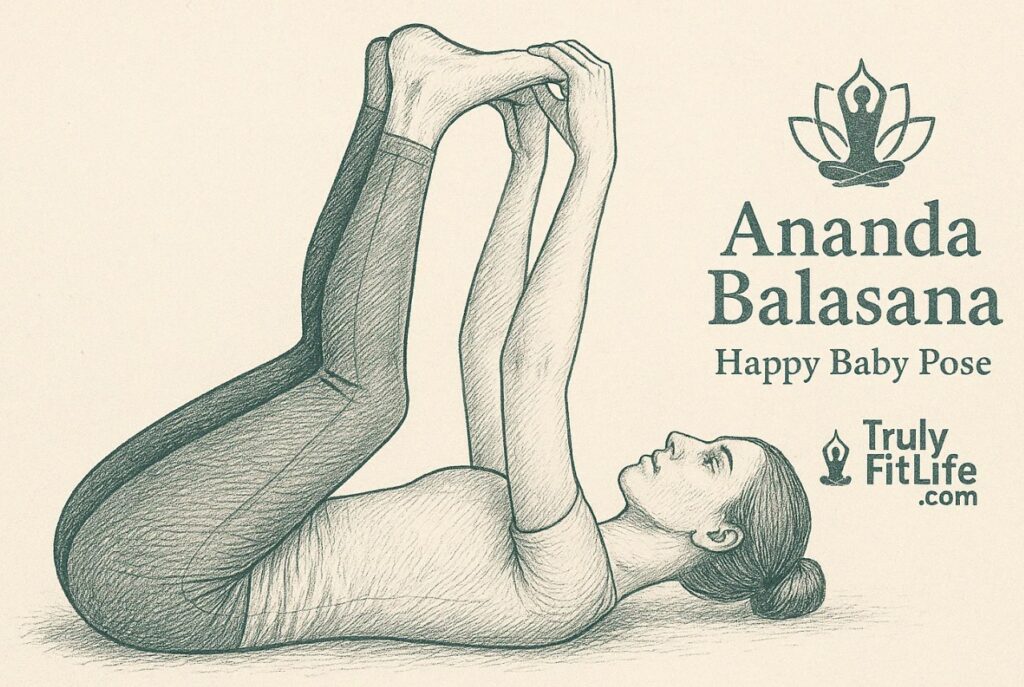
Ananda Balasana – Happy Baby Pose is a calming supine posture often practiced toward the end of a yoga session. In Sanskrit, Ananda means “bliss” or “joy,” and Balasana means “child’s pose.” This pose resembles a happy baby lying on its back, holding its feet with curiosity and ease.
It is one of the most restorative yoga poses, designed to release hip tension, lengthen the spine, and calm the mind. Ananda Balasana is especially popular in Restorative Yoga, Yin Yoga, and prenatal yoga because of its accessibility and soothing effects.
2. How to Practice Ananda Balasana – Step-by-Step Guide
Here’s how to safely perform Ananda Balasana – Happy Baby Pose:
- Begin lying flat on your back in Supta Tadasana (Reclined Mountain Pose).
- Exhale and bend your knees toward the chest.
- Hold the outer edges of your feet with both hands.
- Keep your knees bent and open wider than your torso.
- Align ankles directly over knees, creating a 90-degree angle in your legs.
- Relax shoulders on the floor and lengthen the spine.
- Hold for 30–60 seconds, breathing deeply.
- To release, exhale and gently hug the knees back toward the chest.
👉 Tip: If reaching the feet is difficult, use a yoga strap around the arches.
3. Benefits of Ananda Balasana – Happy Baby Pose
3.1 Physical Benefits
- Gently stretches hips, inner thighs, and groin.
- Lengthens and decompresses the spine.
- Relieves lower back tension and discomfort.
- Improves flexibility of hip joints.
- Aids digestion by massaging abdominal organs.
3.2 Mental & Emotional Benefits
- Calms the nervous system and reduces stress.
- Promotes relaxation, especially before sleep.
- Helps release emotional blockages stored in the hips.
- Improves focus through mindful breathing.
3.3 Spiritual Benefits
- Activates the Sacral Chakra (Svadhisthana), encouraging creativity and emotional flow.
- Encourages surrender and childlike joy.
- Prepares the body for meditation and inner peace.
4. Anatomy and Muscles Engaged in Ananda Balasana
Key muscle groups engaged include:
- Hip adductors & inner thighs – deep stretch.
- Gluteus muscles – relaxation and release.
- Spinal extensors & erector spinae – elongation of the spine.
- Pelvic floor muscles – gentle relaxation.
- Shoulders & arms – stability while holding feet.
5. Contraindications & Safety Precautions
Avoid or modify Ananda Balasana – Happy Baby Pose if you have:
- Recent hip, groin, or knee injury.
- Severe lower back pain.
- Pregnancy (unless using modified props).
Safety Tips:
- Avoid pulling too hard on the feet—let the hips open naturally.
- Use props if flexibility is limited.
- Keep the spine grounded to avoid straining the neck.
6. Variations and Modifications of Ananda Balasana – Happy Baby Pose
- Half Happy Baby Pose (Ardha Ananda Balasana): Hold one foot at a time, keeping the other leg extended.
- Rocking Happy Baby: Gently rock side to side for a soothing massage to the spine.
- Strap-Assisted Happy Baby: Loop straps around feet to make the pose more accessible.
7. Preparatory and Counter Poses
Preparatory Poses:
- Supta Baddha Konasana (Reclined Bound Angle Pose)
- Apanasana (Knees-to-Chest Pose)
- Supta Padangusthasana (Reclined Big Toe Pose)
Counter Poses:
- Savasana (Corpse Pose)
- Supta Matsyendrasana (Reclined Twist)
- Tadasana (Mountain Pose)
8. Ananda Balasana in Yoga Philosophy and Tradition
Ananda Balasana symbolizes the innocence, openness, and joy of childhood. In yogic tradition, the pose represents a return to simplicity and surrender. By lying on the back and imitating the natural playfulness of a baby, practitioners experience bliss, grounding, and emotional release.
This pose is often integrated into restorative and meditation practices as a reminder to embrace stillness and inner joy.
9. Common Mistakes to Avoid in Ananda Balasana – Happy Baby Pose
- Forcing knees toward the ground instead of relaxing.
- Overarching the lower back, lifting it off the floor.
- Pulling on the feet too aggressively.
- Tensing shoulders instead of relaxing them.
10. Final Thoughts
Ananda Balasana – Happy Baby Pose is one of the most accessible and comforting yoga postures. It brings a sense of joy, release, and relaxation while gently stretching the hips and spine.
This pose is ideal for beginners, seniors, and anyone seeking relief from tension, making it a must-have in restorative and bedtime yoga routines. Practicing regularly helps you reconnect with childlike bliss and cultivate inner peace.
🧘 Related Yoga Poses You May Like
- ➤ Supta Baddha Konasana – Reclined Bound Angle Pose: Steps, Benefits, and Relaxation Guide
- ➤ Supta Matsyendrasana – Reclining Spinal Twist: Steps, Benefits, and Relaxation Guide
- ➤ Viparita Karani – Legs Up the Wall Pose Complete Guide
- ➤ Gentle Yoga for Stress Relief
- ➤ Meditation for Beginners: Your Complete Step-by-Step Guide
- ➤ Mindful Breathing Before Bed — A Powerful Practice for Deep Sleep