Table of Contents
- Introduction to Supta Matsyendrasana – Reclining Spinal Twist
- How to Practice Supta Matsyendrasana – Step-by-Step Guide
- Benefits of Supta Matsyendrasana – Reclining Spinal Twist
- Physical Benefits
- Mental & Emotional Benefits
- Spiritual Benefits
- Anatomy and Muscles Engaged in Supta Matsyendrasana
- Contraindications & Safety Precautions
- Variations and Modifications of Supta Matsyendrasana – Reclining Spinal Twist
- Preparatory and Counter Poses
- Supta Matsyendrasana in Yoga Philosophy and Tradition
- Common Mistakes to Avoid in Supta Matsyendrasana
- Final Thoughts
1. Introduction to Supta Matsyendrasana – Reclining Spinal Twist
Supta Matsyendrasana – Reclining Spinal Twist is a gentle reclining yoga posture that releases tension in the spine, massages abdominal organs, and promotes relaxation. The Sanskrit word Supta means “reclined” and Matsyendra refers to the legendary yogi Matsyendra, one of the founders of Hatha Yoga.
This asana is commonly practiced at the end of yoga sessions to relieve back tension, improve digestion, and calm the nervous system. It is restorative yet powerful, making it suitable for beginners as well as experienced yogis.
2. How to Practice Supta Matsyendrasana – Step-by-Step Guide
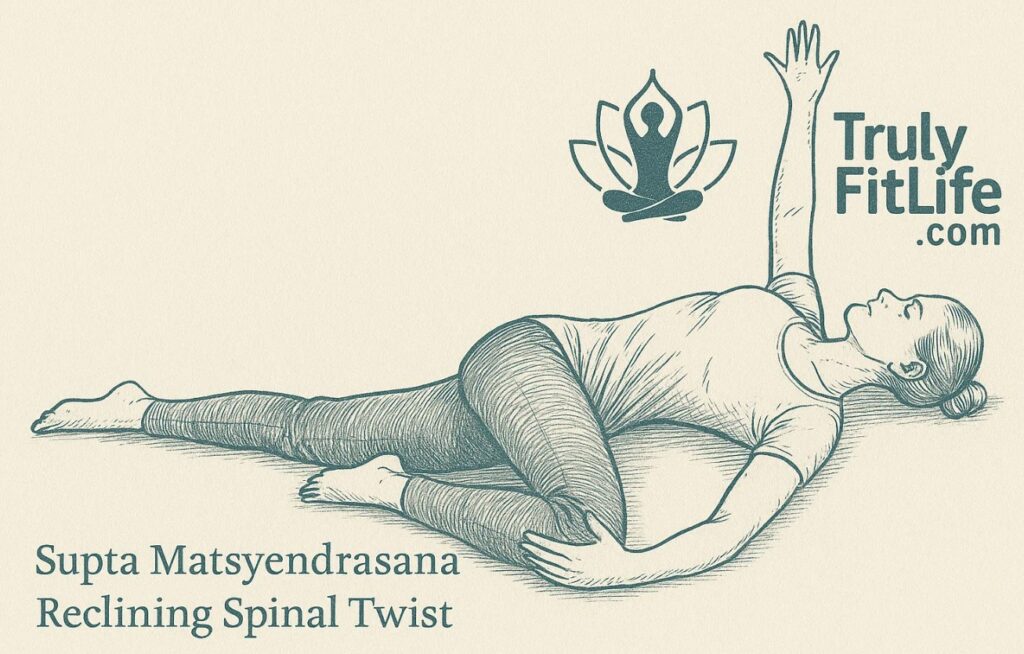
Here’s how to perform Supta Matsyendrasana – Reclining Spinal Twist:
- Begin by lying flat on your back in Supta Tadasana (Reclined Mountain Pose).
- Inhale and bring your right knee toward your chest.
- Exhale and guide the right knee across the body toward the left side, keeping the left hand on the knee.
- Extend your right arm out to the side at shoulder height, palm facing upward.
- Keep your gaze gently toward the right hand, encouraging a spinal twist.
- Relax your shoulders and allow the twist to deepen naturally with breath.
- Hold for 30–60 seconds, breathing deeply.
- Inhale to return to center, then switch sides.
👉 Tip: Place a cushion or bolster under the bent knee for added support.
3. Benefits of Supta Matsyendrasana – Reclining Spinal Twist
3.1 Physical Benefits
- Releases tension in the spine and lower back.
- Stretches hips, chest, and shoulders.
- Improves spinal flexibility and alignment.
- Massages abdominal organs, aiding digestion and detoxification.
- Relieves stiffness after sitting for long periods.
3.2 Mental & Emotional Benefits
- Promotes relaxation and stress relief.
- Reduces anxiety and mental fatigue.
- Enhances focus by calming the nervous system.
3.3 Spiritual Benefits
- Activates the Manipura Chakra (Solar Plexus) for digestion and vitality.
- Opens the Anahata Chakra (Heart) through chest expansion.
- Encourages inner balance, release, and surrender.
4. Anatomy and Muscles Engaged in Supta Matsyendrasana
This asana works on:
- Spinal extensors & erector spinae – gentle rotation.
- Obliques & abdominal muscles – twisting and compression.
- Gluteus muscles & hip flexors – stretch and release.
- Chest & shoulders – expansion and relaxation.
5. Contraindications & Safety Precautions
Avoid or modify Supta Matsyendrasana – Reclining Spinal Twist if you have:
- Herniated discs or severe spinal issues.
- Recent abdominal or back surgery.
- Pregnancy (unless modified with props).
Safety Tips:
- Do not force the knee down—use support if needed.
- Keep shoulders grounded for proper alignment.
- Practice slowly and avoid jerky movements.
6. Variations and Modifications of Supta Matsyendrasana – Reclining Spinal Twist
- Supported Variation: Place a bolster under the bent knee.
- Ardha Supta Matsyendrasana: Keep one leg bent and other extended.
- Advanced Variation: Cross one leg over the other and deepen the twist.
7. Preparatory and Counter Poses
Preparatory Poses:
- Apanasana (Knees-to-Chest Pose)
- Supta Baddha Konasana (Reclined Bound Angle Pose)
- Bhujangasana (Cobra Pose)
Counter Poses:
- Savasana (Corpse Pose)
- Setu Bandhasana (Bridge Pose)
- Tadasana (Mountain Pose)
8. Supta Matsyendrasana in Yoga Philosophy and Tradition
In yoga philosophy, twists are symbolic of purification and release. Supta Matsyendrasana helps in “wringing out” stress and toxins, both physically and mentally.
It is often included in Hatha Yoga and Restorative Yoga sequences for its soothing qualities, bridging the gap between active practice and meditation.
9. Common Mistakes to Avoid in Supta Matsyendrasana
- Forcing the knee toward the floor, straining the lower back.
- Lifting shoulders off the mat instead of grounding them.
- Holding breath instead of breathing deeply.
- Over-rotating the neck, causing strain.
10. Final Thoughts
Supta Matsyendrasana – Reclining Spinal Twist is a restorative yet powerful yoga pose that offers physical, mental, and spiritual benefits. It stretches, detoxifies, and relaxes the body while calming the mind.
With consistent practice, it becomes a go-to asana for relieving back pain, improving digestion, and preparing the body for deep relaxation.
🧘 Related Yoga Poses You May Like
- ➤ Parivrtta Anjaneyasana – Revolved Lunge
- ➤ Parivrtta Trikonasana – Revolved Triangle Pose Complete Guide
- ➤ Parivrtta Utkatasana – Revolved Chair Pose Powerful Guide
- ➤ Ananda Balasana – Happy Baby Pose: Steps, Benefits, and Relaxation Guide
- ➤ Vajrasana – Thunderbolt Pose
- ➤ Padmasana (Lotus Pose) – Steps, Benefits, and Tips for Beginners