
Table of Contents
- Introduction to Virabhadrasana III – Warrior Pose III
- How to Practice Virabhadrasana III – Step-by-Step Guide
- Benefits of Virabhadrasana III – Warrior Pose III
- Physical Benefits
- Mental & Emotional Benefits
- Spiritual Benefits
- Anatomy and Muscles Engaged in Virabhadrasana III
- Contraindications & Safety Precautions
- Variations and Modifications of Virabhadrasana III – Warrior Pose III
- Preparatory and Counter Poses
- Virabhadrasana III in Yoga Philosophy and Tradition
- Common Mistakes to Avoid in Virabhadrasana III
- Final Thoughts
1. Introduction to Virabhadrasana III – Warrior Pose III
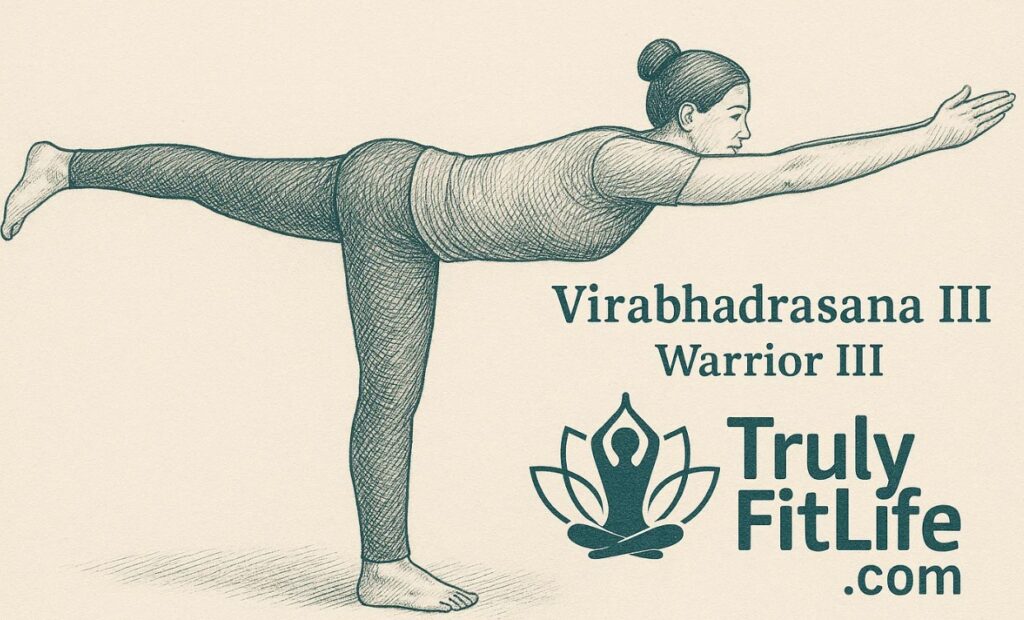
Virabhadrasana III – Warrior Pose III is a dynamic standing balance posture that symbolizes strength, focus, and determination. The Sanskrit name combines Virabhadra (a fierce warrior in Hindu mythology) and Asana (pose).
This pose requires balance, concentration, and muscular engagement. It strengthens the legs, tones the core, and develops steadiness of body and mind, making it a favorite in Vinyasa and Power Yoga sequences.
2. How to Practice Virabhadrasana III – Step-by-Step Guide
To perform Virabhadrasana III – Warrior Pose III correctly:
- Begin in Virabhadrasana I (Warrior I Pose) with your right foot forward.
- Inhale, lengthen the spine, and square the hips forward.
- Exhale and lean the torso forward, shifting weight onto the front leg.
- Simultaneously lift the back leg until it is parallel to the ground.
- Extend arms forward (or alongside the body for balance).
- Keep hips squared and spine in one straight line.
- Hold for 20–40 seconds, breathing deeply.
- To release, exhale and slowly lower the back leg into Warrior I.
- Repeat on the opposite side.
👉 Tip: Engage the core and gaze forward to maintain balance.
3. Benefits of Virabhadrasana III – Warrior Pose III
3.1 Physical Benefits
- Strengthens legs, ankles, and core.
- Improves posture and spinal alignment.
- Enhances balance and stability.
- Tones abdominal muscles and glutes.
- Increases stamina and endurance.
3.2 Mental & Emotional Benefits
- Sharpens focus and concentration.
- Builds inner confidence and willpower.
- Reduces restlessness by demanding full awareness.
3.3 Spiritual Benefits
- Activates the Manipura (Solar Plexus Chakra) for strength and confidence.
- Encourages dharana (concentration) in yoga philosophy.
- Symbolizes warrior-like determination and courage.
4. Anatomy and Muscles Engaged in Virabhadrasana III
This pose works on multiple muscle groups:
- Quadriceps & hamstrings – stability of standing leg.
- Gluteus muscles – support and alignment.
- Abdominals & obliques – core strength.
- Shoulders & arms – extension and stability.
- Spinal erectors – maintaining balance and length.
5. Contraindications & Safety Precautions
Avoid or modify Virabhadrasana III – Warrior Pose III if you have:
- Severe balance issues or vertigo.
- Recent hip, ankle, or knee injuries.
- Chronic lower back pain without support.
Safety Tips:
- Practice near a wall for extra support.
- Do not lock the standing knee—keep it slightly soft.
- Engage the core to avoid collapsing the lower back.
6. Variations and Modifications of Virabhadrasana III – Warrior Pose III
- Supported Variation: Place hands on a wall or chair for balance.
- Arms-to-Sides Variation: Extend arms out to the sides like airplane wings.
- Advanced Variation: Bring palms together overhead for a greater challenge.
7. Preparatory and Counter Poses
Preparatory Poses:
- Virabhadrasana I (Warrior I Pose)
- Ardha Uttanasana (Half Forward Bend)
- Utkatasana (Chair Pose)
Counter Poses:
- Tadasana (Mountain Pose)
- Balasana (Child’s Pose)
- Uttanasana (Standing Forward Bend)
8. Virabhadrasana III in Yoga Philosophy and Tradition
In yogic tradition, the Warrior poses embody inner strength and resilience. Virabhadrasana III teaches steadiness of mind, balance of body, and alignment of energy.
The extended posture symbolizes moving forward with focus and determination, embodying the qualities of a spiritual warrior.
9. Common Mistakes to Avoid in Virabhadrasana III
- Tilting hips sideways instead of squaring them.
- Locking or hyperextending the standing knee.
- Dropping chest instead of maintaining a long spine.
- Forgetting to breathe, causing tension.
10. Final Thoughts
Virabhadrasana III – Warrior Pose III is a challenging yet rewarding yoga posture. It strengthens the body, sharpens the mind, and cultivates discipline.
By practicing regularly, yogis can develop balance, focus, and inner resilience, qualities essential on and off the mat.
🧘 Related Yoga Poses You May Like
- ➤ Vrksasana – Tree Pose Complete Guide
- ➤ Ardha Chandrasana – Half Moon Pose for Balance and Energy
- ➤ Utthita Hasta Padangusthasana – Extended Hand-to-Big-Toe Pose
- ➤ Natarajasana – Graceful Dancer Pose for Balance and Strength
- ➤ Virabhadrasana II – Warrior Pose II for Strength and Stability
- ➤ Anjaneyasana – Low Lunge Pose for Strength and Flexibility


