Table of Contents
- What are Air Squats?
- Step-by-Step Guide to Perform Air Squats
- Benefits of Air Squats
- Muscles Worked in Air Squats
- Common Mistakes to Avoid
- Safety Tips and Modifications
- When to Include Air Squats in Your Workout Routine
- Final Thoughts
What are Air Squats?
Air Squats are one of the most effective and accessible bodyweight exercises for building strength, endurance, and flexibility in your lower body. Unlike weighted squats, Air Squats rely solely on your bodyweight, making them ideal for beginners, athletes, or anyone looking to improve functional movement.
The Air Squats exercise targets your quadriceps, hamstrings, glutes, and core while improving balance and coordination. Because it doesn’t require equipment, it’s perfect for home workouts, warm-ups, or high-intensity training sessions.
Step-by-Step Guide to Perform Air Squats
Follow these steps to perform Air Squats with perfect form and avoid injuries:
- Starting Position:
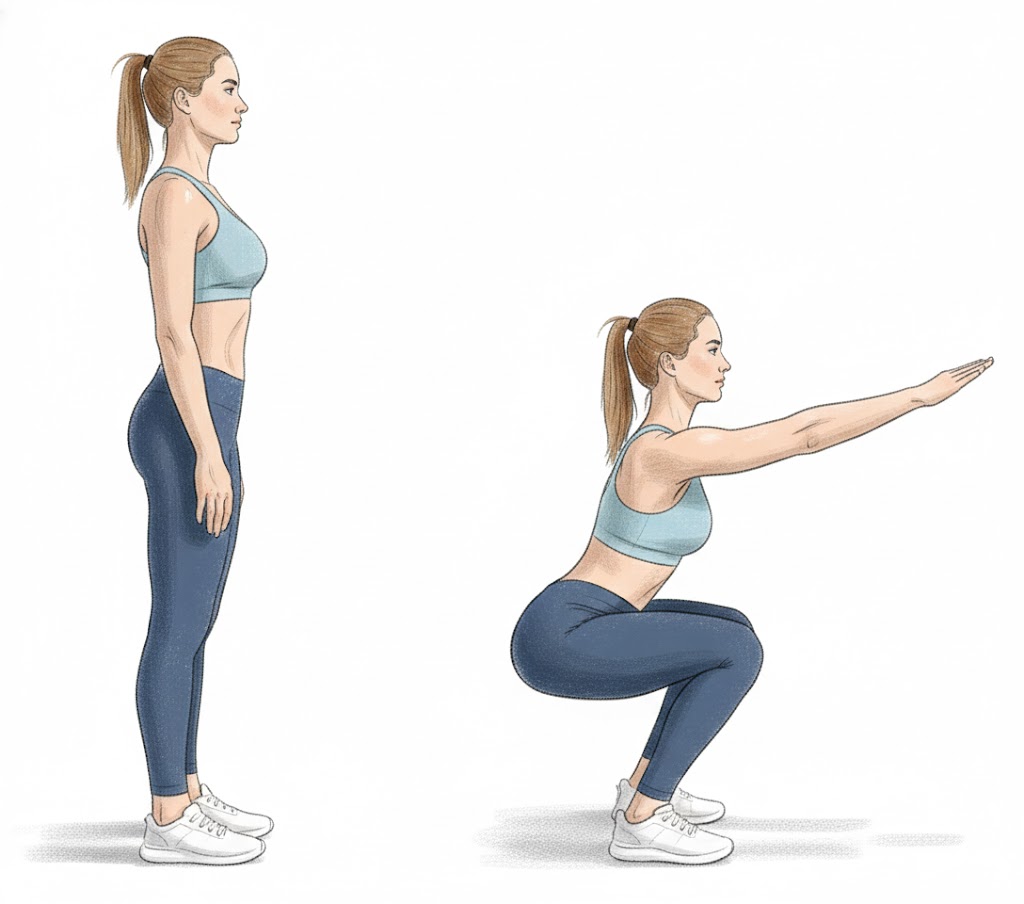
Stand with your feet shoulder-width apart. Keep your toes slightly turned out and your arms relaxed by your sides. - Engage Your Core:
Tighten your abdominal muscles and maintain a straight spine. - Lower Your Body:
Push your hips back and bend your knees as if you’re sitting down on an invisible chair. Keep your chest lifted and your heels flat on the floor. - Arms for Balance:
Extend your arms straight forward at shoulder height for better balance. - Reach Parallel:
Lower yourself until your thighs are parallel to the ground or as far as your flexibility allows. - Return to Start:
Press through your heels and straighten your legs to return to the starting position. - Repetitions:
Perform 15–20 reps for 2–3 sets, maintaining good form throughout.
Benefits of Air Squats
Practicing Air Squats regularly brings several physical and performance benefits:
- Builds Lower Body Strength: Engages quadriceps, hamstrings, and glutes effectively.
- Enhances Mobility: Improves joint flexibility in hips, knees, and ankles.
- Boosts Core Stability: Strengthens abdominal and lower back muscles for balance.
- Increases Endurance: Ideal for HIIT and circuit workouts to boost stamina.
- Promotes Functional Movement: Helps improve posture, walking, and daily movement efficiency.
- No Equipment Needed: Great for home workouts and warm-ups.
Muscles Worked in Air Squats
The Air Squats exercise primarily works these muscle groups:
- Primary Muscles: Quadriceps, hamstrings, gluteus maximus.
- Secondary Muscles: Core stabilizers, calves, and lower back.
This combination makes Air Squats one of the best compound exercises for total lower body conditioning.
Common Mistakes to Avoid in Air Squats
Avoid these common errors to get maximum benefits from Air Squats and reduce injury risk:
- Knees Collapsing Inward: Keep knees aligned with toes throughout the squat.
- Heels Lifting Off the Ground: Press weight evenly through the heels.
- Rounding the Back: Keep your chest upright and shoulders back.
- Going Too Fast: Perform controlled movements to engage muscles fully.
- Partial Range of Motion: Lower until thighs are parallel or slightly below.
Safety Tips and Modifications
- Warm up your hips and knees before doing Air Squats.
- Maintain a neutral spine throughout the exercise.
- Beginners can use a chair behind them for support.
- Advanced athletes can add tempo squats or jump squats for intensity.
- Perform on a flat, non-slip surface for better stability.
When to Include Air Squats in Your Workout Routine
You can include Air Squats in various parts of your fitness routine:
- As a warm-up exercise before strength or cardio sessions.
- In HIIT circuits for fat loss and endurance.
- As part of bodyweight training for strength maintenance.
- During active recovery days to promote blood flow and flexibility.
Aim to perform Air Squats 3–5 times per week for improved lower body strength and function.
Final Thoughts
The Air Squats exercise is one of the simplest yet most powerful movements for building a strong foundation. It enhances strength, balance, mobility, and endurance — all without equipment.
Whether you’re a beginner or an experienced athlete, adding Air Squats to your routine will improve your lower body performance, posture, and overall fitness level. Focus on perfect form, consistency, and breathing for the best results.
🧘 Related Yoga Poses You May Like
- ➤ Bodyweight Squats – Build Lower Body Strength and Improve Mobility
- ➤ Sumo Wide Stance Squats – Powerful Lower Body Exercise
- ➤ Lunges – Powerful Lower Body Strength Exercise
- ➤ Bodyweight Walking Lunges – Strengthen Legs and Improve Balance Anywhere
- ➤ Chair Squats – Effective Beginner-Friendly Strength Exercise
- ➤ Body Weight Side Steps – Strengthen Legs and Improve Lower Body Agility