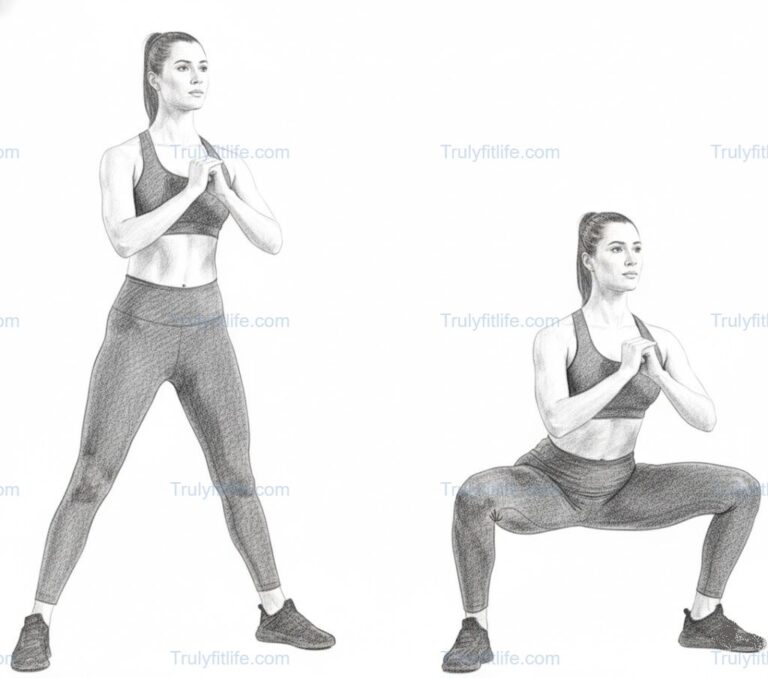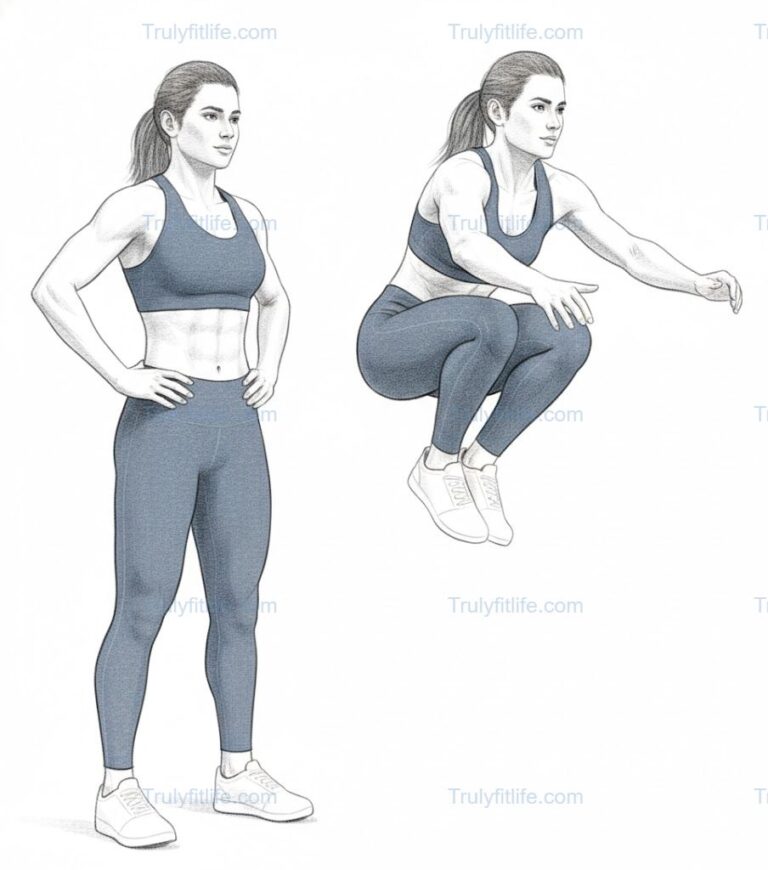

Chair Squats are one of the most effective and safest beginner-friendly exercises for building lower body strength at home. This simple move uses a chair to guide your squat depth, support balance, and improve confidence while learning correct squat form. Chair Squats engage your quadriceps, hamstrings, glutes, and core muscles, making them perfect for beginners, seniors, and anyone recovering from weakness or stiffness. This full guide explains how to perform Chair Squats correctly, their benefits, common mistakes, and modifications suitable for every fitness level.
Table of Contents
- What Are Chair Squats?
- How to Do Chair Squats – Step-by-Step
- Chair Squats Benefits
- Muscles Worked in Chair Squats
- Common Mistakes
- Beginner Modifications
- Advanced Variations
- Contraindications & Safety Tips
- Conclusion
What Are Chair Squats?
Chair Squats are a beginner-level variation of the traditional squat where a chair is used to guide your movement. You lower your hips toward the chair and stand back up without fully sitting. This reduces pressure on the knees, helps maintain proper posture, and teaches correct squatting mechanics. Because it uses stable support, Chair Squats are ideal for improving balance and building confidence for people learning how to squat.
Chair Squats can be done anywhere—living room, office, or outdoor spaces—making them an excellent home workout exercise for strengthening the lower body safely.
How to Do Chair Squats – Step-by-Step
- Stand in front of a chair with your feet shoulder-width apart.
- Keep your chest up and core engaged.
- Cross your arms in front of your chest or extend them forward.
- Push your hips back as if you’re about to sit on the chair.
- Bend your knees and lower your body slowly.
- Gently tap the chair with your glutes—do not fully sit.
- Push through your heels to stand back up.
- Repeat 10–15 reps with controlled movements.
Chair Squats Benefits
1. Builds Lower Body Strength
Chair Squats strengthen the quadriceps, hamstrings, glutes, and calves.
2. Improves Balance and Stability
Using a chair helps maintain form and reduces the risk of falling.
3. Enhances Mobility
Regular practice improves hip mobility and strengthens stabilizing muscles.
4. Beginner-Friendly Exercise
The chair provides structure and confidence, making this ideal for beginners or seniors.
5. Supports Daily Activities
Chair Squats mimic natural movements like standing up from a seat, making everyday tasks easier.
6. Safe for Home Workouts
Requires no equipment other than a chair and can be performed in small spaces.
7. Great for Warm-Up or Strength Training
It activates major lower-body muscles before intense exercise or can serve as a primary strength move.
Muscles Worked in Chair Squats
- Quadriceps
- Hamstrings
- Gluteus maximus
- Calves
- Core stabilizers
Common Mistakes
- Knees caving inward
- Leaning too far forward
- Sitting fully on the chair
- Rounding the spine
- Lifting heels off the floor
- Rushing the movement
Beginner Modifications
- Use a higher chair for more support.
- Hold onto the chair’s backrest for balance.
- Reduce the squat depth until strength improves.
- Perform slow, controlled movements.
Advanced Variations
1. Single-Leg Chair Squats
Lift one leg slightly while squatting down and up.
2. Chair Squat Hold
Pause for 3–5 seconds just above the chair.
3. Weighted Chair Squats
Hold dumbbells or water bottles to increase resistance.
Contraindications & Safety Tips
Avoid or modify Chair Squats if you have:
- Severe knee pain
- Recent hip or leg injury
- Poor balance without support
- Sharp pain during bending
Always warm up lightly and keep your movements slow and controlled.
Conclusion
Chair Squats are a highly effective and accessible exercise for building lower body strength, improving mobility, and enhancing balance. Perfect for beginners, older adults, and home workout routines, this exercise helps develop foundational strength while minimizing injury risk. Practicing Chair Squats regularly increases confidence, supports daily activities, and strengthens key muscle groups essential for movement and stability.
🧘 Related Yoga Poses You May Like
- ➤ Bodyweight Squats – Build Lower Body Strength and Improve Mobility
- ➤ Sumo Wide Stance Squats – Powerful Lower Body Exercise
- ➤ Air Squats – Boost Lower Body Strength and Mobility Naturally
- ➤ Bodyweight Walking Lunges – Strengthen Legs and Improve Balance Anywhere
- ➤ Lunges – Powerful Lower Body Strength Exercise
- ➤ Knee Squats (If Exists Skip Else Ignore)