📑 Table of Contents
- Introduction to Adho Mukha Svanasana – Downward Facing Dog
- How to Practice Step by Step
- Alignment and Drishti Points
- Benefits of Adho Mukha Svanasana
- Common Mistakes and How to Correct Them
- Modifications and Variations
- Contraindications and Safety Guidelines
- Muscles Worked in Downward Facing Dog
- Chakras and Energy Effects
- Preparatory and Follow-Up Poses
- Final Thoughts
1. Introduction to Adho Mukha Svanasana – Downward Facing Dog
Adho Mukha Svanasana – Downward Facing Dog is one of the most recognized yoga poses worldwide. In Sanskrit:
- Adho = Downward
- Mukha = Face
- Svana = Dog
- Asana = Pose
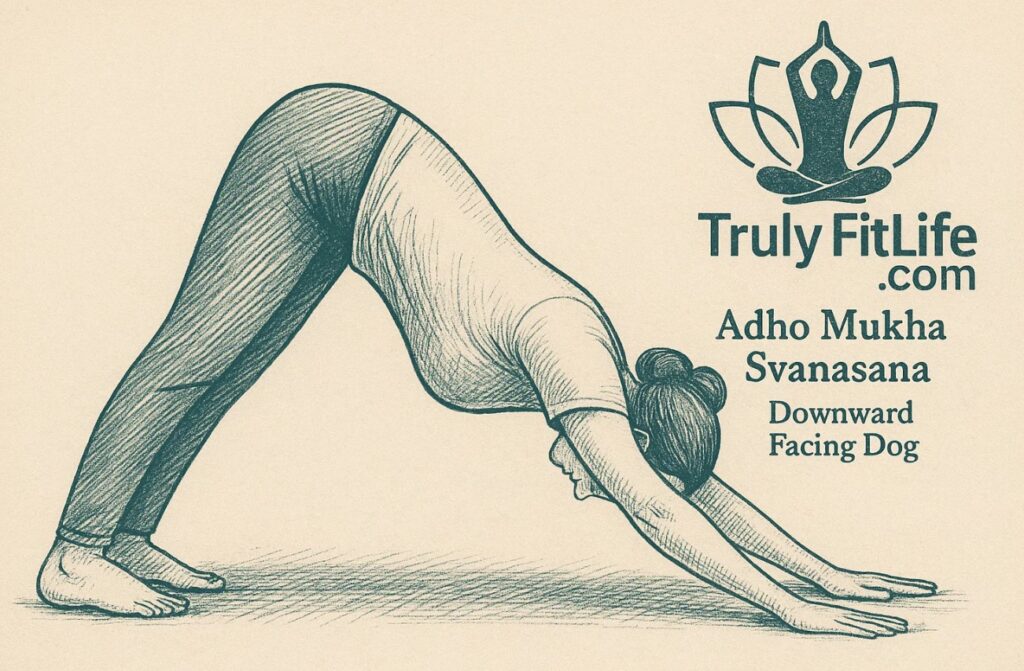
This posture mimics the natural stretching motion of a dog when it lowers its head and raises its hips. It is a restorative, strengthening, and transitional pose widely used in Vinyasa and Ashtanga Yoga sequences. Despite being a foundational pose, its effects are profound on the body and mind.
2. How to Practice Step by Step
- Start on Hands and Knees: Come to a tabletop position with wrists under shoulders and knees under hips.
- Spread Fingers: Press palms firmly into the mat, index fingers pointing forward.
- Tuck Toes & Lift Hips: On exhalation, lift knees off the floor and extend hips toward the ceiling.
- Straighten Legs: Try to lengthen legs without locking knees.
- Form an Inverted V Shape: Keep heels pressing toward the mat and spine lengthened.
- Head & Neck: Relax neck, gaze softly toward feet (Drishti at navel or between legs).
- Hold Pose: Stay for 5–10 breaths before releasing to Child’s Pose or transitioning.
3. Alignment and Drishti Points
- Wrists and Hands: Spread fingers wide, press evenly through palms.
- Shoulders: Rotate outward, keep away from ears.
- Spine: Long and extended, chest moving toward thighs.
- Hips: Lifted high, creating an inverted V.
- Legs: Active and strong, heels pressing down.
- Drishti (gaze): Toward the navel or between the legs.
4. Benefits of Adho Mukha Svanasana – Downward Facing Dog
- Stretches hamstrings, calves, and spine.
- Strengthens arms, shoulders, and wrists.
- Improves blood circulation to the brain (mild inversion).
- Relieves stress, fatigue, and mild depression.
- Energizes the body, combats stiffness.
- Helps improve posture and alignment.
5. Common Mistakes and How to Correct Them
- ❌ Rounding the back → Fix: Bend knees slightly to lengthen spine.
- ❌ Collapsed shoulders → Fix: Externally rotate arms, push mat away.
- ❌ Weight too much on hands → Fix: Shift weight back toward legs.
- ❌ Heels forced down → Fix: Keep heels slightly lifted if flexibility is limited.
6. Modifications and Variations
- Bent Knees Down Dog: Keep knees bent to focus on spine elongation.
- Wall Support: Practice with hands pressing into wall for beginners.
- Three-Legged Dog: Raise one leg at a time to increase core and hip strength.
7. Contraindications and Safety Guidelines
- Avoid with wrist, shoulder, or back injuries.
- High blood pressure or vertigo patients should practice with caution.
- Pregnant practitioners should use modifications.
8. Muscles Worked in Downward Facing Dog
- Primary: Hamstrings, calves, shoulders.
- Secondary: Triceps, quadriceps, spinal extensors, core muscles.
9. Chakras and Energy Effects
- Stimulates the Muladhara (Root Chakra) for grounding.
- Activates the Sahasrara (Crown Chakra) through mild inversion, enhancing clarity and calmness.
- Balances energy flow along the spine.
10. Preparatory and Follow-Up Poses
- Preparatory: Cat-Cow Pose, Plank Pose, Forward Fold.
- Follow-Up: Cobra Pose, Child’s Pose, Standing Forward Bend.
11. Final Thoughts
Adho Mukha Svanasana – Downward Facing Dog is not just a transitional pose; it is a restful, strengthening, and meditative asana that supports the flow of energy and breath throughout yoga practice. Beginners and advanced yogis alike can benefit from its grounding and rejuvenating effects.
🧘 Related Yoga Poses You May Like
- ➤ Eka Pada Adho Mukha Svanasana – One Legged Downward Facing Dog Complete Guide for Balance & Flexibility
- ➤ Chaturanga Dandasana – Four Limbed Staff Pose (Complete Guide)
- ➤ Anjaneyasana – Low Lunge Pose for Strength and Flexibility
- ➤ Uttanasana (Standing Forward Bend) – Steps, Benefits & Complete Guide
- ➤ Plank Arm Raises – Powerful Core Stability Exercise
- ➤ Virabhadrasana I – Warrior Pose I for Strength and Focus