
Table of Contents
- What is the Alternating Side Lunge Touch Exercise?
- Step-by-Step Guide to Perform Alternating Side Lunge Touch
- Benefits of Alternating Side Lunge Touch
- Muscles Worked
- Common Mistakes to Avoid
- Safety Tips and Modifications
- When to Include Alternating Side Lunge Touch in Your Routine
- Final Thoughts
What is the Alternating Side Lunge Touch Exercise?
Alternating Side Lunge Touch is a dynamic lower-body exercise that strengthens the legs, glutes, and core while improving coordination and balance. This functional movement combines the benefits of a side lunge with a controlled reach or “touch” motion, engaging stabilizing muscles throughout the body.
Unlike traditional lunges that move forward or backward, the Alternating Side Lunge Touch moves laterally — helping improve hip mobility, flexibility, and joint strength. It’s a great exercise for athletes, fitness enthusiasts, or anyone looking to tone the lower body and improve movement efficiency.
Step-by-Step Guide to Perform Alternating Side Lunge Touch
Follow these steps to perform Alternating Side Lunge Touch with proper form and technique:
- Starting Position:
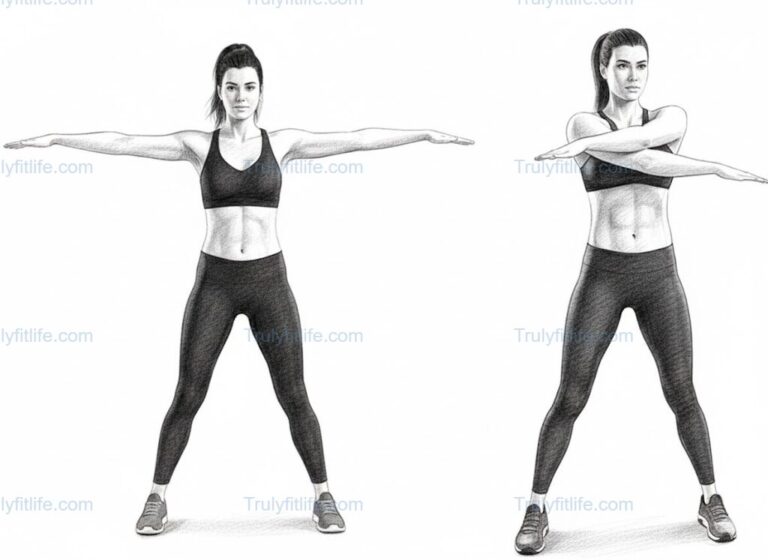
Stand tall with your feet slightly wider than hip-width apart and arms extended out to your sides at shoulder height. - Engage Core:
Tighten your abdominal muscles to stabilize your spine. - Step to the Right:
Take a big step to the right side, bending your right knee while keeping your left leg straight. Push your hips back and keep your chest upright. - Touch Your Foot:
As you lunge, reach your left hand down to touch your right foot or the floor near it. Keep your back straight and your gaze forward. - Return to Center:
Push off your right foot to return to the starting position. - Repeat on the Other Side:
Step to the left and touch your left foot with your right hand. Continue alternating sides in a controlled rhythm. - Repetitions:
Perform 12–16 repetitions (6–8 per side) for 2–3 sets.
Benefits of Alternating Side Lunge Touch
The Alternating Side Lunge Touch offers a full range of strength, stability, and mobility benefits, including:
- Builds Leg Strength: Targets quads, glutes, and hamstrings.
- Improves Hip Flexibility: Enhances range of motion and mobility in hip joints.
- Enhances Balance and Coordination: Engages stabilizing muscles in the core and legs.
- Tones Inner and Outer Thighs: Works the adductors and abductors effectively.
- Boosts Athletic Performance: Mimics lateral movements used in sports like tennis, football, and basketball.
- Increases Functional Strength: Improves daily movements like bending and reaching.
Muscles Worked in Alternating Side Lunge Touch
The Alternating Side Lunge Touch is a compound movement that engages multiple muscle groups simultaneously:
- Primary Muscles: Quadriceps, gluteus maximus, hamstrings.
- Secondary Muscles: Adductors, abductors, calves, and core muscles.
This makes it ideal for developing both strength and flexibility in the lower body while keeping your joints active and healthy.
Common Mistakes to Avoid in Alternating Side Lunge Touch
To get the best results and prevent injuries, avoid these common mistakes when performing Alternating Side Lunge Touch:
- Bending Too Far Forward: Maintain a straight back and neutral spine.
- Letting the Knee Go Past the Toes: Keep your knee aligned directly above your ankle.
- Rushing the Movement: Perform each rep slowly for better control and stability.
- Uneven Weight Distribution: Keep your weight centered through the heel of the working leg.
- Shallow Lunges: Aim for a deep lunge to engage more muscles.
Safety Tips and Modifications
- Warm up your hips, knees, and ankles before starting.
- Maintain a soft bend in the knees throughout the movement.
- Beginners can perform the move without touching the floor — just reach toward the knee.
- Advanced exercisers can hold light dumbbells for added resistance.
- Perform on a flat surface to ensure proper balance and footing.
When to Include Alternating Side Lunge Touch in Your Routine
The Alternating Side Lunge Touch can be used in several types of workouts:
- As a warm-up movement to activate the lower body.
- In HIIT or circuit training for dynamic strength building.
- As part of leg day routines to target the inner thighs and hips.
- During cool-down sessions for mobility and flexibility work.
Perform this exercise 2–3 times a week to develop balance, strength, and coordination effectively.
Final Thoughts
The Alternating Side Lunge Touch is a simple yet highly effective exercise that enhances lower-body power, flexibility, and balance. By combining strength and coordination, it tones the thighs and glutes while improving hip mobility and athletic agility.
Include this versatile move in your fitness routine for better functional movement, leaner legs, and stronger joints — no equipment needed!
🧘 Related Yoga Poses You May Like
- ➤ Alternating Side Lunge Exercise – Sculpt Strong Legs and Improve Hip Mobility
- ➤ Lateral Lunge to Floor Touch – Powerful Lower Body Strength Exercise
- ➤ Bodyweight Walking Lunges – Strengthen Legs and Improve Balance Anywhere
- ➤ Bodyweight Squats – Build Lower Body Strength and Improve Mobility
- ➤ Sumo Wide Stance Squats – Powerful Lower Body Exercise
- ➤ Air Squats – Boost Lower Body Strength and Mobility Naturally