
Table of Contents
- Introduction to Anantasana – Side-Reclining Leg Lift
- How to Practice Anantasana – Step-by-Step Guide
- Benefits of Anantasana – Side-Reclining Leg Lift
- Physical Benefits
- Mental & Emotional Benefits
- Spiritual Benefits
- Anatomy and Muscles Engaged in Anantasana
- Contraindications & Safety Precautions
- Variations and Modifications of Anantasana – Side-Reclining Leg Lift
- Preparatory and Counter Poses
- Anantasana in Yoga Philosophy and Tradition
- Common Mistakes to Avoid in Anantasana – Side-Reclining Leg Lift
- Final Thoughts
1. Introduction to Anantasana – Side-Reclining Leg Lift
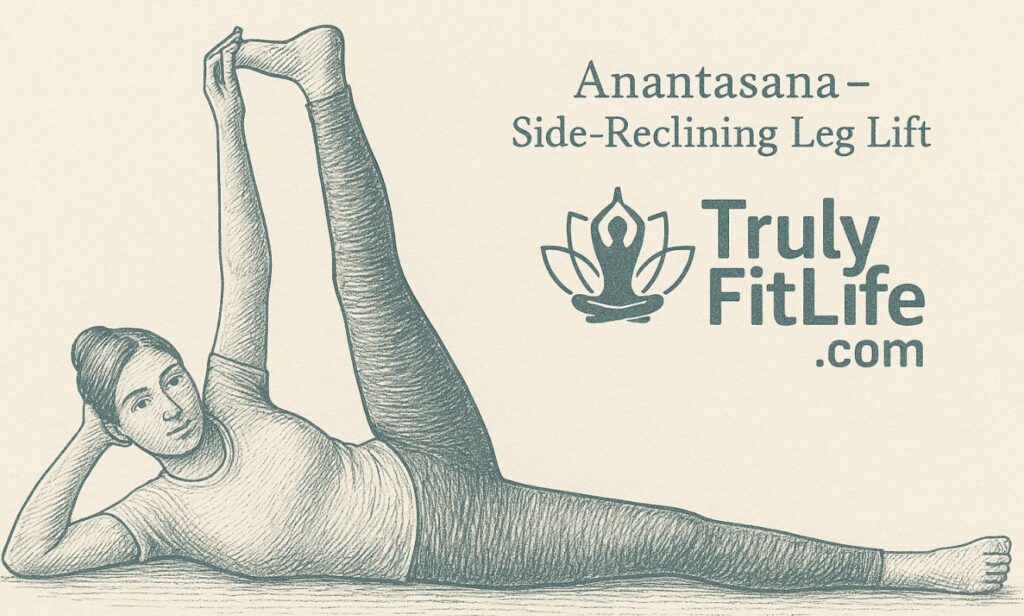
Anantasana – Side-Reclining Leg Lift is a unique yoga pose named after the Hindu god Ananta, symbolizing infinity. In this posture, the yogi reclines on one side while balancing and lifting a leg upward, creating a graceful yet challenging shape.
The pose combines balance, strength, and flexibility while encouraging focus and stability. Because of its reclining position, Anantasana is also considered a restful yet strengthening posture, suitable for both beginners (with modifications) and intermediate practitioners.
2. How to Practice Anantasana – Step-by-Step Guide
To perform Anantasana – Side-Reclining Leg Lift safely:
- Lie down on your right side with legs extended.
- Place your right arm on the floor, extend it, and rest your head on your right palm.
- Keep your body in one straight line, hips stacked.
- Bend your left knee, grasp the big toe with your left hand using yogic toe lock (Padangusthasana grip).
- Inhale and extend the left leg upward toward the ceiling, keeping it straight.
- Balance your body on the right side, engaging the core.
- Keep the gaze steady forward or upward.
- Hold the pose for 20–40 seconds, breathing evenly.
- Release gently and repeat on the other side.
👉 Tip: Beginners may use a yoga strap around the raised foot.
3. Benefits of Anantasana – Side-Reclining Leg Lift
3.1 Physical Benefits
- Strengthens abdominal muscles and improves core stability.
- Enhances balance and coordination.
- Stretches hamstrings, calves, and hips.
- Improves spinal alignment and posture.
- Boosts circulation in the legs and hips.
3.2 Mental & Emotional Benefits
- Builds concentration and focus.
- Encourages patience and discipline.
- Reduces restlessness by promoting steady breathing.
3.3 Spiritual Benefits
- Symbolizes infinity (Ananta) – representing inner expansion and awareness.
- Activates the Manipura Chakra (Solar Plexus) for willpower and strength.
- Balances body and mind through stability.
4. Anatomy and Muscles Engaged in Anantasana
This pose primarily engages:
- Core muscles (obliques, abdominals) – for balance.
- Hamstrings & calves – stretch during leg lift.
- Hip flexors & adductors – opening and strengthening.
- Spinal stabilizers – maintaining side alignment.
- Shoulders & arms – stability while holding the toe.
5. Contraindications & Safety Precautions
Avoid or modify Anantasana – Side-Reclining Leg Lift if you have:
- Severe lower back or spinal injuries.
- Hamstring tears or hip stiffness.
- Shoulder injuries (difficulty supporting the head).
Safety Tips:
- Keep core engaged to prevent collapsing.
- Use a strap if hamstrings are tight.
- Practice on a firm, flat surface to maintain balance.
6. Variations and Modifications of Anantasana – Side-Reclining Leg Lift
- Beginner Variation: Use a strap around the lifted foot instead of grabbing the toe.
- Half Anantasana: Keep the top leg bent and hold the shin.
- Advanced Variation: Balance without using the bottom hand for added challenge.
7. Preparatory and Counter Poses
Preparatory Poses:
- Supta Padangusthasana (Reclined Big Toe Pose)
- Trikonasana (Triangle Pose)
- Vasisthasana (Side Plank)
Counter Poses:
- Apanasana (Knees-to-Chest Pose)
- Savasana (Corpse Pose)
- Balasana (Child’s Pose)
8. Anantasana in Yoga Philosophy and Tradition
In yoga philosophy, Anantasana is symbolic of the divine serpent Ananta, who represents infinity and timelessness. Practicing this pose reminds yogis of the infinite nature of the self and the importance of balance in life.
The posture also embodies the qualities of steadiness and patience, essential for spiritual growth.
9. Common Mistakes to Avoid in Anantasana – Side-Reclining Leg Lift
- Collapsing the body forward instead of keeping hips stacked.
- Overstretching hamstrings without warming up.
- Holding breath while balancing.
- Placing weight on the neck instead of balancing through the core.
10. Final Thoughts
Anantasana – Side-Reclining Leg Lift is a graceful yoga pose that unites balance, strength, and flexibility. It not only strengthens the core but also stretches the legs and opens the hips, making it both restorative and energizing.
By practicing regularly, yogis can improve focus, stability, and patience—qualities that extend beyond the mat into everyday life.
🧘 Related Yoga Poses You May Like
- ➤ Supta Baddha Konasana – Reclined Bound Angle Pose: Steps, Benefits, and Relaxation Guide
- ➤ Ananda Balasana – Happy Baby Pose: Steps, Benefits, and Relaxation Guide
- ➤ Viparita Karani – Legs Up the Wall Pose Complete Guide
- ➤ Supta Matsyendrasana – Reclining Spinal Twist: Steps, Benefits, and Relaxation Guide
- ➤ Leg Raises Exercise – Build a Strong Core and Sculpt Your Lower Abs Fast
- ➤ V-Sits – Powerful Core Strength Exercise


