📌 Table of Contents
- Introduction
- Step-by-Step Guide
- Alignment & Tips
- Benefits of Ardha Uttanasana
- Contraindications & Precautions
- Modifications & Variations
- Muscles Engaged
- Chakra Activation
- Drishti (Gaze Point)
- Preparatory & Counter Poses
- Conclusion
1. Introduction
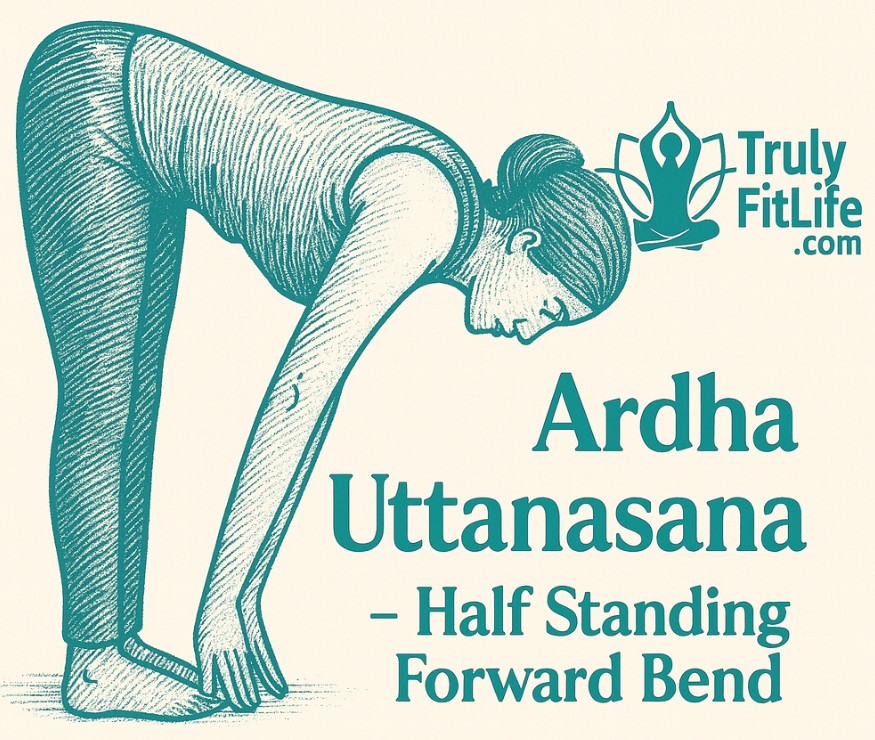
Ardha Uttanasana (Half Standing Forward Bend) is a foundational yoga pose that combines strength, balance, and flexibility. The Sanskrit word Ardha means “half,” Uttana means “intense stretch,” and asana means “pose.” This posture lengthens the spine, stretches the hamstrings, and improves overall posture.
It is commonly practiced in Surya Namaskar (Sun Salutation) sequences and serves as a preparatory pose for deeper forward bends like Uttanasana (Full Forward Bend). Beginners appreciate it for improving alignment, while advanced practitioners use it to refine balance and breath awareness.
👉 Yoga Journal’s guide explains how Ardha Uttanasana helps correct slouching and improves spinal health.
2. Step-by-Step Guide to Ardha Uttanasana
- Start in Tadasana (Mountain Pose): Stand tall with feet hip-width apart, arms at your sides.
- Inhale and lift arms overhead: Reach upward, lengthening your torso.
- Exhale and fold forward: Hinge at the hips, keeping your spine long, to enter Uttanasana.
- Inhale, lift halfway up: Place fingertips on shins, thighs, or floor, and extend the spine parallel to the ground.
- Engage core muscles: Draw your belly inward to protect the lower back.
- Align gaze (drishti): Look forward or slightly down without straining the neck.
- Hold: Stay for 20–40 seconds, breathing deeply.
- Release: Exhale and fold back into Uttanasana or continue into Chaturanga in vinyasa flow.
3. Alignment & Tips
- Keep the spine flat, avoid rounding.
- Distribute weight evenly between heels and toes.
- Slightly bend knees if hamstrings feel tight.
- Use yoga blocks under hands for support.
- Lift kneecaps by engaging quadriceps.
4. Benefits of Ardha Uttanasana
Physical Benefits
- Stretches hamstrings, calves, and hips.
- Strengthens the back and core.
- Improves posture and spinal alignment.
- Stimulates abdominal organs, aiding digestion.
- Enhances blood flow to the brain for energy and clarity.
Mental & Emotional Benefits
- Builds concentration and awareness.
- Reduces fatigue and mild stress.
- Promotes a calm, centered state of mind.
- Supports mindfulness and breath control.
5. Contraindications & Precautions
- Avoid with recent back injuries or disc problems.
- Practice carefully if you have sciatica; bend knees if necessary.
- Pregnant practitioners should widen stance for comfort.
- Beginners should avoid forcing the hamstrings.
6. Modifications & Variations
- Beginner option: Place hands on shins or thighs instead of the floor.
- Prop variation: Use yoga blocks under hands to maintain spine alignment.
- Advanced variation: Palms flat on the mat with legs straight.
- Dynamic variation: Flow in and out with breath during Sun Salutation.
7. Muscles Engaged
- Hamstrings
- Quadriceps
- Glutes
- Spinal extensors
- Abdominals
- Calves
8. Chakra Activation
- Root Chakra (Muladhara): Provides grounding through legs.
- Solar Plexus Chakra (Manipura): Engaged core builds strength and willpower.
9. Drishti (Gaze Point)
- Padayoragra Drishti (towards the toes) or forward gaze.
10. Preparatory & Counter Poses
Preparatory Poses:
- Tadasana (Mountain Pose)
- Uttanasana (Standing Forward Bend)
- Adho Mukha Svanasana (Downward-Facing Dog)
Counter Poses:
- Uttanasana (Full Forward Bend)
- Bhujangasana (Cobra Pose)
- Balasana (Child’s Pose)
11. Conclusion
Ardha Uttanasana (Half Standing Forward Bend) is more than a transitional pose — it is a posture of awareness and alignment. Regular practice strengthens the legs, lengthens the spine, and cultivates mindfulness. Whether you are a beginner learning proper alignment or an advanced yogi deepening awareness, Ardha Uttanasana offers both physical renewal and mental calmness.
