Table of Contents
- What are Arm Swings?
- Step-by-Step Guide to Perform Arm Swings
- Benefits of Arm Swings
- Muscles Worked in Arm Swings
- Common Mistakes to Avoid
- Safety Tips and Modifications
- When to Include Arm Swings in Your Routine
- Final Thoughts
What are Arm Swings?
Arm Swings are a simple yet effective dynamic stretching exercise designed to warm up the upper body, especially the shoulders, chest, and arms. They involve swinging your arms forward and backward or across your chest in a controlled motion.
This movement helps improve joint mobility, flexibility, and blood flow to the muscles before strength training, cardio, or sports activities. The Arm Swings exercise is an essential part of a warm-up routine, preventing stiffness and reducing the risk of injury during intense workouts.
Whether you’re preparing for a push-up session, weightlifting, or yoga, Arm Swings are a great way to activate your upper body and enhance range of motion.
Step-by-Step Guide to Perform Arm Swings
Here’s how to perform Arm Swings correctly:
- Starting Position:
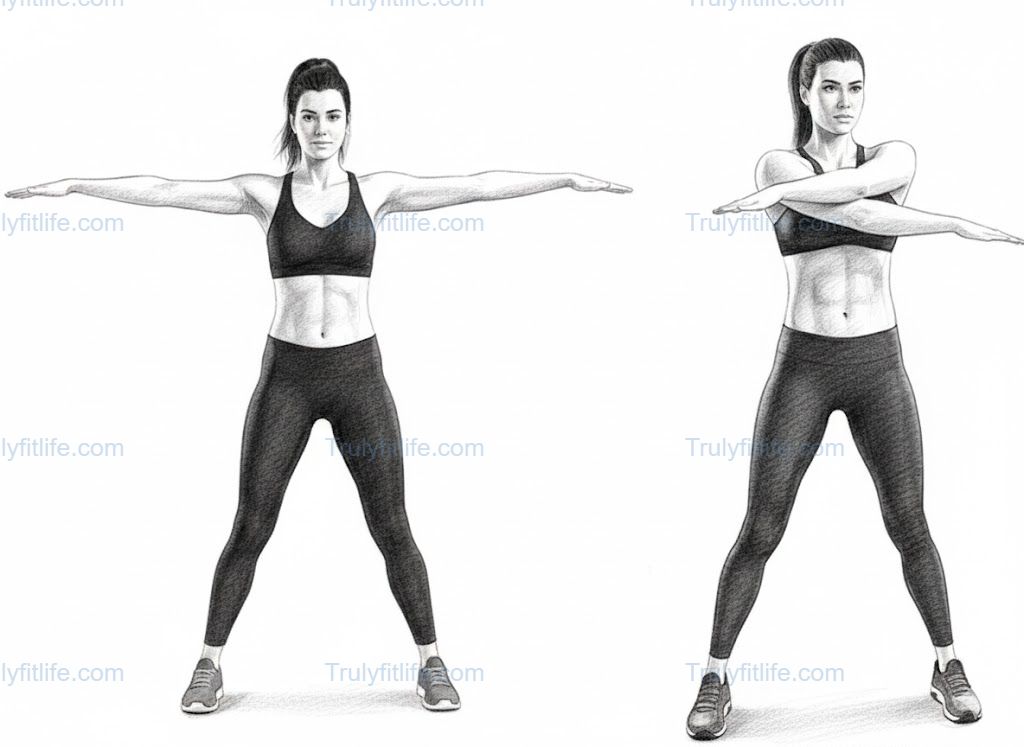
Stand tall with your feet shoulder-width apart. Keep your knees slightly bent and your core engaged. - Arm Position:
Extend both arms straight out to your sides at shoulder height. - Begin Swinging:
Swing your arms forward until they cross in front of your chest. - Open Wide:
Swing them back out to the sides as far as comfortable, feeling a stretch across your chest and shoulders. - Controlled Motion:
Continue swinging smoothly, maintaining a steady rhythm. Avoid jerky or fast movements. - Breathing:
Inhale as you open your arms and exhale as you cross them in front. - Repetitions:
Perform for 20–30 seconds or 15–20 swings as part of your warm-up routine.
Pro Tip: Alternate which arm crosses on top each time to ensure even flexibility and balance.
Benefits of Arm Swings
Adding Arm Swings to your warm-up or mobility routine provides multiple benefits:
- Improves Shoulder Flexibility: Loosens stiff shoulder joints and enhances range of motion.
- Boosts Blood Circulation: Prepares muscles for more intense exercises.
- Activates Chest and Upper Back: Warms up key upper-body muscles for pressing or pulling movements.
- Prevents Injuries: Reduces risk of shoulder strains and upper-back tension.
- Enhances Posture: Strengthens and mobilizes the muscles responsible for shoulder alignment.
- Quick and Equipment-Free: Simple to perform anywhere, anytime.
Muscles Worked in Arm Swings
The Arm Swings exercise activates and stretches multiple muscles in the upper body:
- Primary Muscles: Deltoids (shoulders), pectorals (chest), and trapezius (upper back).
- Secondary Muscles: Biceps, triceps, rhomboids, and rotator cuff muscles.
This dynamic motion improves flexibility and prepares your arms and shoulders for pushing, pulling, or overhead activities.
Common Mistakes to Avoid in Arm Swings
Avoid these common errors to ensure you get the most from your Arm Swings:
- Overstretching: Don’t force your arms beyond your comfort range.
- Locking Elbows: Keep a slight bend in your elbows to reduce joint strain.
- Fast, Jerky Movements: Maintain smooth and controlled swings for better results.
- Poor Posture: Stand tall with shoulders back and abs engaged.
- Holding Breath: Remember to breathe rhythmically throughout the movement.
Safety Tips and Modifications
- Start slow and gradually increase your swing range as your muscles warm up.
- If you have shoulder pain or stiffness, perform smaller swings until you feel comfortable.
- Combine Arm Swings with other dynamic stretches like arm circles or torso twists.
- Avoid doing this exercise if you have acute shoulder injuries or inflammation.
When to Include Arm Swings in Your Routine
Arm Swings are best performed before any upper-body or full-body workout. You can include them:
- As part of your warm-up routine for 1–2 minutes.
- Between strength sets to relieve tension and improve shoulder mobility.
- During morning mobility routines to loosen up after sleep.
- Before activities like swimming, weightlifting, or yoga for better flexibility.
Regular practice enhances performance and reduces stiffness, especially if you sit for long hours.
Final Thoughts
The Arm Swings exercise is one of the simplest and most effective ways to prepare your body for upper-body training. It promotes better mobility, posture, and flexibility while preventing shoulder injuries.
Whether you’re warming up for a workout or just starting your day, spending a minute on Arm Swings can make a noticeable difference in comfort and performance.
Consistency and control are key — swing gently, stay relaxed, and breathe steadily for best results.
🧘 Related Yoga Poses You May Like
- ➤ Double Arm Front Raises – Effective Shoulder Strength Exercise
- ➤ Double Arm Side Raises – Powerful Shoulder Strength Exercise
- ➤ Push-Ups – Powerful Upper Body Strength Exercise
- ➤ Plank Arm Raises – Powerful Core Stability Exercise
- ➤ Chair Neck Rolls (Chair Yoga)
- ➤ Elbow Plank – Powerful Core Stability Exercise