🧘 What is Baddha Hasta Tadasana?
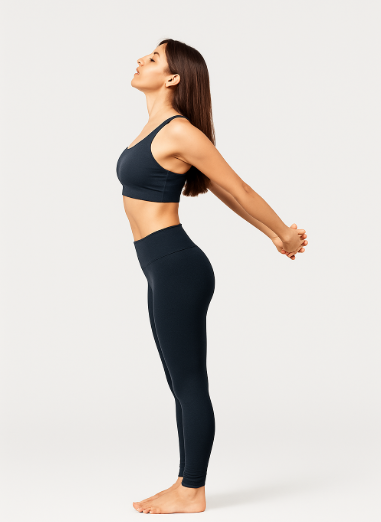
Baddha Hasta Tadasana, or Hands Bound Mountain Pose, is a foundational standing yoga posture that combines the alignment of Tadasana with a gentle chest and shoulder opener. “Baddha” means bound, and “Hasta” means hands — this variation invites deeper breath, an open heart, and enhanced posture. It’s especially beneficial for desk-bound individuals and those seeking to release tension in the upper body.
🔍 Step-by-Step Instructions for Practicing Baddha Hasta Tadasana
- Foundation (Feet & Legs)
Stand with your feet together (or hip-width for better balance). Spread your toes and root down through all four corners of your feet. - Legs & Pelvis
Engage your quadriceps, lifting your kneecaps. Avoid locking your knees. Slightly draw your tailbone downward to maintain a neutral pelvis. - Torso & Spine
Elongate your spine from the base to the crown. Draw your lower ribs gently inward to support spinal alignment. - Arms & Shoulders
Reach both arms behind your back and clasp the hands in reverse prayer (palms touching, fingers pointing upward). If this is too intense, clasp opposite elbows or hold a strap. - Head & Drishti (Gaze Point)
Keep the chin parallel to the ground and gaze toward your third eye (Bhrumadhye). Breathe deeply through your nose. - Hold
Stay in Baddha Hasta Tadasana for 5–10 breaths or 30–60 seconds. Focus on the stretch across your chest and the strength in your legs.
💪 Health Benefits of Baddha Hasta Tadasana
🔹 Musculoskeletal Benefits
- Improves postural alignment and upright spinal support.
- Stretches the chest, shoulders, and anterior deltoids.
- Strengthens core, thighs, and back muscles.
🔹 Respiratory & Circulatory Benefits
- Opens the thoracic cavity, enhancing lung capacity and deeper breathing.
- Promotes venous return and heart health by lifting the chest.
🔹 Energetic & Emotional Benefits
- Stimulates the Anahata (Heart) Chakra, promoting emotional openness and balance.
- Reduces stress and calms the nervous system.
- Encourages grounding, presence, and stillness.
⚠️ Contraindications & Safety Tips
- Avoid deep shoulder binding if you have recent injuries in the shoulders, wrists, or elbows.
- Maintain a gentle micro-bend in the knees to protect joints.
- If binding behind your back is uncomfortable, use a yoga strap or clasp opposite elbows.
- Move slowly into and out of the pose to prevent overstretching.
✨ When to Practice Baddha Hasta Tadasana
- Warm-Up or Cool-Down: Ideal before or after chest-opening poses.
- In Daily Life: Excellent posture reset during long hours of desk work.
- Between Poses: Helps recalibrate alignment and deepen breath.

