Table of Contents
- What are Body Weight Side Steps?
- Step-by-Step Guide to Perform Body Weight Side Steps
- Benefits of Body Weight Side Steps
- Muscles Worked in Body Weight Side Steps
- Common Mistakes to Avoid
- Safety Tips and Modifications
- When to Include Body Weight Side Steps in Your Routine
- Final Thoughts
What are Body Weight Side Steps?
The Body Weight Side Steps exercise is a dynamic lower-body movement that improves leg strength, balance, and coordination without requiring any equipment. It involves stepping side to side while maintaining a semi-squat position, effectively targeting the thighs, glutes, and hips.
This functional movement mimics natural lateral motion, making it excellent for athletes, fitness enthusiasts, and anyone looking to improve lower-body stability. The Body Weight Side Steps can be performed as part of a warm-up, cardio session, or strength circuit to enhance endurance and agility.
Step-by-Step Guide to Perform Body Weight Side Steps
Follow these steps carefully to perform Body Weight Side Steps with proper technique:
- Starting Position:
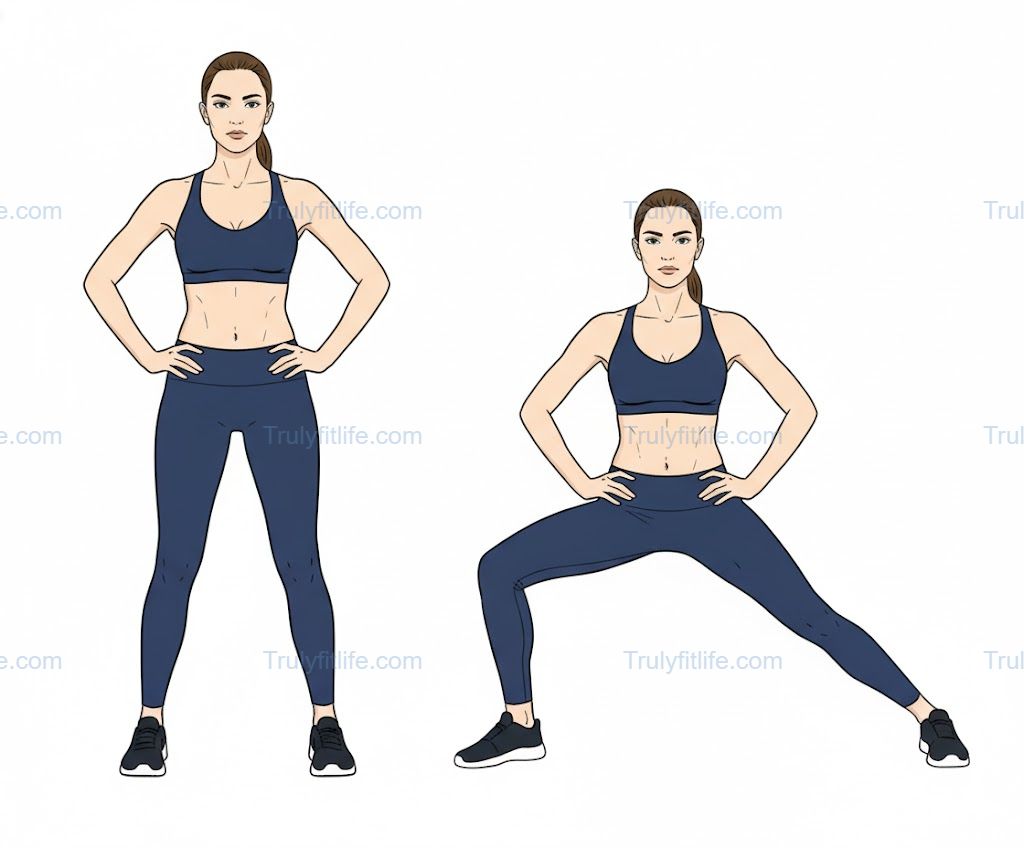
Stand with your feet shoulder-width apart, toes pointing forward. Keep your hands on your hips or in front of your chest for balance. - Engage Core:
Tighten your core muscles and slightly bend your knees into a half-squat position. - Step to the Right:
Take a wide step to your right, keeping your hips low and knees bent. Ensure your chest stays lifted and your back straight. - Bring Feet Together:
Bring your left foot toward your right foot, returning to the starting stance. - Repeat to the Left:
Now take a step to your left and bring your right foot toward your left foot. - Repetitions:
Continue stepping side to side for 30–60 seconds or perform 15–20 reps per side for 2–3 sets.
Pro Tip: Keep your movements controlled — avoid standing up fully between steps to maintain muscle engagement.
Benefits of Body Weight Side Steps
Performing Body Weight Side Steps regularly provides multiple benefits:
- Strengthens Lower Body: Builds strength in your quads, glutes, and hamstrings.
- Improves Hip Mobility: Enhances range of motion and flexibility in the hip joints.
- Increases Core Stability: Engages abdominal and lower back muscles for balance.
- Boosts Agility and Coordination: Mimics athletic side-to-side motion for improved movement control.
- Tones Thighs and Glutes: Targets inner and outer thigh muscles for a sculpted look.
- Enhances Joint Health: Strengthens stabilizing muscles around knees and hips.
Muscles Worked in Body Weight Side Steps
The Body Weight Side Steps is a compound movement that activates several key muscles:
- Primary Muscles: Quadriceps, hamstrings, and gluteus maximus.
- Secondary Muscles: Adductors (inner thighs), abductors (outer thighs), and hip flexors.
This exercise effectively develops strength, endurance, and balance across your lower body.
Common Mistakes to Avoid in Body Weight Side Steps
Avoid these common mistakes when performing the Body Weight Side Steps to ensure maximum effectiveness and safety:
- Standing Too Tall: Stay in a half-squat to keep your glutes and thighs engaged.
- Knees Caving Inward: Keep knees aligned with toes to prevent strain.
- Not Engaging Core: Maintain a tight core for stability.
- Overstepping: Avoid taking steps too wide, which can compromise form.
- Moving Too Fast: Focus on smooth, controlled motion instead of speed.
Safety Tips and Modifications
- Always perform a light warm-up before starting Body Weight Side Steps.
- Maintain a neutral spine throughout the exercise.
- Beginners can take smaller steps and gradually increase range.
- For added resistance, use a resistance band around your thighs.
- Keep breathing steady — inhale during the step, exhale as you bring feet together.
When to Include Body Weight Side Steps in Your Routine
You can include Body Weight Side Steps in various workout sessions:
- As part of a warm-up to activate lower body muscles.
- During strength training for leg endurance.
- In HIIT circuits for agility and cardio conditioning.
- As part of a cool-down routine for improved flexibility.
Perform 3–4 times per week for stronger legs, better coordination, and improved movement control.
Final Thoughts
The Body Weight Side Steps is a versatile exercise that strengthens your legs, tones your glutes, and enhances coordination — all without any equipment. It’s perfect for all fitness levels and can easily fit into any workout plan.
By practicing Body Weight Side Steps consistently, you’ll build endurance, prevent muscle imbalances, and boost your overall lower-body agility. Stay low, move controlled, and feel the burn for maximum results!
🧘 Related Yoga Poses You May Like
- ➤ Lateral Lunge to Floor Touch – Powerful Lower Body Strength Exercise
- ➤ Bodyweight Squats – Build Lower Body Strength and Improve Mobility
- ➤ Bodyweight Walking Lunges – Strengthen Legs and Improve Balance Anywhere
- ➤ Sumo Wide Stance Squats – Powerful Lower Body Exercise
- ➤ Air Squats – Boost Lower Body Strength and Mobility Naturally
- ➤ Lunges – Powerful Lower Body Strength Exercise