Table of Contents
- What are Bodyweight Walking Lunges?
- Step-by-Step Guide to Perform Bodyweight Walking Lunges
- Benefits of Bodyweight Walking Lunges
- Muscles Worked in Bodyweight Walking Lunges
- Common Mistakes to Avoid
- Safety Tips and Modifications
- When to Include Bodyweight Walking Lunges in Your Routine
- Final Thoughts
What are Bodyweight Walking Lunges?
Bodyweight Walking Lunges are a dynamic lower-body exercise that strengthens the legs, hips, and core while enhancing balance and coordination. Unlike stationary lunges, this version involves continuous forward movement, engaging stabilizing muscles and improving functional strength.
The Bodyweight Walking Lunges exercise is perfect for beginners and experienced athletes alike, as it requires no equipment and can be done anywhere. It helps improve posture, stability, and endurance, making it an excellent addition to strength training, cardio, or bodyweight routines.
This exercise also mimics natural movement patterns used in sports and daily activities — making it one of the most functional leg exercises you can perform.
Step-by-Step Guide to Perform Bodyweight Walking Lunges
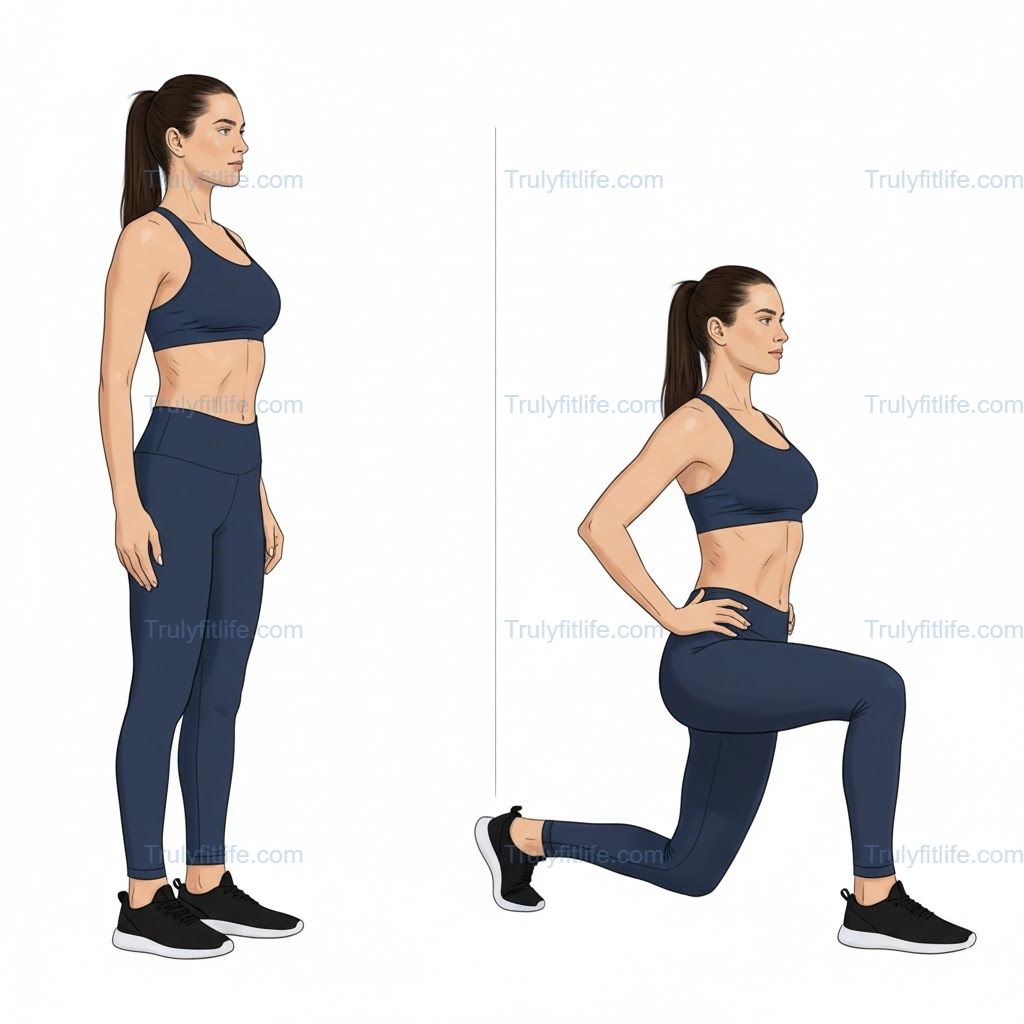
Follow these steps to perform Bodyweight Walking Lunges safely and effectively:
- Starting Position:
Stand tall with your feet hip-width apart and hands on your hips or at your sides. - Step Forward:
Take a big step forward with your right leg, keeping your torso upright and core engaged. - Lower Your Body:
Bend both knees until your front thigh is parallel to the floor and your back knee nearly touches the ground. Keep your front knee aligned over your ankle. - Push Forward:
Drive through your front heel to bring your back leg forward into the next lunge. - Alternate Legs:
Continue stepping forward with alternating legs in a controlled motion. - Repetitions:
Perform 10–12 lunges per leg (20–24 total steps) for 2–3 sets.
Pro Tip: Maintain an upright posture and engage your core throughout to prevent leaning or wobbling.
Benefits of Bodyweight Walking Lunges
Incorporating Bodyweight Walking Lunges into your workout routine offers multiple benefits:
- Builds Leg Strength: Strengthens quadriceps, hamstrings, and glutes.
- Improves Balance and Coordination: Challenges stabilizing muscles for better body control.
- Enhances Flexibility: Stretches hip flexors and improves joint mobility.
- Tones Lower Body: Shapes and firms thighs and glutes.
- Supports Functional Movement: Mimics natural walking patterns to improve daily performance.
- Improves Core Stability: Engages abs and lower back to maintain posture.
- Boosts Endurance: Increases muscular stamina for long-duration workouts.
Muscles Worked in Bodyweight Walking Lunges
The Bodyweight Walking Lunges exercise engages multiple muscle groups, including:
- Primary Muscles: Quadriceps, gluteus maximus, and hamstrings.
- Secondary Muscles: Calves, hip flexors, and core stabilizers.
This combination makes it a compound lower-body movement that builds strength and coordination effectively.
Common Mistakes to Avoid in Bodyweight Walking Lunges
Avoid these common errors for safe and efficient performance of Bodyweight Walking Lunges:
- Knee Going Past Toes: Keep the front knee stacked over the ankle.
- Leaning Forward: Maintain an upright torso to protect your spine.
- Shallow Lunges: Lower your back knee closer to the ground for full range of motion.
- Overstepping: Avoid taking steps too large, which may strain the hips or lower back.
- Losing Balance: Engage your core and focus on controlled, steady movements.
Safety Tips and Modifications
- Warm up before starting to loosen your hips and knees.
- Beginners can perform stationary lunges to master form before walking.
- For added intensity, hold light dumbbells at your sides.
- Avoid sudden movements — move smoothly between each step.
- If you have knee pain, reduce your range of motion or perform on a soft surface.
When to Include Bodyweight Walking Lunges in Your Routine
You can incorporate Bodyweight Walking Lunges in multiple types of workouts:
- Strength Training: Use them to build leg endurance and balance.
- Cardio Circuits: Perform at a faster pace for a calorie-burning effect.
- Warm-Ups: Activate leg muscles before heavy lifts or sports.
- Cool-Downs: Use for gentle stretching and mobility work.
Perform 2–3 times per week for best results, gradually increasing repetitions as your strength improves.
Final Thoughts
The Bodyweight Walking Lunges exercise is one of the most effective movements for lower-body strength, balance, and flexibility. Its versatility makes it ideal for home workouts, gym sessions, or outdoor training.
By performing Bodyweight Walking Lunges regularly, you’ll develop toned legs, stronger glutes, and better coordination — all while enhancing your posture and athletic performance.
Consistency and proper form are key — focus on smooth, controlled movements to get the most out of every step.
🧘 Related Yoga Poses You May Like
- ➤ Lunges – Powerful Lower Body Strength Exercise
- ➤ Bodyweight Squats – Build Lower Body Strength and Improve Mobility
- ➤ Sumo Wide Stance Squats – Powerful Lower Body Exercise
- ➤ Air Squats – Boost Lower Body Strength and Mobility Naturally
- ➤ Lateral Lunge to Floor Touch – Powerful Lower Body Strength Exercise
- ➤ Body Weight Side Steps – Strengthen Legs and Improve Lower Body Agility