Sleep is essential for physical health, mental clarity, and emotional balance. Yet millions of people struggle with insomnia, racing thoughts, and restlessness at night. Breathing Meditation for Sleep offers a simple, natural, and effective solution. By learning to control your breath and calm your mind, you can ease into deep, restorative sleep without the need for medication.
In this comprehensive guide, we will explore what breathing meditation is, why it works, detailed step-by-step techniques, benefits, scientific evidence, tips for success, and common mistakes to avoid.
Table of Contents
- Introduction to Breathing Meditation for Sleep
- Why Breathing Affects Sleep Quality
- The Science Behind Breathing Meditation for Sleep
- Step-by-Step Guide: Breathing Meditation for Sleep
- 4-7-8 Breathing Technique
- Box Breathing (Square Breathing)
- Diaphragmatic Breathing
- Alternate Nostril Breathing (Nadi Shodhana)
- Mindful Breathing Before Bed
- Benefits of Breathing Meditation for Sleep
- Physical Benefits
- Mental and Emotional Benefits
- Long-Term Benefits
- When and How to Practice Breathing Meditation for Sleep
- Common Mistakes and How to Avoid Them
- Scientific Studies Supporting Breathing Meditation
- Breathing Meditation vs. Sleep Aids
- Related Practices for Better Sleep
- Final Tips for Success
- Conclusion
1. Introduction to Breathing Meditation for Sleep
Breathing Meditation for Sleep is a mindfulness-based practice that focuses on regulating your breath to quiet the mind and release physical tension. Unlike traditional sleep aids, it is natural, cost-free, and has no side effects.
This practice is especially effective for:
- People struggling with insomnia
- Those with stress and anxiety at bedtime
- Anyone seeking natural sleep improvement methods
- Professionals and students with irregular sleep schedules
By incorporating these techniques into your nightly routine, you can gradually retrain your body and mind to relax and enter sleep effortlessly.
2. Why Breathing Affects Sleep Quality
Breath is directly linked to the autonomic nervous system. When you breathe shallow and fast, your body activates the sympathetic nervous system (fight or flight mode). But when you slow down and deepen your breath, you trigger the parasympathetic nervous system, which signals the body to rest and digest.
This is why Breathing Meditation for Sleep is powerful—it helps regulate your nervous system, lowers heart rate, and prepares your body for deep rest.
3. The Science Behind Breathing Meditation for Sleep
Scientific studies have shown that conscious breathing techniques improve sleep quality, reduce anxiety, and even lower blood pressure.
- A study in the Journal of Clinical Psychology found that deep breathing practices improved sleep onset and sleep efficiency in adults with insomnia.
- Harvard Medical School has highlighted how 4-7-8 Breathing can work as a natural tranquilizer for the nervous system.
- Mindful breathing activates the vagus nerve, which promotes relaxation and better heart rate variability.
Thus, practicing Breathing Meditation for Sleep is not just a relaxation trick—it is scientifically validated.
4. Step-by-Step Guide: Breathing Meditation for Sleep
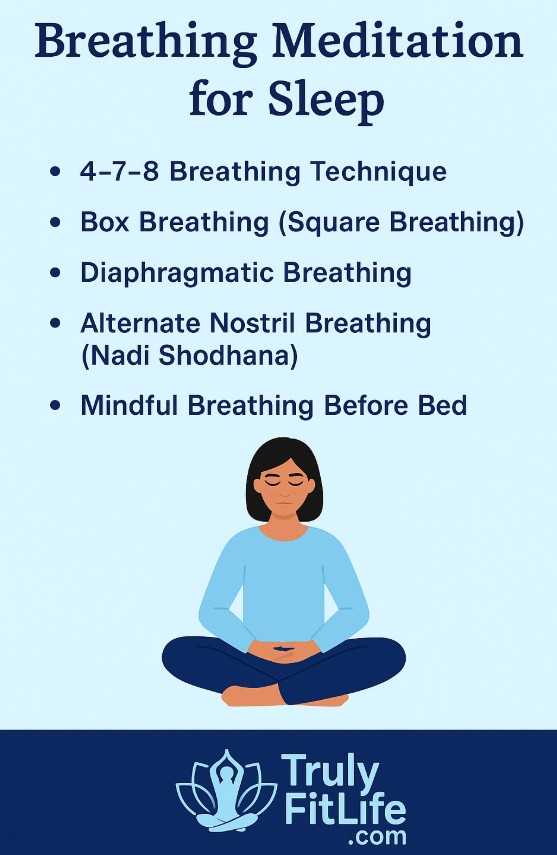
Here are the most effective breathing techniques to try before bed:
🌙 4-7-8 Breathing Technique
- Sit or lie down comfortably.
- Inhale deeply through your nose for 4 seconds.
- Hold your breath for 7 seconds.
- Exhale slowly through your mouth for 8 seconds.
- Repeat this cycle 4–6 times.
This method works as a natural sedative for the nervous system.
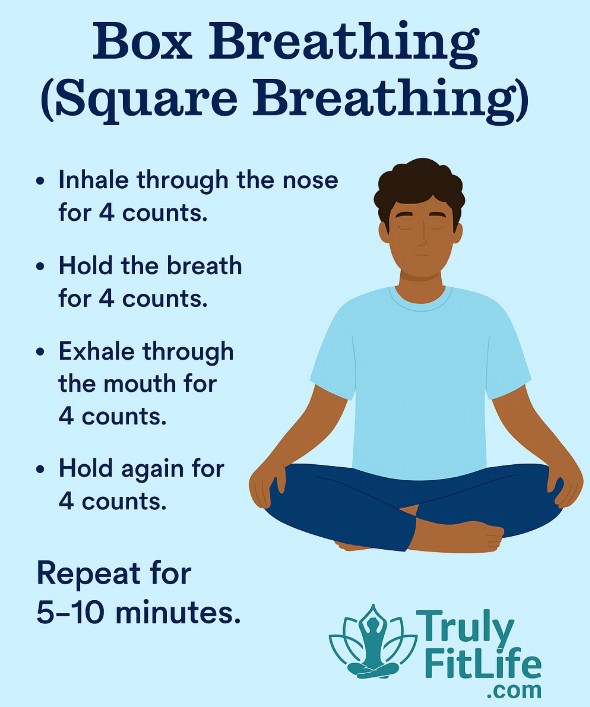
🌙 Box Breathing (Square Breathing)
- Inhale through the nose for 4 counts.
- Hold the breath for 4 counts.
- Exhale through the mouth for 4 counts.
- Hold again for 4 counts.
- Repeat for 5–10 minutes.
Box breathing balances oxygen and carbon dioxide in the body, calming both body and mind.
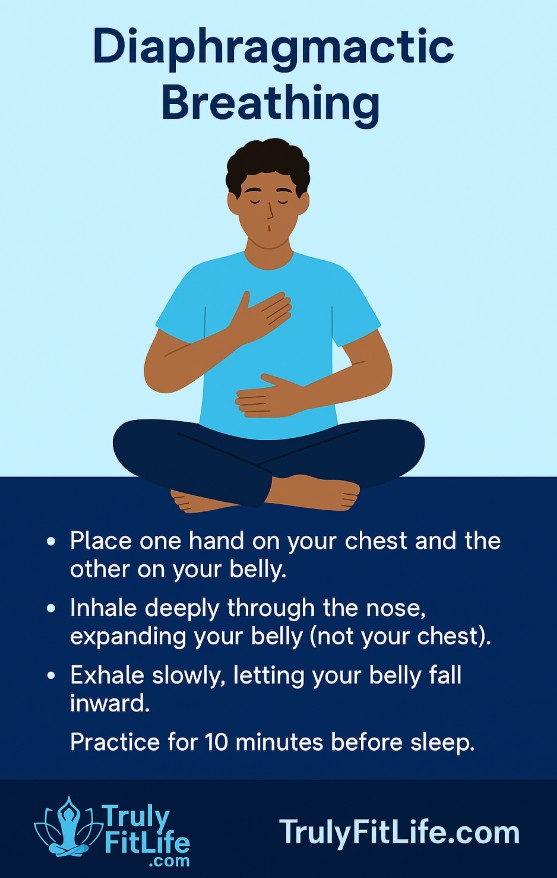
🌙 Diaphragmatic Breathing
- Place one hand on your chest and the other on your belly.
- Inhale deeply through the nose, expanding your belly (not your chest).
- Exhale slowly, letting your belly fall inward.
- Practice for 10 minutes before sleep.
This technique reduces shallow breathing and promotes full oxygen exchange.
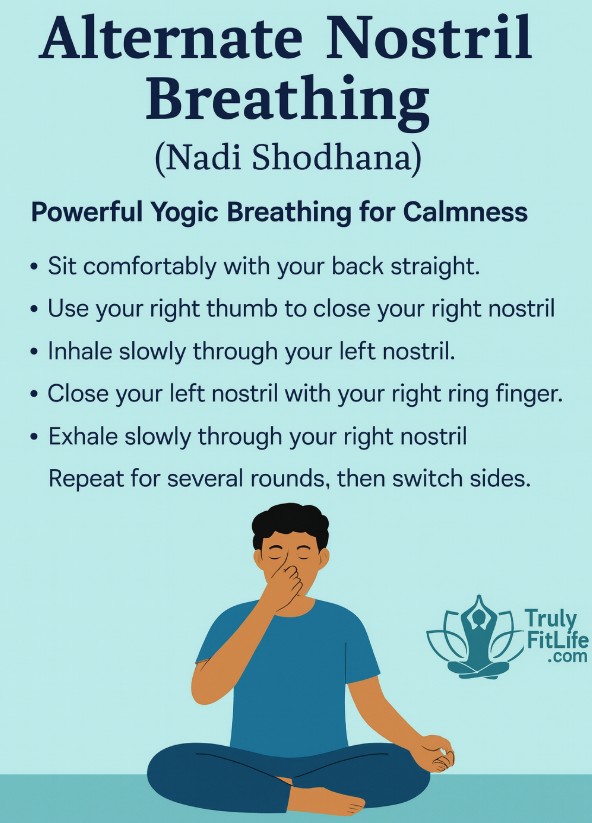
🌙 Alternate Nostril Breathing (Nadi Shodhana)
- Sit in a comfortable position.
- Close your right nostril with your thumb.
- Inhale through your left nostril.
- Switch and close the left nostril, exhale through the right.
- Repeat for 5–7 minutes.
This balances energy and creates mental clarity before sleep.
🌙 Mindful Breathing Before Bed
- Lie down in bed comfortably.
- Bring your awareness to your natural breath.
- Notice the inhale and exhale without changing it.
- When thoughts arise, gently return focus to breathing.
- Continue until sleep naturally comes.
This is the simplest Breathing Meditation for Sleep, perfect for beginners.
5. Benefits of Breathing Meditation for Sleep
Physical Benefits
- Slows heart rate and lowers blood pressure
- Relieves muscle tension
- Improves oxygen flow in the body
Mental and Emotional Benefits
- Reduces stress, anxiety, and overthinking
- Promotes emotional balance
- Helps clear the mind from racing thoughts
Long-Term Benefits
- Establishes a consistent sleep routine
- Improves overall sleep quality and duration
- Supports immune function and mental clarity
6. When and How to Practice Breathing Meditation for Sleep
- Practice 30 minutes before bed or while lying down.
- Keep the room dark and cool.
- Avoid caffeine, heavy meals, and screen time before meditation.
- Combine with relaxing rituals like reading, herbal tea, or light stretching.
7. Common Mistakes and How to Avoid Them
- Forcing the breath → Keep it natural and gentle.
- Practicing irregularly → Make it part of your bedtime routine.
- Expecting instant results → It may take days or weeks to notice improvements.
8. Scientific Studies Supporting Breathing Meditation
- Frontiers in Psychology (2021): Found deep breathing significantly improved sleep quality.
- National Sleep Foundation: Breathing techniques reduce insomnia symptoms.
- Harvard Health Publishing: Promotes Breathing Meditation for Sleep as a drug-free alternative for relaxation.
9. Breathing Meditation vs. Sleep Aids
- Sleep medications may provide quick results but often come with side effects and dependency risks.
- Breathing Meditation for Sleep is natural, safe, cost-free, and works long-term.
10. Related Practices for Better Sleep
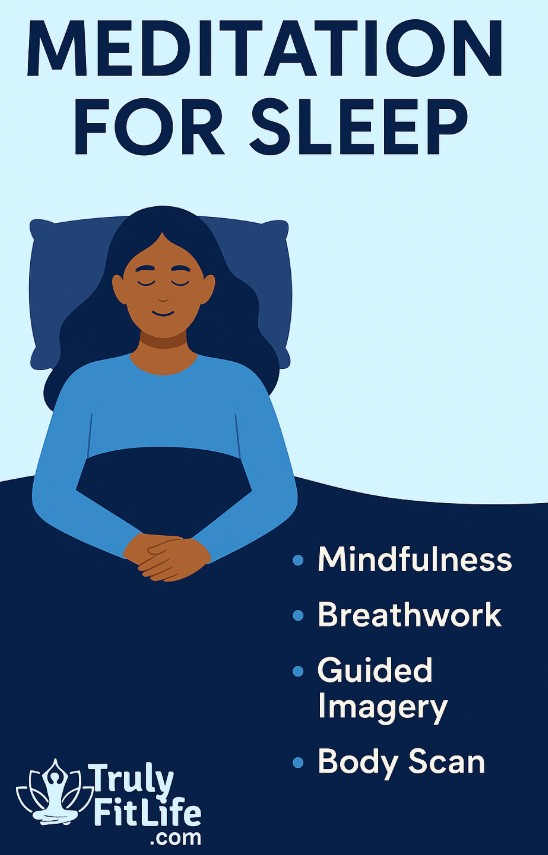
- Guided Meditation for Sleep
- Yoga Nidra (Yogic Sleep)
- Progressive Muscle Relaxation
- Journaling before bed
- Aromatherapy with lavender essential oils
11. Final Tips for Success
- Start with 5 minutes daily, gradually increase duration.
- Stay consistent—regular practice is the key.
- Pair with mindfulness and gratitude journaling for deeper rest.
12. Conclusion
Breathing Meditation for Sleep is one of the most effective, natural, and sustainable ways to overcome insomnia, stress, and poor sleep quality. By practicing simple techniques like 4-7-8 breathing, box breathing, and diaphragmatic breathing, you can calm your nervous system, slow your thoughts, and fall asleep peacefully.
Unlike sleeping pills, this practice empowers you to take control of your mind and body—leading to restful nights and energized mornings.
🧘 Related Yoga Poses You May Like
- ➤ Guided Meditation for Sleep: 10 Techniques That Actually Work
- ➤ Mindful Breathing Before Bed — A Powerful Practice for Deep Sleep
- ➤ 4-7-8 Breathing Technique – Calm Your Mind & Improve Sleep Naturally
- ➤ Diaphragmatic Breathing – Powerful Technique for Relaxation and Better Health
- ➤ Box Breathing (Square Breathing) – Master Calmness and Focus with Breath
- ➤ Meditation for Beginners: Your Complete Step-by-Step Guide