Cross-Body Mountain Climbers: Introduction
Cross-Body Mountain Climbers are one of the most effective full-body cardio and core-strengthening moves you can include in any fitness routine. This exercise combines speed, stability, coordination, and core activation, making it ideal for fat-burning workouts like HIIT, home training sessions, warm-ups, and bodyweight circuits. Because the movement crosses your knee toward the opposite elbow, it intensely targets your obliques, abs, hip flexors, and shoulders.
This guide explains how to perform Cross-Body Mountain Climbers with perfect form, their benefits, mistakes to avoid, variations, and essential safety tips. The exercise requires no equipment and can be performed anywhere—making it great for beginners and advanced athletes alike.
What Are Cross-Body Mountain Climbers?
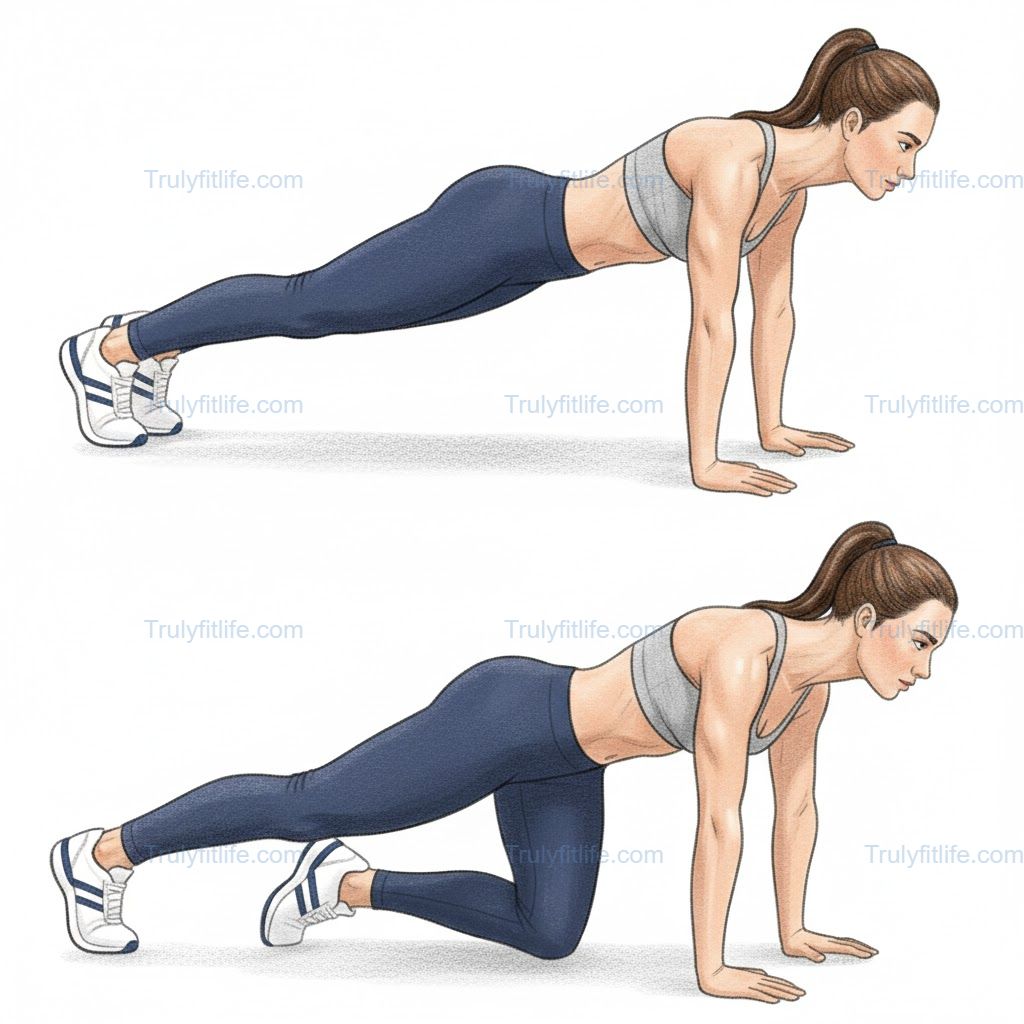
Cross-Body Mountain Climbers are a dynamic plank-based exercise where each knee drives diagonally across the body toward the opposite elbow. This twisting motion increases core engagement far more than standard mountain climbers, making it a superior option for functional core strength, balance, stability, and calorie burn.
How to Do Cross-Body Mountain Climbers (Step-by-Step)
Follow these steps to perform the move safely and effectively:
- Start in a High Plank Position
Place your hands directly under your shoulders and extend your legs behind you. Keep your body straight from head to heels. - Engage Your Core
Pull your belly button inward. Avoid arching or dipping the lower back. - Drive Your Knee Cross-Body
Bring your right knee toward your left elbow while keeping your hips stable. - Return to Plank
Extend your right leg back to the plank position. - Repeat on the Other Side
Bring your left knee toward your right elbow. - Pick Up the Pace
Continue alternating legs at a steady or fast speed without compromising form.
Aim for 30–45 seconds or 15–20 reps per side.
Muscles Worked
Cross-Body Mountain Climbers work multiple muscle groups:
- Core Muscles – Rectus abdominis, transverse abdominis
- Obliques – Highly activated due to twisting motion
- Hip Flexors
- Glutes
- Shoulders & Chest
- Leg Muscles – Quads & hamstrings as stabilizers
This makes the exercise ideal for full-body conditioning.
Benefits of Cross-Body Mountain Climbers
- Improves Core Strength
The cross-body motion activates deep abdominal muscles, making it excellent for strengthening your entire midsection. - Burns Calories & Boosts Cardio Fitness
It elevates your heart rate quickly, supporting fat loss and improved stamina. - Enhances Balance & Coordination
Alternating knee movements challenge stability, improving overall athletic performance. - Strengthens Shoulders & Arms
Maintaining plank position works the upper body consistently. - Increases Hip Mobility
The diagonal knee drive promotes flexibility and mobility in the hips. - Perfect for Home Workouts
No equipment required—just your bodyweight.
Common Mistakes to Avoid
- Dropping your hips (puts pressure on lower back)
- Bouncing your upper body instead of staying stable
- Moving too fast with bad form
- Placing hands too far forward
- Not engaging the core
Focus on controlled, diagonal knee drives for maximum results.
Variations
Try these variations to increase difficulty:
- Slow Cross-Body Mountain Climbers (more core control)
- Weighted Mountain Climbers
- Elevated Mountain Climbers
- Spider Climbers
- Plank Jack + Cross-Body Combo
Safety Tips
- Warm up before starting.
- Keep your wrists aligned under your shoulders.
- Maintain a neutral spine.
- Stop if you feel sharp pain in wrists or lower back.
- Beginners should start slow and build speed gradually.