Dekasana – Airplane Pose
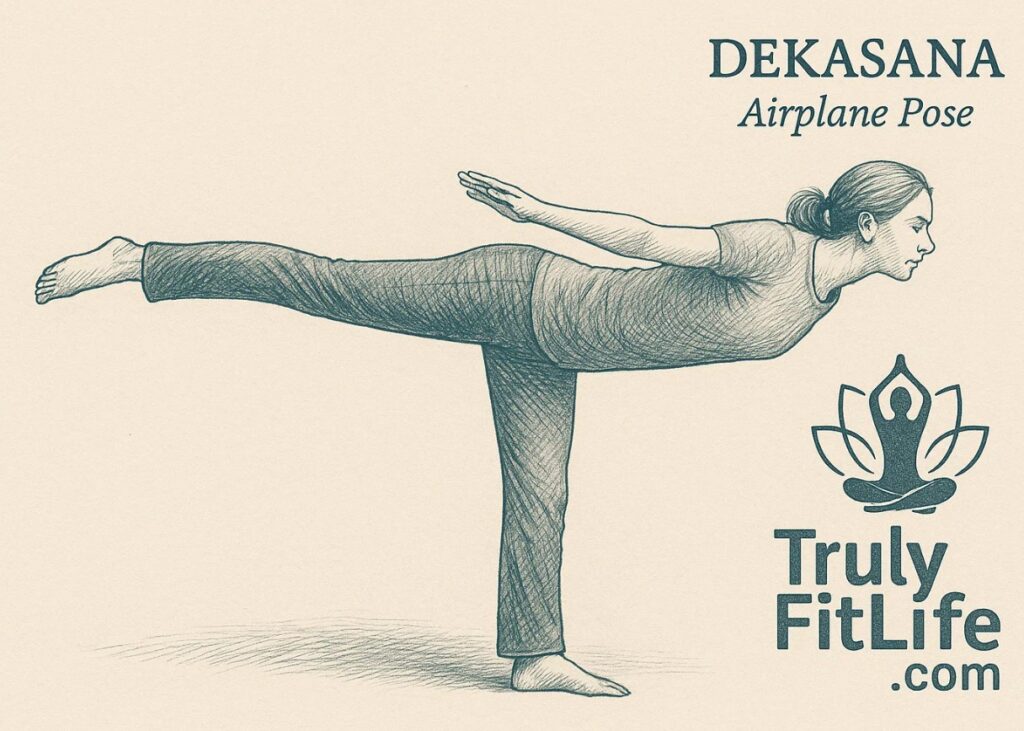
Dekasana – Airplane Pose is a dynamic standing balance posture that strengthens the body and sharpens concentration. Its name comes from the shape of the body resembling an airplane gliding through the sky, with arms extended and torso leaning forward.
This pose develops stability, tones leg muscles, and trains focus while improving body coordination. It is especially useful for athletes, yoga practitioners, and anyone who wants to cultivate balance and stamina.
🗂️ Table of Contents
- What is Dekasana?
- Step-by-Step Guide to Dekasana – Airplane Pose
- Benefits of Dekasana – Airplane Pose
- Muscles and Joints Engaged
- Breathing, Drishti, and Chakras
- Common Mistakes and How to Correct Them
- Variations and Modifications
- Contraindications and Safety Tips
- Practice Suggestions and Sequences
- Related Yoga Poses
- Conclusion
1. What is Dekasana?
The Sanskrit name breaks down as:
- Deka – airplane (modern Sanskrit adaptation)
- Asana – posture
Thus, Dekasana means Airplane Pose. Unlike classical postures from ancient yoga texts, this is a more modern yoga pose designed to combine balance, strength, and creativity.
Symbolically, Dekasana represents freedom, courage, and the balance between grounding and expansion.
2. Step-by-Step Guide to Dekasana – Airplane Pose
- Start in Tadasana (Mountain Pose). Stand tall with feet together.
- Shift weight. Transfer body weight onto the right leg.
- Lean forward. Inhale, hinge from hips, and extend torso forward.
- Lift opposite leg. Extend the left leg backward, keeping it parallel to the floor if possible.
- Extend arms. Stretch both arms out to the sides like airplane wings.
- Engage muscles. Keep standing leg strong, core tight, and gaze fixed.
- Hold the posture. Stay balanced for 20–40 seconds while breathing deeply.
- Release slowly. Exhale, return to standing, and repeat on the other side.
3. Benefits of Dekasana – Airplane Pose
Regular practice of Dekasana – Airplane Pose offers:
- ✅ Improves balance and coordination – strengthens stabilizing muscles.
- ✅ Strengthens legs and glutes – standing leg builds endurance.
- ✅ Engages core muscles – improves posture and stability.
- ✅ Enhances concentration – drishti (focus) trains mental clarity.
- ✅ Opens chest and shoulders – promotes better breathing.
- ✅ Symbolizes freedom – encourages confidence and courage.
👉 According to Yoga Journal, standing balance postures like Dekasana are excellent for building physical strength and mental discipline.
4. Muscles and Joints Engaged
- Quadriceps and hamstrings (standing leg)
- Gluteus maximus and hip stabilizers
- Calves and ankle stabilizers
- Core muscles (abdominals and obliques)
- Shoulders and upper back
5. Breathing, Drishti, and Chakras
- Breathing: Inhale to lengthen, exhale to stabilize.
- Drishti (gaze): Focus on a fixed point ahead for balance.
- Chakras: Activates Muladhara Chakra (Root) for stability and Ajna Chakra (Third Eye) for concentration.
6. Common Mistakes and How to Correct Them
❌ Collapsing chest → ✅ Keep chest lifted and shoulders open.
❌ Standing knee locked → ✅ Maintain a micro-bend for stability.
❌ Hips rotating → ✅ Keep hips square toward the ground.
❌ Arms dropping → ✅ Keep arms extended and engaged.
7. Variations and Modifications
- Beginner: Keep back leg lower for easier balance.
- Intermediate: Interlace fingers behind back for chest opening.
- Advanced: Transition into Warrior III by extending arms forward.
- Support: Practice near a wall for added stability.
8. Contraindications and Safety Tips
Avoid Dekasana – Airplane Pose if you have:
- Severe ankle, knee, or hip injuries
- Vertigo or balance disorders
- Uncontrolled high blood pressure
Always warm up with standing poses like Warrior I and II before attempting.
9. Practice Suggestions and Sequences
- Ideal in morning sequences for focus and energy.
- Hold for 20–40 seconds per side, repeat 2–3 times.
- Combine with Warrior III, Tree Pose, and Eagle Pose for balance training.
- Great as a transition posture in dynamic flows.
10. Related Yoga Poses
- Virabhadrasana III – Warrior III Pose
- Vrksasana – Tree Pose
- Garudasana – Eagle Pose
- Ardha Chandrasana – Half Moon Pose
(Link internally to your site’s related balance poses.)
11. Conclusion
Dekasana – Airplane Pose is a fun and empowering balancing posture that strengthens the body and sharpens the mind. By rooting through the standing leg while extending arms and leg outward, this pose teaches stability, courage, and focus.
It is a perfect pose for practitioners seeking improved coordination, leg strength, and inner confidence. With consistent practice, Dekasana can uplift both physical balance and mental resilience.