Table of Contents
- Introduction — What is Mindful Breathing Before Bed?
- Why Mindful Breathing Before Bed Works
- Science of Mindful Breathing Before Bed
- Step-by-Step Guide to Mindful Breathing Before Bed
- Best Time and Duration for Mindful Breathing Before Bed
- Benefits of Mindful Breathing Before Bed
- Common Mistakes and How to Avoid Them
- Variations of Mindful Breathing Before Bed
- Who Should Practice Mindful Breathing Before Bed?
- Safety Tips and Final Thoughts
1. Introduction — What is Mindful Breathing Before Bed?
Mindful Breathing Before Bed is a simple yet powerful relaxation practice that brings awareness to the natural rhythm of your breath. By focusing on the inhale and exhale without force or change, you invite the body into a state of calm that naturally leads to sleep. Unlike complex breathing techniques that involve counts or retention, mindful breathing before bed is effortless, accessible to all ages, and requires no prior meditation experience.
2. Why Mindful Breathing Before Bed Works
Many people struggle with insomnia, restlessness, or racing thoughts at night. Mindful Breathing Before Bed works because it anchors your attention in the present moment. By observing the breath, you create distance from stressful thoughts and allow the nervous system to shift from fight-or-flight into rest-and-digest mode. This practice has roots in ancient meditation traditions but is now supported by modern science as an effective natural sleep aid.
3. Science of Mindful Breathing Before Bed
Breath awareness directly influences the autonomic nervous system. Studies show that slow, mindful breathing lowers heart rate, decreases blood pressure, and reduces cortisol (the stress hormone). Practicing mindful breathing before bed helps quiet the sympathetic nervous system and enhances parasympathetic activation, which is essential for restorative sleep. Mindful Breathing Before Bed also improves melatonin release, the hormone that regulates sleep-wake cycles.
4. Step-by-Step Guide to Mindful Breathing Before Bed
Here’s how to practice Mindful Breathing Before Bed:
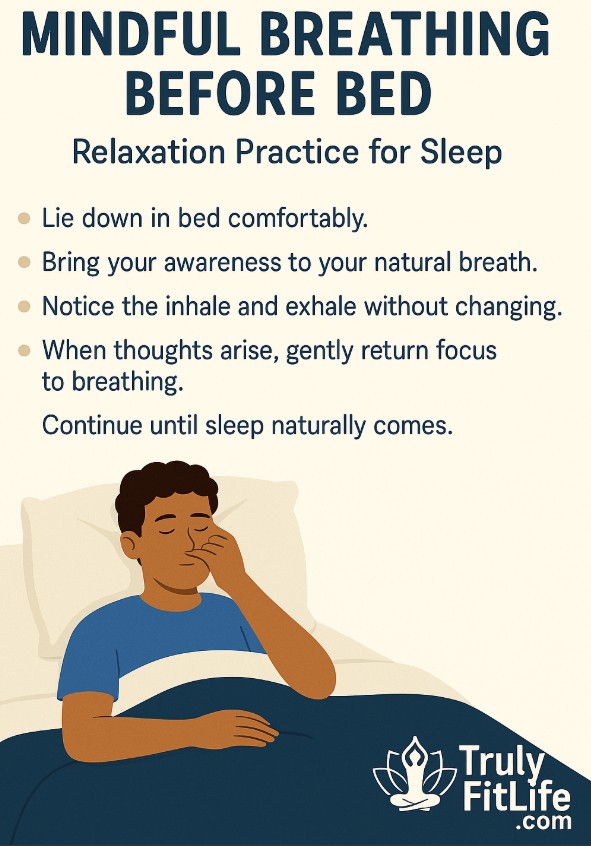
- Prepare your space: Lie down in bed comfortably, adjusting pillows and blankets for support.
- Close your eyes: Let your body relax and soften into the mattress.
- Notice your breath: Simply observe the inhale and exhale without trying to change it.
- Anchor your focus: When thoughts arise, gently guide your attention back to your breath.
- Stay present: Notice sensations in your body — the rise and fall of your chest, the feeling of air passing through your nose.
- Continue until sleep comes: Allow yourself to drift into sleep naturally without expectation.
Beginners may start with 5–10 minutes of practice, while experienced practitioners may continue until they naturally fall asleep.
5. Best Time and Duration for Mindful Breathing Before Bed
- Best time: Directly before going to sleep, as part of your nightly routine.
- Duration: 10–20 minutes, or until you drift off naturally.
- Frequency: Daily practice is ideal, especially for those struggling with sleep anxiety or stress-related insomnia.
6. Benefits of Mindful Breathing Before Bed
Practicing Mindful Breathing Before Bed regularly offers multiple benefits:
- Improves sleep quality: Promotes deeper, more restful sleep cycles.
- Reduces anxiety and stress: Helps release mental chatter before sleep.
- Supports emotional balance: Decreases nighttime restlessness caused by unresolved thoughts.
- Lowers heart rate and blood pressure: Enhances physical relaxation.
- Boosts immunity: Better sleep supports the immune system.
- Enhances mindfulness: Over time, you develop awareness that extends beyond bedtime.
7. Common Mistakes and How to Avoid Them
- Trying too hard to sleep: Mindful breathing is not about forcing sleep; it’s about gentle awareness.
- Controlling the breath: Don’t manipulate the inhale or exhale; simply observe.
- Getting frustrated with thoughts: It’s natural for the mind to wander. Patiently return to the breath each time.
- Poor posture in bed: Ensure you’re lying in a comfortable, supportive position.
8. Variations of Mindful Breathing Before Bed
- Body scan with mindful breathing: As you observe your breath, also notice sensations from head to toe.
- Counting breaths: Lightly count each inhale and exhale up to 10, then restart.
- Guided meditation: Use a recording to gently guide awareness to the breath.
- Combining with aromatherapy: Breathing in calming scents like lavender can enhance the effect.
9. Who Should Practice Mindful Breathing Before Bed?
- Anyone experiencing difficulty falling asleep or frequent waking at night.
- Individuals managing stress, anxiety, or depression.
- Children, adults, and seniors can all safely practice.
- People with chronic insomnia may combine mindful breathing before bed with cognitive-behavioral strategies for stronger results.
10. Safety Tips and Final Thoughts
- Practice in a safe environment — lying in bed.
- Avoid heavy meals, caffeine, or screen time right before practice.
- Stay consistent — benefits grow over time.
- If persistent insomnia continues despite practicing, consult a healthcare provider.
Final Note: Mindful Breathing Before Bed is a gentle, natural tool for calming the mind and inviting sleep. With consistency, this simple practice can transform your nighttime routine and improve both mental and physical health.
🧘 Related Yoga Poses You May Like
- ➤ 4-7-8 Breathing Technique – Calm Your Mind & Improve Sleep Naturally
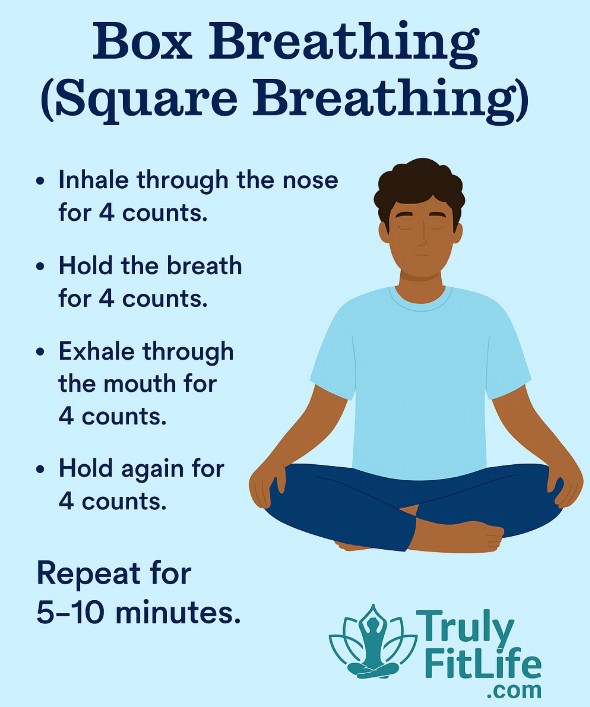
- ➤ Box Breathing (Square Breathing) – Master Calmness and Focus with Breath
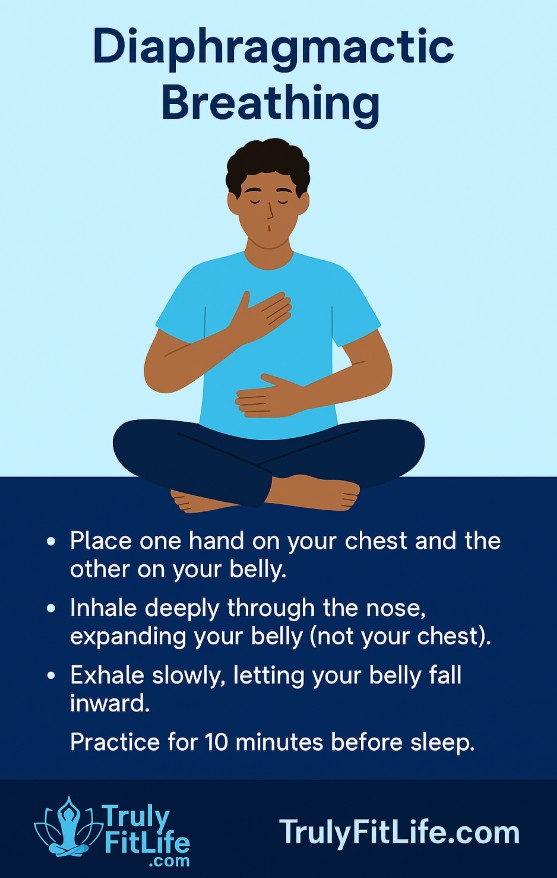
- ➤ Diaphragmatic Breathing – Powerful Technique for Relaxation and Better Health
- ➤ Breathing Meditation for Sleep – A Powerful Guide to Restful Nights
- ➤ Guided Meditation for Sleep: 10 Techniques That Actually Work
- ➤ Meditation for Beginners: Your Complete Step-by-Step Guide