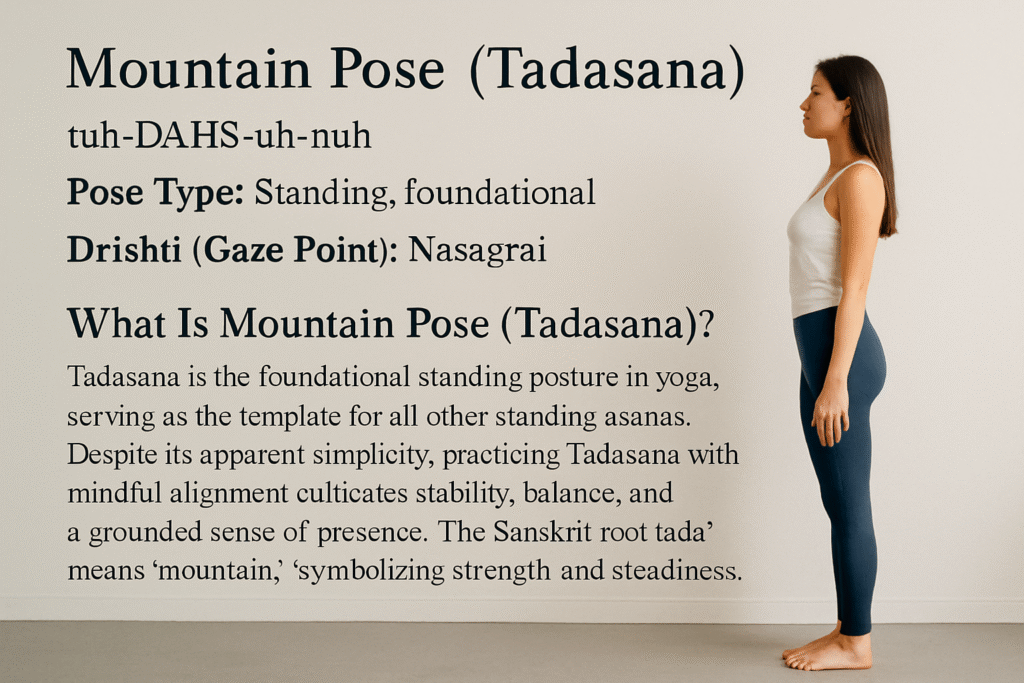
What Is Mountain Pose (Tadasana)?
Tadasana, also known as Mountain Pose or Samasthiti, is the foundation for all standing yoga poses. While it appears simple, it teaches deep awareness of posture, balance, and breath. “Tada” means mountain in Sanskrit, symbolizing stability, strength, and presence.
🔢 Step-by-Step Instructions
- Feet & Foundation: Stand tall with big toes touching or feet hip-width apart. Distribute weight evenly across feet.
- Legs & Pelvis: Engage thighs, lift kneecaps slightly. Draw tailbone down for a neutral pelvis.
- Torso & Spine: Elongate spine upward. Soften ribs inward for stability.
- Shoulders & Arms: Relax shoulders away from ears. Arms rest alongside body with palms forward.
- Head & Breath: Keep head aligned, chin parallel to the ground. Breathe deeply and evenly.
- Hold: Stay for 30–60 seconds, maintaining mindful alignment and calm breathing.
🎯 Alignment Tips
- Feet should stay parallel, toes spread.
- Keep a slight bend in knees (micro-bend).
- Engage your core gently.
- Broaden across the chest without puffing ribs.
- Keep gaze soft and steady.
💪 Physical Benefits
- Improves full-body posture and spinal alignment.
- yoga-poses-for-posture-correction
- Foundational Poses
- Strengthens legs, ankles, feet, and core muscles.
- Enhances balance and proprioception.
- Yoga for Focus & Balance
- Reduces pressure on joints through better weight distribution.
🧠 Mental & Energetic Benefits
- Promotes grounding and inner calm.
- Yoga for Stress Relief
- Sharpens focus and builds present-moment awareness.
- Activates the parasympathetic nervous system (relaxation response).
🛠️ Modifications & Variations
- Wall Support: Use a wall for feedback on posture.
- Feet Apart: Beginners can keep feet hip-width for more stability.
- Raise Arms: Lift arms overhead (Urdhva Hastasana) to deepen the stretch.
⚠️ Safety & Contraindications
- Keep knees soft to avoid joint strain.
- Rise and exit slowly if you have low blood pressure.
- Use wider stance during pregnancy or balance challenges.
🕒 When to Practice
- Beginning of Class: Sets alignment and breath for all standing poses.
- Between Poses: Resets balance during transitions.
- Daily Life: Can be practiced during short breaks to improve posture and mindfulness.
✅ Key Takeaway
Tadasana may look basic, but it’s one of the most important yoga poses. Practicing it regularly improves posture, balance, and breath awareness — laying the foundation for your entire yoga journey.
🧘 Related Yoga Poses You May Like
Disclaimer: This content is for informational purposes only. Please consult a certified yoga instructor or healthcare provider before starting any exercise program.