Table of Contents
- Introduction to Natarajasana
- Step-by-Step Guide to Natarajasana
- Alignment and Drishti Points
- Benefits of Natarajasana
- Muscles and Systems Activated
- Preparatory and Counter Poses
- Common Mistakes to Avoid
- Variations and Modifications of Natarajasana
- Contraindications and Safety Guidelines
- Symbolism of Natarajasana in Yoga Philosophy
- Final Thoughts
1. Introduction to Natarajasana
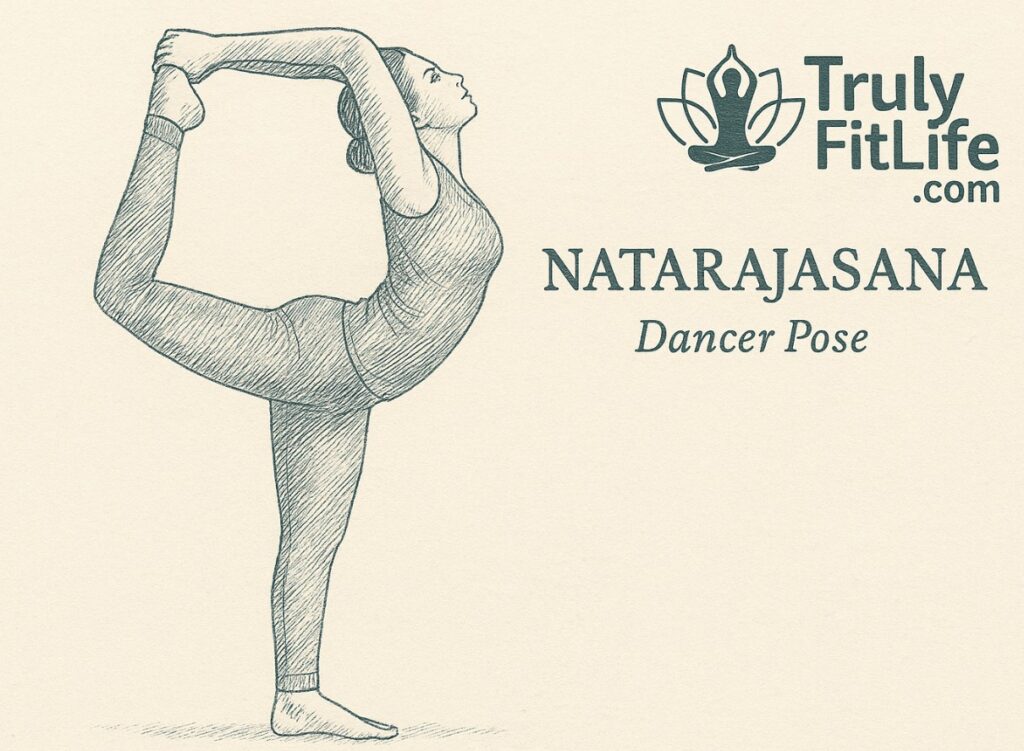
Natarajasana, also known as Lord of the Dance Pose or Dancer Pose, is a visually striking yoga asana that symbolizes grace, devotion, and inner balance. The name comes from Nata meaning “dancer,” Raja meaning “king,” and Asana meaning “pose.” In Hindu mythology, Nataraja is Lord Shiva in his cosmic dance form, representing the rhythm of creation, preservation, and destruction.
This asana combines strength, flexibility, and concentration. It is often practiced as an advanced standing balance posture, requiring not only physical ability but also a calm and focused mind.
2. Step-by-Step Guide to Natarajasana
- Begin in Tadasana (Mountain Pose): Stand tall with feet together and arms at your sides.
- Shift weight: Ground firmly through your left foot while keeping the spine tall.
- Lift right leg: Bend the right knee and bring the heel toward the glutes.
- Catch the ankle: Reach the right hand back and hold the inside of the right ankle.
- Raise left arm forward: Extend the left arm straight ahead at shoulder height for balance.
- Kick back and up: Inhale, press the right foot into the hand while lifting the leg upward.
- Lean forward slightly: Allow the torso to tilt gently forward as the leg rises, creating a graceful arch.
- Drishti (gaze): Focus your eyes softly on a fixed point in front.
- Hold: Stay in the pose for 20–40 seconds, breathing steadily.
- Release: Exhale, gently release the foot and return to Tadasana. Repeat on the other side.
3. Alignment and Drishti Points in Natarajasana
- Supporting foot firmly rooted, with toes spread wide.
- Hips square to the front, not opening outward.
- Shoulder blades drawn together, chest lifted.
- Extended arm forward and upward, palm open.
- Gaze fixed straight ahead or slightly upward for stability.
4. Benefits of Natarajasana
Physical Benefits
- Improves balance and stability.
- Strengthens legs, glutes, core, and back muscles.
- Stretches shoulders, chest, thighs, and abdomen.
- Enhances hip flexibility.
- Promotes spinal mobility.
Mental & Emotional Benefits
- Increases focus and concentration.
- Encourages patience and resilience.
- Reduces stress and anxiety through mindful breathing.
- Cultivates grace, confidence, and body awareness.
5. Muscles and Systems Activated
Natarajasana activates and stretches multiple muscle groups:
- Lower Body: Quadriceps, hamstrings, gluteus maximus.
- Core: Abdominals and obliques for stabilization.
- Upper Body: Shoulders, pectorals, triceps.
- Back: Erector spinae and spinal extensors.
It also stimulates the nervous system, improves circulation, and deepens the capacity of the respiratory system by expanding the chest.
6. Preparatory and Counter Poses
Preparatory Poses
- Tadasana (Mountain Pose)
- Virabhadrasana III (Warrior III Pose)
- Utkatasana (Chair Pose)
- Bhujangasana (Cobra Pose)
Counter Poses
- Uttanasana (Standing Forward Bend)
- Balasana (Child’s Pose)
- Ardha Matsyendrasana (Seated Twist)
7. Common Mistakes to Avoid
- Tilting hips outward: Keep hips square to avoid imbalance.
- Forcing the backbend: Focus on lengthening, not collapsing.
- Losing the drishti: Keep gaze steady for balance.
- Overarching the lower back: Engage core for protection.
8. Variations and Modifications of Natarajasana
- Beginner Support: Practice near a wall for stability.
- Half Dancer Pose: Hold the lifted foot with both hands while keeping torso upright.
- Advanced Variation: Use both hands to hold the raised foot overhead (Full Natarajasana).
- Partner Support: Practice with a partner for assistance and deeper stretch.
9. Contraindications and Safety Guidelines
Avoid Natarajasana if you have:
- Knee, ankle, or lower back injuries
- Shoulder strain or rotator cuff issues
- Severe balance disorders
Safety Tips:
- Always warm up legs, hips, and shoulders before attempting.
- Focus on alignment rather than depth.
- Beginners should practice with props or supervision.
10. Symbolism of Natarajasana in Yoga Philosophy
In yoga philosophy, Natarajasana embodies Lord Shiva’s cosmic dance – a dance of destruction and creation. It symbolizes balance between effort and surrender, discipline and flow. Practicing Natarajasana teaches yogis to balance grace with strength, cultivating harmony between body, mind, and spirit.
11. Final Thoughts
Natarajasana is not just a physical challenge but a spiritual expression of grace and focus. With consistent practice, it enhances balance, flexibility, and strength while also promoting mindfulness. This pose invites practitioners to embrace inner stability while moving gracefully through life.