
Push-Ups: Introduction
Push-Ups are one of the most iconic and powerful bodyweight exercises, offering full upper-body and core strengthening benefits. They require no equipment, can be performed anywhere, and target multiple major muscle groups simultaneously. Push-Ups are used in fitness programs for athletes, beginners, military training, rehabilitation, and home workouts because of their versatility and effectiveness.
Push-Ups help develop strong chest muscles, sculpted arms, and better shoulder stability. Beyond upper-body strength, Push-Ups also improve balance, core engagement, and overall body control. Whether your goal is fat loss, muscle building, stability, or general fitness, Push-Ups are a foundational movement you should master.
What Are Push-Ups?
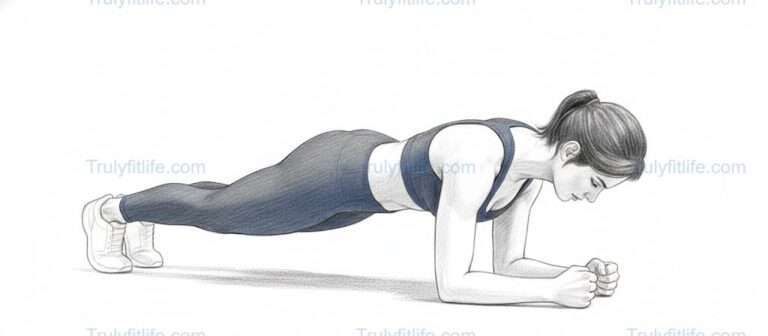
Push-Ups are a compound upper-body exercise performed from a plank position where the body is lowered toward the ground and pushed back up using the chest, arms, and shoulders. The movement also engages the core, glutes, and legs to maintain a strong, stable plank.
Because Push-Ups activate multiple muscle groups at once, they deliver excellent strength-building and calorie-burning benefits with minimal time and no equipment required.
How to Do Push-Ups – Step-by-Step
Follow this step-by-step guide to perform Push-Ups correctly:
- Start in a high plank position with your hands slightly wider than shoulder-width.
- Keep your body in a straight line from head to heels.
- Engage your core and squeeze your glutes.
- Slowly bend your elbows and lower your chest toward the floor.
- Keep elbows at a 45-degree angle from your body.
- Lower until your chest is close to the ground.
- Press through your palms to push your body back up.
- Maintain even breathing and controlled movement throughout the rep.
Aim for 8–15 reps or 30–45 seconds, depending on your fitness level.
Push-Ups Benefits
1. Builds Chest Strength
Push-Ups primarily target the pectoral muscles, building a stronger and more defined chest.
2. Enhances Arm and Shoulder Power
Push-Ups strengthen the shoulders, triceps, and stabilizing muscles.
3. Strengthens the Core
Maintaining plank position engages the abs, obliques, and lower back.
4. Improves Functional Movement
Push-Ups mimic real-life pushing motions, enhancing upper-body performance.
5. Helps with Fat Loss
Because Push-Ups use large muscle groups, they boost calorie burn and metabolism.
6. Accessible for All Fitness Levels
Push-Ups can be modified for beginners or intensified for advanced athletes.
Muscles Worked in Push-Ups
Push-Ups work several major muscle groups, including:
- Pectorals (chest)
- Triceps
- Deltoids (shoulders)
- Serratus anterior
- Abdominals
- Obliques
- Lower back
- Glutes
- Quadriceps (stabilizing role)
This makes Push-Ups one of the most complete bodyweight strength exercises.
Common Mistakes
Avoid these errors while performing Push-Ups:
- Dropping the hips or raising them too high
- Allowing elbows to flare excessively
- Collapsing the lower back
- Not engaging the core
- Moving too fast with poor control
- Incomplete range of motion
Correct form ensures muscles activate properly and reduces strain on joints.
Beginner Modifications
If you’re new to Push-Ups, try these easier variations:
- Knee Push-Ups
- Wall Push-Ups
- Incline Push-Ups
- Hands-elevated Push-Ups
These help build strength safely while improving form.
Advanced Variations
To increase difficulty, try:
- Decline Push-Ups
- Diamond Push-Ups
- Plyometric (clap) Push-Ups
- Slow-tempo Push-Ups
- Spiderman Push-Ups
- Archer Push-Ups
- One-arm Push-Ups (advanced level)
These variations challenge stability, power, and muscular endurance.
Contraindications & Safety Tips
Avoid or modify Push-Ups if you have:
- Wrist pain
- Shoulder injuries
- Severe lower-back issues
- Limited upper-body strength
Safety Tips
- Warm up your shoulders and chest before training.
- Keep your spine neutral throughout the movement.
- Lower yourself slowly for better control.
- Stop if you feel sharp pain or discomfort.
Conclusion
Push-Ups are one of the most effective and universally accessible upper-body exercises. They build strength, improve core stability, enhance endurance, and support functional movement. Whether you’re a beginner or an advanced athlete, mastering Push-Ups will significantly improve your fitness and overall body strength.
🧘 Related Yoga Poses You May Like
- ➤ Plank Arm Raises – Powerful Core Stability Exercise
- ➤ Elbow Plank – Powerful Core Stability Exercise
- ➤ Double Arm Front Raises – Effective Shoulder Strength Exercise
- ➤ Double Arm Side Raises – Powerful Shoulder Strength Exercise
- ➤ Chaturanga Dandasana – Four Limbed Staff Pose (Complete Guide)
- ➤ Arm Swings – Warm Up Your Shoulders and Improve Upper Body Flexibility