📑 Table of Contents
- Introduction to Sirsasana II – Tripod Headstand
- Step-by-Step Guide to Practice
- Alignment and Drishti Points
- Benefits of Sirsasana II – Tripod Headstand
- Common Mistakes and How to Avoid Them
- Modifications and Variations
- Contraindications and Safety Guidelines
- Muscles Worked in Tripod Headstand
- Chakras and Energetic Benefits
- Preparatory and Follow-Up Poses
- Final Thoughts
1. Introduction to Sirsasana II – Tripod Headstand
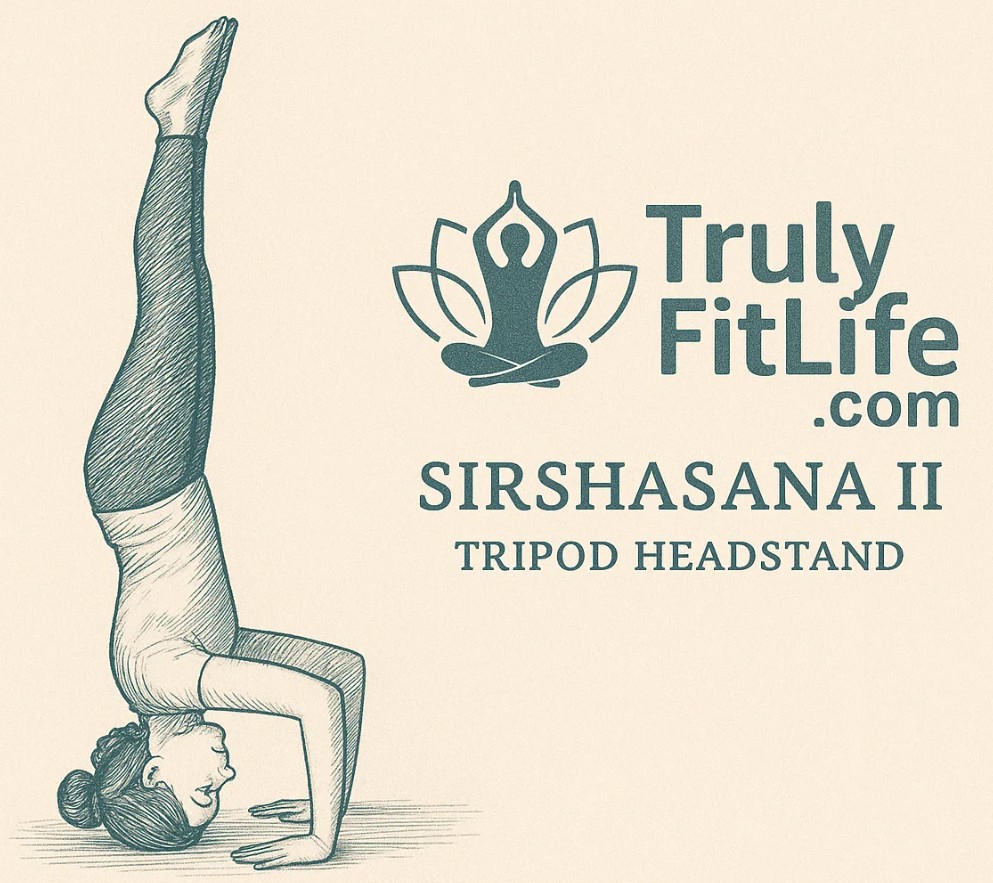
Sirsasana II – Tripod Headstand is a classical inversion in which the body is balanced vertically on the head and hands. The Sanskrit word Sirsa means “head,” and Asana means “pose.”
Unlike the traditional Sirsasana I (with forearms on the ground), this variation forms a tripod base using the head and both hands. It is considered an intermediate-to-advanced posture, requiring strength, balance, and mindful control. Practicing Sirsasana II helps build confidence in inversions and is often a stepping stone toward arm balances.
2. Step-by-Step Guide to Practice
- Start on Knees: Sit in Vajrasana, then place hands shoulder-width apart on the mat.
- Place Head: Lower crown of head on the floor between hands, forming a tripod.
- Lift Hips: Tuck toes, straighten legs, and walk feet closer until hips stack above shoulders.
- Bend Knees In: Gently bring knees onto upper arms near triceps.
- Engage Core: With control, lift legs upward, straightening them overhead.
- Balance: Maintain body alignment with shoulders strong and core engaged.
- Hold Pose: Stay for 10–30 seconds, breathing steadily.
- Exit Safely: Slowly lower knees to arms, then feet to floor. Rest in Child’s Pose.
3. Alignment and Drishti Points
- Head & Hands: Form a stable triangular base.
- Shoulders: Active, lifting away from ears to protect neck.
- Spine: Neutral and lengthened, avoiding over-arching.
- Legs: Straight, engaged, and aligned with hips.
- Drishti (gaze): Soft focus between hands.
4. Benefits of Sirsasana II – Tripod Headstand
- Strengthens shoulders, arms, and core.
- Improves balance, stability, and focus.
- Increases blood flow to the brain, enhancing clarity.
- Stimulates endocrine glands, especially pituitary.
- Builds confidence in advanced inversions.
- Enhances body awareness and control.
5. Common Mistakes and How to Avoid Them
- ❌ Collapsing shoulders → Fix: Push shoulders away from ears and engage arms.
- ❌ Overloading neck → Fix: Distribute weight evenly across head and hands.
- ❌ Kicking up forcefully → Fix: Lift legs slowly using core strength.
- ❌ Arms too wide or narrow → Fix: Place hands shoulder-width apart for stability.
6. Modifications and Variations
- Beginner Prep: Practice knees on arms before fully extending legs.
- Wall Support: Use a wall behind for confidence and safety.
- Half Tripod: Lift one leg at a time while keeping the other on the ground.
- Advanced Variation: Transition from Tripod Headstand to Bakasana (Crow Pose).
7. Contraindications and Safety Guidelines
- Avoid if you have neck, spine, or shoulder injuries.
- Not suitable for those with high blood pressure, glaucoma, or heart conditions.
- Should not be practiced during pregnancy.
- Always exit with control and rest in Balasana.
8. Muscles Worked in Tripod Headstand
- Primary: Shoulders, triceps, core, forearms.
- Secondary: Back muscles, hip flexors, hamstrings.
9. Chakras and Energetic Benefits
- Stimulates the Sahasrara (Crown Chakra) → deepens spiritual awareness.
- Activates the Ajna (Third Eye Chakra) → enhances focus, intuition, and clarity.
- Balances energy flow, calming the nervous system.
10. Preparatory and Follow-Up Poses
- Preparatory Poses: Dolphin Pose, Downward Dog, Bakasana (Crow Pose).
- Follow-Up Poses: Balasana (Child’s Pose), Sarvangasana (Shoulderstand), Matsyasana (Fish Pose).
11. Final Thoughts
Sirsasana II – Tripod Headstand is a transformative inversion that challenges strength, balance, and concentration. While it offers immense physical and mental benefits, it requires patience, discipline, and correct alignment. Practice under supervision if new to inversions, and always balance with restorative postures.
🧘 Related Yoga Poses You May Like
- ➤ Sirsasana – Headstand Pose Complete Guide
- ➤ Handstand – Adho Mukha Vrksasana: Master the Powerful Yoga Inversion
- ➤ Sarvangasana – Shoulderstand Pose Complete Yoga Guide for Balance & Vitality
- ➤ Dolphin Pose (If Exists Skip Else Ignore)
- ➤ Plank Arm Raises – Powerful Core Stability Exercise
- ➤ Chaturanga Dandasana – Four Limbed Staff Pose (Complete Guide)