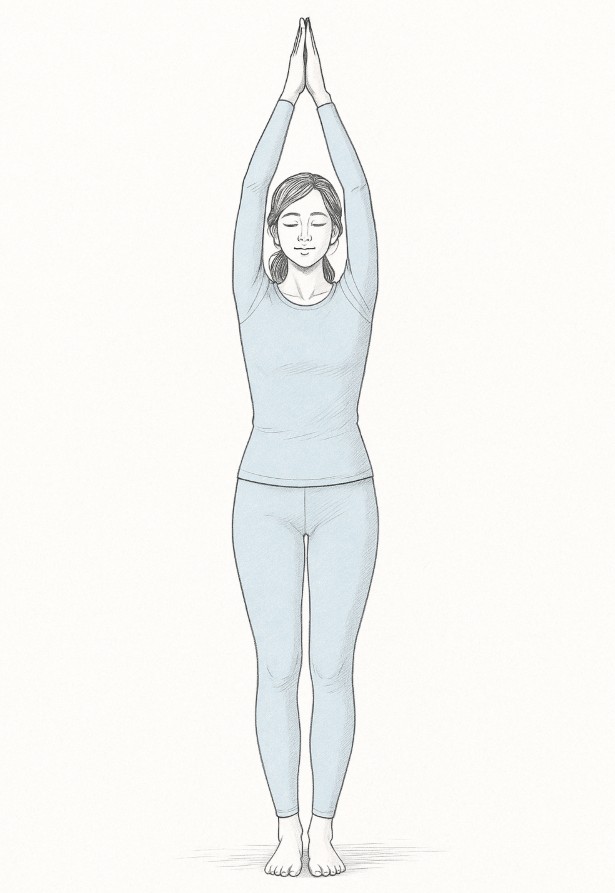
Urdhva Hastasana -Upward Salute Pose is a standing yoga pose that stretches the spine, shoulders, and arms while improving posture, breathing capacity, and overall body alignment.
🕉️ Sanskrit Name & Pronunciation
Urdhva Hastasana (OORD-vuh huh-STAHSS-uh-nuh)
Meaning:
- Urdhva = upward
- Hasta = hand
- Asana = posture
🧩 Also Known As
- Upward Salute Pose
- Volcano Pose
🧘 Pose Type and Difficulty
- Pose Type: Standing Asana
- Level: Beginner
- Backbend: Mild backbend
- Drishti (Gaze Point): Angushtamadhye – at the thumbs
📸 Step-by-Step Instructions
- Start in Tadasana (Mountain Pose) – Stand with feet together, arms relaxed at sides.
- Inhale – Raise both arms overhead, palms facing forward.
- Bring palms to touch – Extend fully without shrugging the shoulders.
- Slight backbend – Lift chest slightly and gaze at thumbs.
- Engage thighs and core – Stay tall and steady.
- Hold for 3–5 breaths – Focus on elongating the spine.
✅ Modifications and Precautions
- Tight shoulders? Keep arms shoulder-width apart instead of palms touching.
- Avoid deep backbend if you have shoulder, neck, or back injuries.
- Pregnant practitioners should keep feet hip-width apart for balance.
🌿 Benefits of Urdhva Hastasana
Physical:
- Stretches shoulders, chest, abdomen, and spine
- Improves posture and spinal flexibility
- Prepares body for deeper standing poses
Mental:
- Improves concentration and inner awareness
- Awakens mental clarity through lifted gaze
Therapeutic:
- Helps relieve mild anxiety
- Supports gentle stimulation of digestion
🔄 Preparatory & Counter Poses
Preparatory Poses:
- Tadasana (Mountain Pose)
- Bhujangasana (Cobra Pose)
Counter Poses:
- Uttanasana (Standing Forward Bend)
- Ardha Uttanasana (Half Forward Bend)
🧠 Chakras & Muscles Focused
- Chakras Activated:
- 🟢 Anahata (Heart Chakra)
- 🔵 Vishuddha (Throat Chakra)
- Muscle Engagement:
- Arms, shoulders, upper back
- Core, thighs, spine extensors