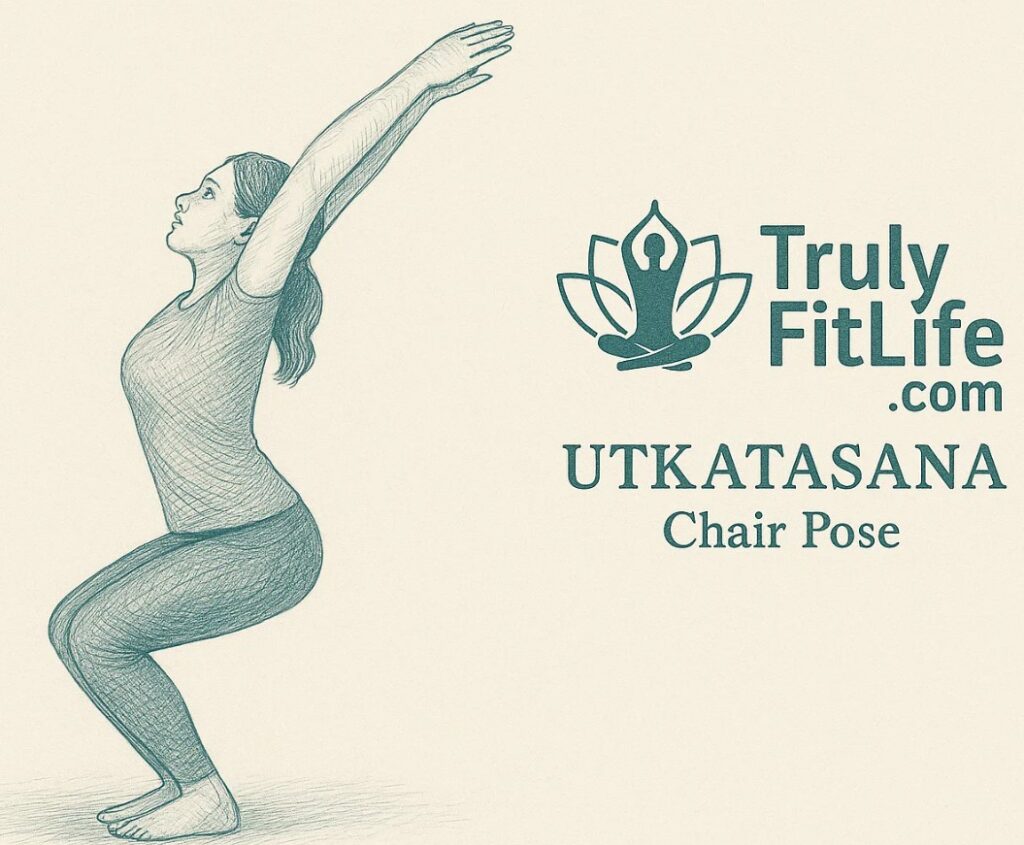
Utkatasana (Chair Pose) is a foundational standing posture in yoga that builds strength, endurance, and focus. The Sanskrit word Utkata means “powerful” or “intense,” and Asana means “pose.” Though it looks like sitting on an invisible chair, it challenges multiple muscle groups simultaneously.
This pose is commonly included in Hatha and Vinyasa sequences and is also part of the Sun Salutation B (Surya Namaskar B) series. According to Yoga Journal
, Utkatasana strengthens the lower body, tones the core, and stimulates circulation, making it both energizing and grounding.
2. Step-by-Step Guide to Utkatasana (Chair Pose)
Start in Tadasana (Mountain Pose): Stand tall with feet together, arms by your sides.
Inhale and raise arms: Stretch arms overhead, palms facing inward or joined.
Exhale and bend knees: Lower hips back as if sitting in an invisible chair.
Engage core: Keep chest lifted and spine long.
Align thighs: Try to keep thighs parallel to the floor (if possible).
Weight distribution: Keep weight in heels, not toes.
Hold: Stay for 20–60 seconds, breathing steadily.
Release: Inhale, straighten legs, and return to Tadasana.
3. Alignment & Tips
Keep knees pointing straight ahead, not collapsing inward.
Avoid overarching the lower back—engage the core.
Keep gaze forward or slightly upward.
If shoulders feel tense, separate arms shoulder-width.
Imagine sitting deeper without leaning forward too much.
Reduces anxiety by channeling energy into grounding.
5. Contraindications & Precautions
Avoid if you have serious knee, hip, or ankle injuries.
Those with chronic lower back pain should practice with caution.
People with heart problems or low blood pressure should consult a doctor.
Beginners should avoid dropping hips too low—focus on alignment.
6. Modifications & Variations
Beginner option: Keep feet hip-width apart for more stability.
Wall support: Practice with back against a wall for extra safety.
Advanced variation: Lift heels off the floor to intensify balance.
Twisting variation: Practice Parivrtta Utkatasana (Revolved Chair Pose) for added spinal twist.
7. Muscles Engaged
Quadriceps
Gluteus maximus
Hamstrings
Core stabilizers
Shoulders and arms
Lower back muscles
8. Chakra Activation
Root Chakra (Muladhara): Builds grounding and stability.
Solar Plexus Chakra (Manipura): Enhances willpower and inner strength.
9. Drishti (Gaze Point)
Forward gaze (Nasagra Drishti) for stability.
Upward gaze toward the thumbs for focus.
10. Preparatory & Counter Poses
Preparatory Poses:
Tadasana (Mountain Pose)
Utkata Konasana (Goddess Pose)
Virabhadrasana I (Warrior I Pose)
Counter Poses:
Uttanasana (Standing Forward Bend)
Ardha Uttanasana (Half Standing Forward Bend)
Balasana (Child’s Pose)
11. Conclusion
Utkatasana (Chair Pose) is a powerful posture that strengthens the legs, tones the core, and builds stamina while encouraging mental focus. Though it may appear simple, the intensity of holding the pose cultivates both physical endurance and emotional resilience. Regular practice improves posture, supports cardiovascular health, and fosters confidence and grounding.