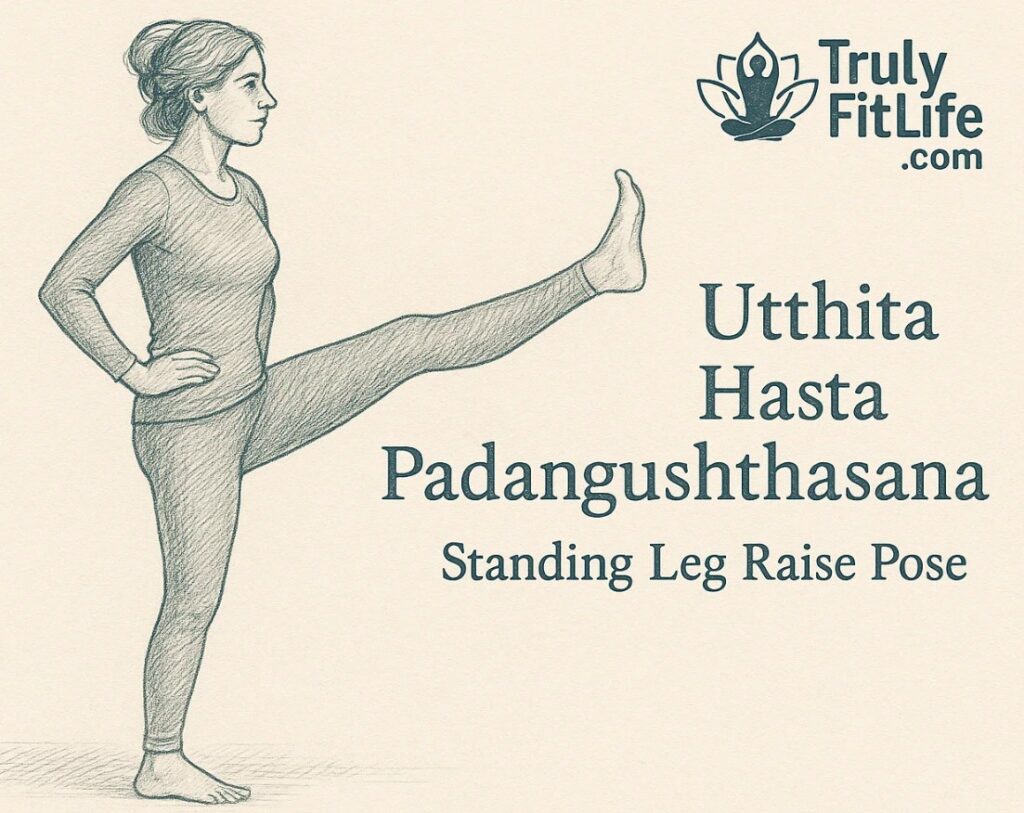
Utthita Hasta Padangusthasana – Extended Hand-to-Big-Toe Pose is a powerful balancing asana from the Hatha Yoga tradition. It challenges stability, flexibility, and focus at the same time. Practitioners not only gain strength in the legs and core but also develop deep concentration, which is essential in both yoga and daily life.
In this master guide, we’ll explore the pose step by step, highlight its benefits, share common mistakes, and provide safety tips, variations, and practice recommendations.
🗂️ Table of Contents
- What is Utthita Hasta Padangusthasana?
- Step-by-Step Guide to Utthita Hasta Padangusthasana
- Benefits of Utthita Hasta Padangusthasana – Extended Hand-to-Big-Toe Pose
- Muscles Worked in Utthita Hasta Padangusthasana
- Breathing, Drishti, and Chakras
- Common Mistakes and Corrections
- Variations and Modifications
- Contraindications and Safety Tips
- Practice Suggestions and Sequences
- Related Yoga Poses
- Conclusion
1. What is Utthita Hasta Padangusthasana?
The Sanskrit name breaks down into:
- Utthita – extended or stretched
- Hasta – hand
- Padangustha – big toe
- Asana – posture
Thus, Utthita Hasta Padangusthasana – Extended Hand-to-Big-Toe Pose literally means “the posture where the hand holds the extended big toe.”
This pose is common in Ashtanga Yoga Primary Series, Vinyasa flows, and balance-focused practices. It’s considered an intermediate to advanced pose due to the flexibility and strength required.
2. Step-by-Step Guide to Utthita Hasta Padangusthasana
- Start in Tadasana (Mountain Pose). Stand tall, feet together, arms by your side.
- Shift weight. Inhale and shift your weight onto the left leg.
- Lift the right knee. Bend your right knee toward your chest.
- Hold the toe. Reach your right hand inside the thigh and grab the right big toe with the index and middle fingers (yogic toe lock).
- Extend the leg. On exhale, extend the right leg forward while keeping the spine tall.
- Balance. Engage the core and press down through the standing foot.
- Optional variation. Open the leg outward to the right side while extending the left arm sideways for counterbalance.
- Hold. Maintain the pose for 15–30 seconds, breathing deeply.
- Release. Return slowly to Tadasana and switch sides.
3. Benefits of Utthita Hasta Padangusthasana – Extended Hand-to-Big-Toe Pose
Regular practice of Utthita Hasta Padangusthasana offers:
- ✅ Improved balance and focus – enhances concentration and stability.
- ✅ Strengthens standing leg – engages quadriceps, calves, and glutes.
- ✅ Increases hamstring flexibility – stretches the lifted leg deeply.
- ✅ Strengthens core and hip flexors – improves overall stability.
- ✅ Encourages mental calmness – balance poses train patience and awareness.
- ✅ Supports better posture – aligns spine and pelvis.
👉 According to Yoga Journal, this asana is one of the best ways to test and train both physical and mental balance.
4. Muscles Worked in Utthita Hasta Padangusthasana
- Quadriceps and hamstrings
- Gluteus maximus and medius
- Calf muscles (gastrocnemius, soleus)
- Hip flexors (psoas, iliacus)
- Core muscles (rectus abdominis, obliques, transverse abdominis)
- Lower back stabilizers
5. Breathing, Drishti, and Chakras
- Breathing: Inhale to lift and lengthen, exhale to extend the leg.
- Drishti (gaze): Focus at eye level or the horizon to stabilize balance.
- Chakras: Stimulates Muladhara Chakra (Root) for grounding and Manipura Chakra (Solar Plexus) for confidence and willpower.
6. Common Mistakes and Corrections
❌ Rounding the back → ✅ Keep spine tall and chest open.
❌ Knee hyperextension → ✅ Micro-bend the standing leg.
❌ Losing balance → ✅ Focus on drishti and engage the core.
❌ Forcing flexibility → ✅ Bend lifted leg slightly if hamstrings are tight.
7. Variations and Modifications
- Beginner: Keep the lifted knee bent and hold the shin instead of the toe.
- Intermediate: Use a yoga strap looped around the foot.
- Advanced: Extend the leg fully to the side (Utthita Hasta Padangusthasana B).
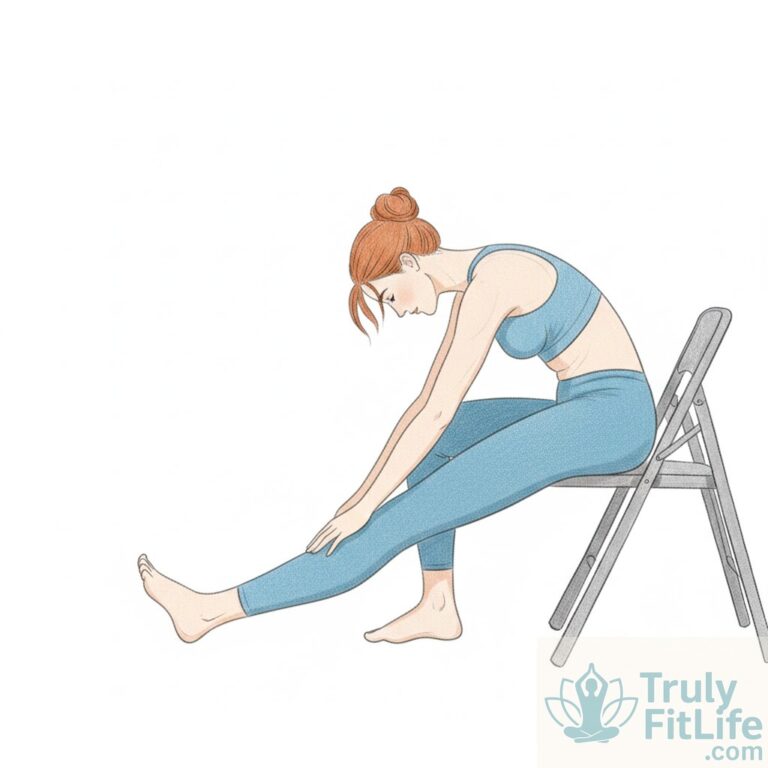
- Seated Variation: Do the pose from Dandasana (staff pose) for hamstring stretch.
8. Contraindications and Safety Tips
Avoid or modify this pose if you have:
- Recent hamstring, hip, or ankle injuries
- Lower back pain or herniated disc issues
- Poor balance (practice near a wall for support)
Always warm up with Sun Salutations, hamstring stretches, and hip openers before attempting.
9. Practice Suggestions and Sequences
- Practice in the morning when energy and focus are high.
- Hold each side for 15–30 seconds, 2–3 repetitions.
- Add to balance-focused sequences with poses like Tree Pose and Eagle Pose.
- Include in intermediate vinyasa flows for strength and stability.
10. Related Yoga Poses
- Tadasana – Mountain Pose
- Vrikshasana – Tree Pose
- Ardha Chandrasana – Half Moon Pose
- Natarajasana – Dancer Pose
(For internal linking, connect these to your existing yoga pose posts.)
11. Conclusion
Utthita Hasta Padangusthasana – Extended Hand-to-Big-Toe Pose is both a physical and mental challenge. It builds strength, balance, and flexibility while calming the mind. With patience and steady practice, you will notice improvements not only in your yoga journey but also in your everyday confidence and focus.
This pose teaches discipline, resilience, and inner balance—qualities that extend far beyond the yoga mat.