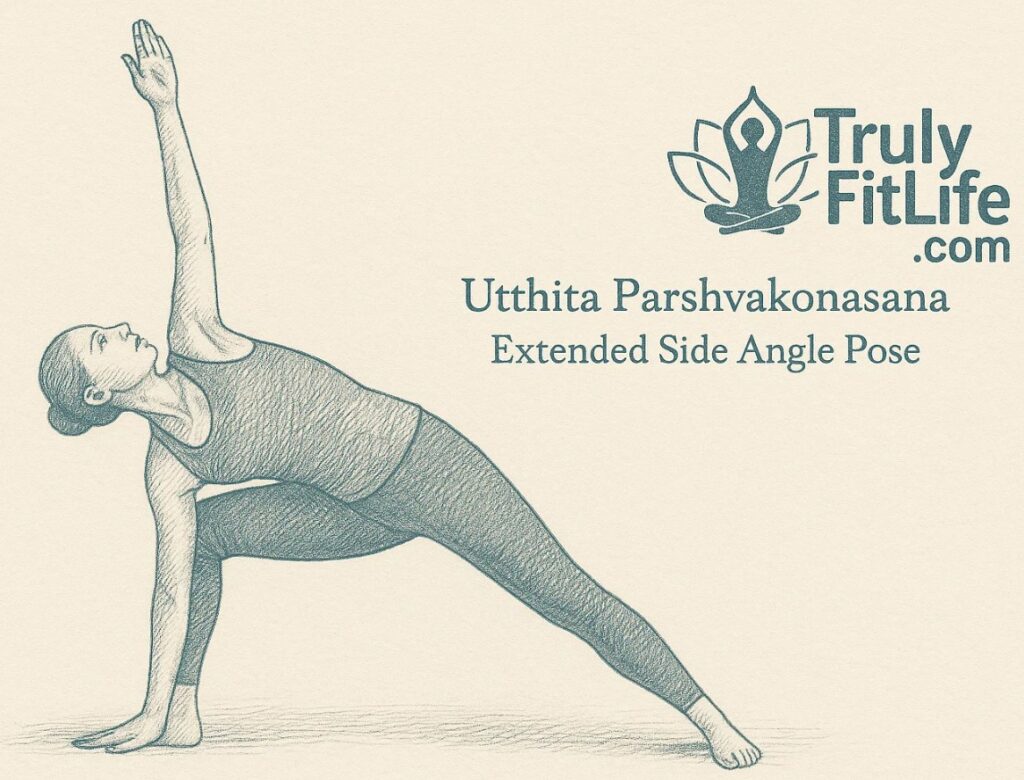
Utthita Parshvakonasana – Extended Side Angle Pose is a foundational standing yoga asana that combines strength, flexibility, and endurance. Practiced widely in Hatha, Vinyasa, and Iyengar yoga, it creates an energizing stretch from the feet all the way through the fingertips.
This pose enhances lower body stability, opens the hips, and stretches the side body while improving concentration and breathing. It is suitable for beginners with modifications but also offers depth for advanced practitioners.
🗂️ Table of Contents
- What is Utthita Parshvakonasana?
- Step-by-Step Guide to Utthita Parshvakonasana – Extended Side Angle Pose
- Benefits of Utthita Parshvakonasana – Extended Side Angle Pose
- Muscles and Joints Engaged
- Breathing, Drishti, and Chakras
- Common Mistakes and How to Avoid Them
- Variations and Modifications
- Contraindications and Safety Tips
- Practice Suggestions and Sequences
- Related Yoga Poses
- Conclusion
1. What is Utthita Parshvakonasana?
The Sanskrit name breaks down into:
- Utthita – extended
- Parshva – side
- Kona – angle
- Asana – posture
Thus, Utthita Parshvakonasana translates to Extended Side Angle Pose. Symbolically, it represents expansion and grounding, as the body creates a diagonal line of energy from the back foot to the fingertips.
This pose is often practiced in Sun Salutation variations, strength-building flows, and as preparation for deeper hip openers.
2. Step-by-Step Guide to Utthita Parshvakonasana – Extended Side Angle Pose
- Start in Tadasana (Mountain Pose). Stand tall with feet together, arms at sides.
- Step wide. Inhale, step feet 3–4 feet apart.
- Form Warrior II. Turn right foot outward 90°, left foot slightly in. Bend right knee at 90°, thigh parallel to floor.
- Place forearm or hand. Exhale, bring right forearm onto right thigh or right hand to the floor outside right foot.
- Extend opposite arm. Stretch left arm overhead, creating a straight line from left foot to left fingertips.
- Engage core and legs. Press firmly through back foot, keep chest open.
- Hold the posture. Stay for 20–40 seconds with steady breathing.
- Release. Inhale, return to standing and repeat on other side.
3. Benefits of Utthita Parshvakonasana – Extended Side Angle Pose
Regular practice of Utthita Parshvakonasana – Extended Side Angle Pose brings:
- ✅ Strengthens legs and glutes – builds stamina and endurance.
- ✅ Stretches side body and spine – improves posture and flexibility.
- ✅ Opens hips and chest – relieves stiffness from sitting.
- ✅ Improves digestion – twist and compression stimulate abdominal organs.
- ✅ Enhances lung capacity – expands ribcage for deeper breathing.
- ✅ Builds focus and balance – develops concentration and grounding.
👉 According to Yoga Journal, this pose is essential for building strength while promoting expansion.
4. Muscles and Joints Engaged
- Quadriceps and hamstrings
- Gluteus muscles
- Calves and ankles
- Hip flexors and adductors
- Obliques, abdominals, and spinal extensors
- Shoulders, arms, and chest
5. Breathing, Drishti, and Chakras
- Breathing: Inhale to expand side body, exhale to ground legs.
- Drishti (gaze): Look upward toward extended hand or forward for balance.
- Chakras: Activates Manipura Chakra (Solar Plexus) for energy and Anahata Chakra (Heart) for openness.
6. Common Mistakes and How to Avoid Them
❌ Front knee collapsing inward → ✅ Keep knee aligned above ankle.
❌ Rounding chest → ✅ Open chest toward ceiling.
❌ Putting weight on front hand → ✅ Use core and legs for support.
❌ Hips rising upward → ✅ Keep thighs engaged and pelvis low.
7. Variations and Modifications
- Beginner: Rest forearm on thigh instead of reaching floor.
- Intermediate: Bring bottom hand to block for stability.
- Advanced: Bind hands behind back (Bound Side Angle Pose).
- Chair modification: Practice seated, stretching one arm overhead for side body opening.
8. Contraindications and Safety Tips
Avoid or modify Utthita Parshvakonasana if you have:
- Knee or hip injuries
- Severe shoulder pain
- High or low blood pressure (avoid looking up)
Always warm up with Warrior II, Triangle Pose, and hip openers before practicing.
9. Practice Suggestions and Sequences
- Best practiced in morning or evening as part of standing flow.
- Hold 20–40 seconds on each side, repeat 2–3 rounds.
- Include in Sun Salutation B sequences.
- Combine with Warrior II, Triangle, and Half Moon for a strong standing sequence.
10. Related Yoga Poses
- Virabhadrasana II – Warrior II
- Trikonasana – Triangle Pose
- Parivrtta Trikonasana – Revolved Triangle Pose
- Baddha Parshvakonasana – Bound Side Angle Pose
(Use internal links to your site’s posts for SEO.)
11. Conclusion
Utthita Parshvakonasana – Extended Side Angle Pose is a foundational yoga posture that strengthens, stretches, and energizes the body. By combining grounding stability with expansive side-body lengthening, it improves flexibility, builds focus, and relieves tension.
This pose embodies the balance of strength and openness, making it essential for both beginners and advanced yoga practitioners.


