Table of Contents
- Introduction to Utthita Trikonasana – Extended Triangle Pose
- Step-by-Step Guide to Practice
- Benefits of Utthita Trikonasana – Extended Triangle Pose
- Physical Benefits
- Mental & Emotional Benefits
- Spiritual Benefits
- Muscles and Body Systems Involved
- Drishti (Gaze Point) and Breathing Pattern
- Preparatory and Counter Poses
- Modifications and Variations
- Common Mistakes and Safety Tips
- Contraindications – Who Should Avoid This Pose?
- Therapeutic Applications
- Utthita Trikonasana in Yoga Styles
- Final Thoughts
1. Introduction to Utthita Trikonasana – Extended Triangle Pose
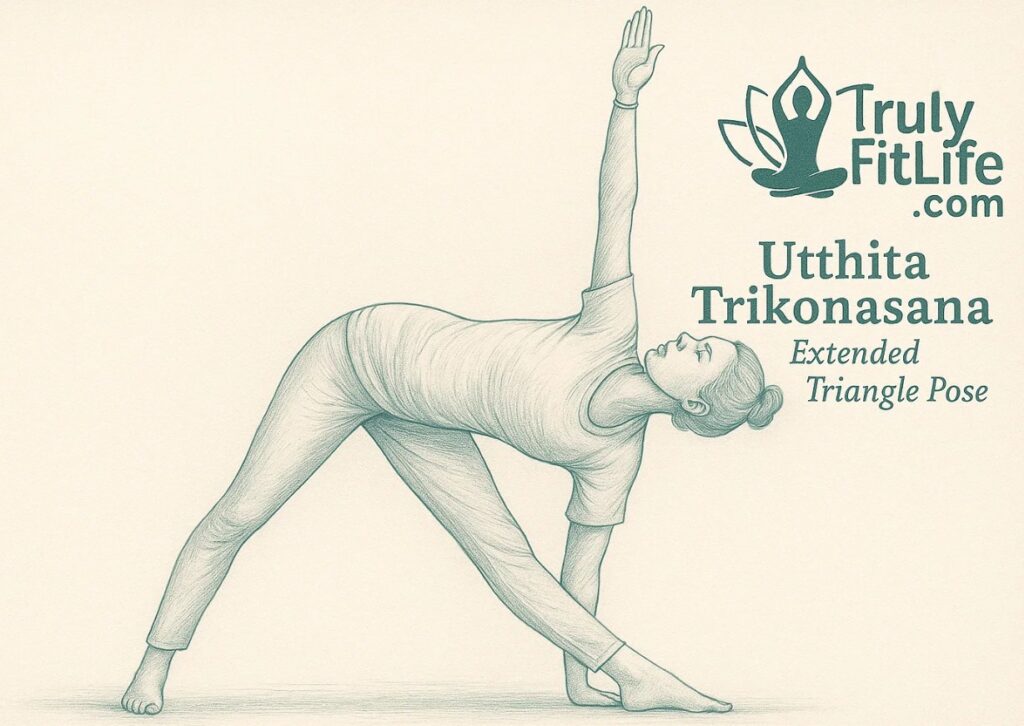
Utthita Trikonasana, also known as the Extended Triangle Pose, is a classical standing yoga asana that symbolizes balance, grounding, and expansion. “Utthita” means extended, “Trikona” means triangle, and “Asana” means pose.
It is one of the foundational poses in Hatha Yoga and frequently appears in Vinyasa Flow sequences. This pose enhances body awareness, opens the hips and chest, and helps practitioners establish strong foundations for more advanced asanas.
2. Step-by-Step Guide to Practice
- Begin in Tadasana (Mountain Pose) with feet together and arms at the sides.
- Step feet about 3–4 feet apart. Turn the right foot outward (90°) and the left foot slightly inward.
- Extend both arms sideways, parallel to the floor.
- Exhale and bend at the hip, reaching the right arm toward the shin, ankle, or a block.
- Stretch the left arm upward, forming a straight line from hand to hand.
- Keep both legs straight and thighs engaged.
- Turn the head to gaze at the left fingertips (or forward if the neck feels strained).
- Hold the pose for 30–60 seconds, breathing deeply.
- Inhale to rise back up, then repeat on the opposite side.
3. Benefits of Utthita Trikonasana – Extended Triangle Pose
Physical Benefits
- Stretches hamstrings, hips, calves, and spine.
- Strengthens legs, knees, and ankles.
- Expands the chest and shoulders, improving respiratory function.
- Improves digestion by stimulating abdominal organs.
- Enhances balance and postural alignment.
Mental & Emotional Benefits
- Reduces stress and mental fatigue.
- Promotes focus and concentration.
- Encourages calmness through steady breathing.
Spiritual Benefits
- Balances energy flow in the Manipura Chakra (Solar Plexus).
- Encourages grounding and stability.
- Prepares the body for meditation by aligning energy channels.
4. Muscles and Body Systems Involved
- Muscles: hamstrings, quadriceps, glutes, obliques, erector spinae, shoulders.
- Systems: digestive system, respiratory system, musculoskeletal system, and nervous system (calming effect).
5. Drishti (Gaze Point) and Breathing Pattern
- Drishti (gaze): Urdhva Drishti – upward to the raised hand.
- Breathing: Inhale while lengthening the spine; exhale while deepening into the side stretch. Maintain slow, rhythmic breaths.
6. Preparatory and Counter Poses
Preparatory poses:
- Tadasana (Mountain Pose)
- Virabhadrasana II (Warrior II)
- Parsvottanasana (Intense Side Stretch)
Counter poses:
- Ardha Chandrasana (Half Moon Pose)
- Utthita Parsvakonasana (Extended Side Angle Pose)
- Prasarita Padottanasana (Wide-Legged Forward Bend)
7. Modifications and Variations
- Use a yoga block under the hand for stability.
- Practice near a wall to maintain alignment.
- For advanced practice, extend the top arm overhead creating a diagonal line (Parivrtta variation).
8. Common Mistakes and Safety Tips
- Collapsing the chest instead of expanding.
- Overextending the bottom hand and losing alignment.
- Locking the knees instead of engaging muscles.
- Straining the neck by forcing the gaze upward.
✔️ Tip: Always prioritize spine length and chest openness over how far you reach down.
9. Contraindications – Who Should Avoid This Pose?
- Severe migraines or vertigo.
- Neck injuries (keep gaze forward).
- High or low blood pressure (avoid upward gaze).
- Knee or hip joint injuries.
10. Therapeutic Applications
- Relieves stiffness in the hips and spine.
- Reduces stress and mild anxiety.
- Improves digestion and relieves bloating.
- Strengthens posture for those with sedentary lifestyles.
11. Utthita Trikonasana in Yoga Styles
- Hatha Yoga: taught as a foundational standing pose.
- Ashtanga Yoga: practiced in the primary series.
- Vinyasa Flow: used as a transition pose for dynamic sequences.
- Iyengar Yoga: strong emphasis on alignment and props like blocks and straps.
12. Final Thoughts
Utthita Trikonasana (Extended Triangle Pose) is a cornerstone of yoga practice. It embodies grounding, expansion, and balance while cultivating mental focus. Regular practice enhances flexibility, strengthens the body, and promotes a sense of calm stability.
Whether practiced in Hatha, Vinyasa, or Iyengar traditions, it remains a timeless asana for both beginners and experienced practitioners.
🧘 Related Yoga Poses You May Like
- ➤ Parivrtta Trikonasana – Revolved Triangle Pose Complete Guide
- ➤ Utthita Parshvakonasana – Extended Side Angle Pose Complete Guide
- ➤ Ardha Chandrasana – Half Moon Pose for Balance and Energy
- ➤ Virabhadrasana II – Warrior Pose II for Strength and Stability
- ➤ Trikonasana (If Exists Skip Else Ignore)
- ➤ Parivrtta Utkatasana – Revolved Chair Pose Powerful Guide