Table of Contents
- Introduction to Virabhadrasana II
- Step-by-Step Guide to Virabhadrasana II
- Alignment and Drishti Points
- Benefits of Virabhadrasana II
- Muscles and Systems Activated
- Preparatory and Counter Poses
- Common Mistakes to Avoid
- Variations and Modifications of Virabhadrasana II
- Contraindications and Safety Guidelines
- Symbolism of Virabhadrasana II in Yoga Philosophy
- Final Thoughts
1. Introduction to Virabhadrasana II
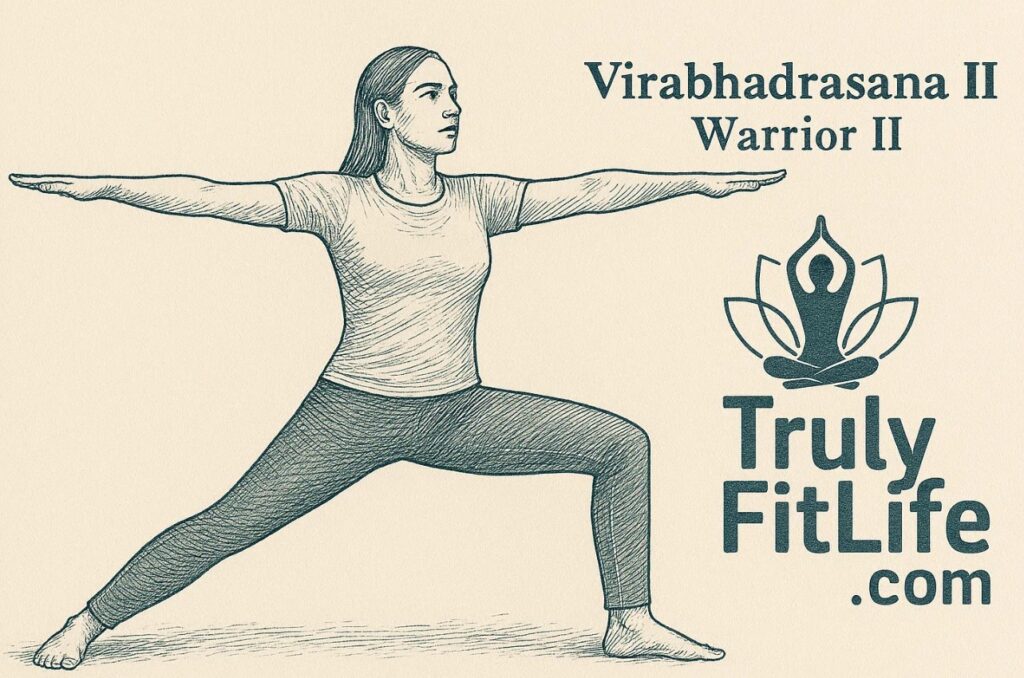
Virabhadrasana II, also called Warrior Pose II, is a foundational standing yoga posture symbolizing strength, courage, and inner stability. In Sanskrit, Virabhadra refers to a legendary warrior created by Lord Shiva, and Asana means pose.
This posture combines strength with openness: while the legs root firmly into the earth, the arms extend powerfully outward. It is widely practiced in Hatha, Vinyasa, and Ashtanga yoga, offering both physical benefits and mental grounding.
2. Step-by-Step Guide to Virabhadrasana II
- Start in Tadasana (Mountain Pose): Stand tall with feet together and arms at your sides.
- Step wide: Inhale and step your feet about 3–4 feet apart.
- Turn feet: Rotate the right foot 90 degrees outward, left foot slightly inward.
- Bend front knee: Exhale and bend the right knee directly above the ankle, thigh parallel to the floor.
- Extend arms: Stretch both arms outward in line with the shoulders, palms facing down.
- Open hips: Keep pelvis facing the side, with chest lifted.
- Drishti (gaze): Look forward over your right fingertips.
- Hold: Stay for 20–40 seconds with steady breathing.
- Release: Straighten the right leg, return arms to sides, and repeat on the opposite side.
3. Alignment and Drishti Points in Virabhadrasana II
- Front knee stacked over ankle, not collapsing inward.
- Back leg strong, outer edge of the foot pressing into the mat.
- Arms extended evenly, shoulders relaxed.
- Spine tall, chest open, hips facing sideways.
- Drishti focused forward beyond front fingertips.
4. Benefits of Virabhadrasana II
Physical Benefits
- Strengthens legs, ankles, and shoulders.
- Stretches hips, groin, and chest.
- Improves stamina and endurance.
- Enhances balance and coordination.
- Increases mobility in hips and spine.
Mental & Emotional Benefits
- Boosts focus and determination.
- Encourages grounding and inner stability.
- Reduces anxiety and promotes confidence.
- Inspires a sense of empowerment and courage.
5. Muscles and Systems Activated
- Lower Body: Quadriceps, hamstrings, glutes, calves.
- Core: Abdominals and obliques for stabilization.
- Upper Body: Deltoids, trapezius, and spinal extensors.
This posture stimulates the circulatory system, improves lung capacity by expanding the chest, and strengthens the nervous system through focused drishti and balance.
6. Preparatory and Counter Poses
Preparatory Poses
- Utthita Trikonasana (Extended Triangle Pose)
- Virabhadrasana I (Warrior Pose I)
- Utthita Parsvakonasana (Extended Side Angle Pose)
Counter Poses
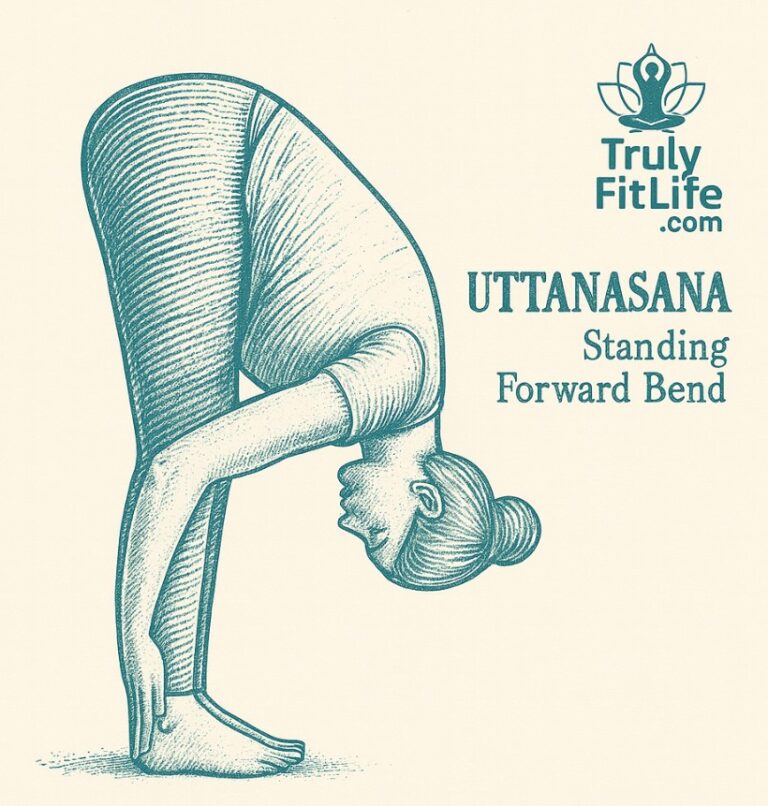
- Prasarita Padottanasana (Wide-Legged Forward Bend)
- Tadasana (Mountain Pose)
- Balasana (Child’s Pose)
7. Common Mistakes to Avoid
- Front knee extending beyond toes: Keep shin vertical.
- Collapsing torso forward: Maintain upright spine.
- Uneven arms: Stretch both arms equally.
- Overarching lower back: Engage core to protect spine.
8. Variations and Modifications of Virabhadrasana II
- Beginner Modification: Shorten the stance to reduce intensity.
- Wall Support: Perform with back against the wall for alignment.
- Dynamic Variation: Flow between straight and bent front knee to build stamina.
- Advanced Variation: Close eyes in the pose to challenge balance.
9. Contraindications and Safety Guidelines
Avoid Virabhadrasana II if you have:
- Recent hip, knee, or ankle injuries
- High blood pressure (avoid prolonged holds)
- Shoulder strain
Safety Tips:
- Use props or shorten stance for support.
- Warm up hips and legs before practice.
- Focus on breathing to maintain steadiness.
10. Symbolism of Virabhadrasana II in Yoga Philosophy
Virabhadrasana II represents the warrior spirit of courage, focus, and resilience. It embodies readiness for challenges while staying calm and centered. This asana reminds practitioners to face difficulties with strength, stability, and an open heart.
11. Final Thoughts
Virabhadrasana II – Warrior Pose II is a dynamic posture that unites strength, focus, and grace. It improves balance, flexibility, and endurance while cultivating inner confidence.
By practicing Virabhadrasana II regularly, yogis learn to ground firmly, expand outward, and face life’s challenges with courage and determination.