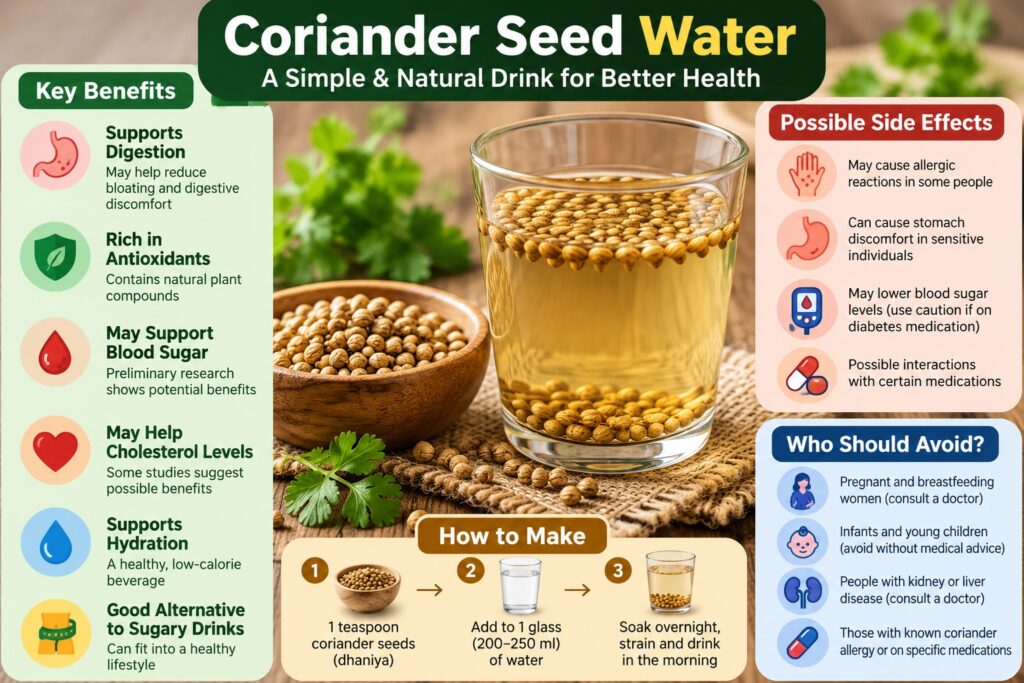
Coriander seed water benefits have made this traditional Indian drink popular among people looking for natural ways to support digestion, hydration, and general wellness. Also known as Dhaniya Water (ధనియాల నీళ్లు), this simple infusion is prepared by soaking coriander seeds in water, usually overnight.
Coriander seeds (Coriandrum sativum) are commonly used in Indian cooking and traditional home remedies. They contain aromatic compounds, polyphenols, and flavonoids that have been investigated for their antioxidant and metabolic properties.
However, it is important to distinguish traditional uses from scientifically established benefits. Research involving coriander seed powder, extracts, or laboratory preparations does not necessarily prove that drinking homemade soaked coriander water produces the same effects.
In this article, we will explore the potential benefits of soaked coriander seeds water, possible side effects, preparation methods, recommended precautions, and who should or should not drink it.
Table of Contents
- What Is Coriander Seed Water?
- Nutritional and Plant Compounds in Coriander Seeds
- Potential Benefits of Coriander Seed Water
- Coriander Seed Water Side Effects
- Who Can Drink Coriander Water?
- Who Should Avoid Coriander Water?
- How to Make Coriander Seed Water
- Soaked vs. Boiled Coriander Water
- Best Time to Drink Coriander Water
- How Much Coriander Water Can You Drink?
- Frequently Asked Questions
- Final Thoughts
What Is Coriander Seed Water?
Coriander seed water is a mild herbal infusion prepared by soaking whole coriander seeds in drinking water. In India, coriander seeds are commonly called Dhaniya or Dhaniyalu.
The seeds release some of their flavour and water-soluble compounds into the water during soaking. The resulting drink has a mild, aromatic taste and can be consumed warm or at room temperature.
Coriander seed water is different from coriander seed powder mixed with water, boiled coriander decoctions, and concentrated coriander extracts. These preparations may contain different concentrations of plant compounds.
Although coriander seeds have a long history of culinary and traditional use, the specific health effects of overnight-soaked coriander water have not been extensively studied in humans.
Nutritional and Plant Compounds in Coriander Seeds
Coriander seeds contain several naturally occurring compounds that have attracted scientific interest.
Some of the important compounds include:
- Linalool: An aromatic compound responsible for much of coriander’s characteristic fragrance.
- Polyphenols: Plant compounds investigated for their antioxidant properties.
- Flavonoids: Naturally occurring compounds studied for their potential biological activities.
- Essential oils: Aromatic substances that contribute to coriander’s flavour and fragrance.
The amount of these compounds transferred into homemade coriander water depends on factors such as seed quality, quantity, soaking duration, water temperature, and preparation method.
Drinking coriander water should not be considered equivalent to consuming a measured quantity of coriander seed powder or a standardized herbal extract.
Potential Benefits of Coriander Seed Water
Coriander seed water is traditionally consumed for digestive comfort and general wellness. Some potential benefits are supported by preliminary research on coriander preparations, while others remain traditional uses without strong clinical evidence.
1. May Support Digestive Comfort
One of the most common traditional uses of coriander water is supporting digestion.
Coriander seeds contain aromatic compounds that have been investigated for their potential gastrointestinal effects. Traditionally, coriander preparations have been used for occasional digestive discomfort.
Some people enjoy coriander water after meals or as a mild herbal beverage.
However, there is insufficient clinical evidence to confirm that overnight-soaked coriander water reliably treats indigestion, acidity, gas, or bloating.
If you experience persistent abdominal pain, frequent acidity, vomiting, or unexplained digestive symptoms, consult a healthcare professional rather than relying on herbal drinks.
2. Contains Antioxidant Plant Compounds
Coriander seeds contain polyphenols and other phytochemicals that have demonstrated antioxidant activity in laboratory research.
Antioxidants are compounds that help protect biological molecules from oxidative damage.
Although coriander contains antioxidant compounds, this does not establish that drinking coriander water prevents chronic diseases or reverses existing cellular damage.
The health effects of a homemade infusion depend on its actual composition and the quantity consumed.
3. May Support Blood Sugar Regulation
Coriander seed preparations have been investigated for their possible effects on blood glucose levels.
A small randomized, placebo-controlled clinical trial involving adults with type 2 diabetes examined the consumption of 1,000 mg of coriander seed powder daily for six weeks.
The researchers reported improvements in fasting blood glucose and certain lipid measurements in the coriander group.
However, this study investigated measured coriander seed powder rather than homemade coriander seed water.
More research is needed to determine whether soaked coriander water produces similar effects, what quantity might be effective, and whether regular consumption is safe alongside diabetes medication.
Important: Coriander water is not a treatment for diabetes and should never replace prescribed medication, blood glucose monitoring, or medical advice.
4. May Have Potential Cholesterol-Related Benefits
Some preliminary research involving coriander seed powder has investigated its effects on cholesterol and triglyceride levels.
The small clinical trial mentioned above reported changes in total cholesterol, LDL cholesterol, and triglycerides following coriander seed powder supplementation.
However, these findings cannot be directly applied to overnight-soaked coriander water.
There is not enough evidence to recommend coriander water as a treatment for high cholesterol or cardiovascular disease.
People with elevated cholesterol should continue following their clinician’s recommendations regarding diet, exercise, medication, and monitoring.
5. Supports Daily Hydration
Coriander water contributes to your daily fluid intake, just like ordinary drinking water and other unsweetened beverages.
If you enjoy its mild flavour, it can be an alternative to sugary drinks.
For people trying to reduce added sugar consumption, unsweetened coriander water may be a convenient beverage option.
However, its hydration benefits are primarily due to the water itself rather than a special detoxifying property of coriander seeds.
6. May Be a Convenient Alternative to Sweetened Beverages
Homemade coriander water generally contains very little energy when prepared without added sugar, honey, or other sweeteners.
Replacing sugary beverages with unsweetened drinks can help reduce added sugar intake.
However, coriander water does not independently burn body fat or guarantee weight loss.
Weight management depends on overall dietary intake, physical activity, sleep, and other individual factors.
7. Traditionally Used for General Wellness
In traditional Indian households, coriander seed water is sometimes consumed as part of a morning wellness routine.
People may drink it because it is inexpensive, easy to prepare, and has a mild flavour.
Nevertheless, traditional use should not be confused with proven medical effectiveness.
There is currently insufficient clinical evidence to establish that regular coriander water consumption prevents kidney disease, removes toxins, cures infections, or treats chronic medical conditions.
Coriander Seed Water Side Effects
Coriander seeds are commonly used as a culinary spice, but some people may experience unwanted effects, particularly when consuming concentrated preparations.
Understanding coriander seed water side effects is important before making it a regular habit.
1. Allergic Reactions
Some individuals may be allergic to coriander.
Possible symptoms include:
- Skin itching or rash
- Hives
- Swelling of the lips, tongue, or face
- Wheezing
- Difficulty breathing
Anyone with a known coriander allergy should avoid coriander water.
Severe allergic symptoms, especially breathing difficulty or throat swelling, require immediate emergency medical attention.
2. Possible Blood Sugar Changes
Preliminary research involving coriander seed preparations suggests possible blood-glucose-lowering effects.
People taking insulin or diabetes medications should be cautious about regularly consuming concentrated coriander preparations.
The actual risk associated with ordinary soaked coriander water has not been established.
If you have diabetes, discuss regular medicinal use with your healthcare professional and continue monitoring your blood glucose as recommended.
3. Digestive Discomfort
Some people may experience stomach discomfort, nausea, or loose stools after consuming a herbal preparation that does not agree with them.
The likelihood may depend on individual sensitivity, concentration, and quantity consumed.
If symptoms occur, discontinue the drink.
4. Possible Medication Interactions
Reliable clinical interaction data for ordinary coriander water are limited.
However, people taking medications that affect blood glucose should be particularly cautious about concentrated herbal preparations.
If you take multiple prescription medicines or have a chronic medical condition, consult your doctor or pharmacist before using coriander preparations regularly for medicinal purposes.
5. Contamination and Food Safety
Improperly stored seeds or water can introduce unwanted microorganisms.
To reduce contamination risks:
- Use clean drinking water.
- Rinse coriander seeds before soaking.
- Use a clean glass or container.
- Cover the container.
- Refrigerate during prolonged soaking, particularly in warm weather.
- Prepare fresh servings rather than storing the infusion for several days.
Discard the drink if it develops an unusual smell, appearance, or taste.
Who Can Drink Coriander Water?
For many healthy adults, a mild coriander seed infusion can be consumed as an occasional beverage if it is well tolerated.
Healthy Adults
Adults without known coriander allergies or relevant medical restrictions can generally try a mild preparation.
There is no established medical requirement to drink coriander water every morning.
People Looking for a Low-Sugar Beverage
Unsweetened coriander water can contribute to daily hydration and provide an alternative to sweetened beverages.
People With Occasional Digestive Discomfort
Some individuals may find a mild coriander infusion pleasant as part of their regular diet.
However, its effectiveness for treating digestive symptoms is not established.
People With Diabetes
Normal culinary quantities of coriander are different from concentrated herbal preparations.
People taking insulin or glucose-lowering medications should discuss regular medicinal use with their healthcare professional.
People With High Cholesterol
Preliminary studies involving coriander seed powder have investigated lipid-related effects, but coriander water is not a proven cholesterol-lowering treatment.
It should not replace prescribed cholesterol medication or dietary recommendations.
Who Should Avoid Coriander Water?
Certain individuals should avoid coriander water or consult a healthcare professional before consuming it regularly.
| Person or condition | Recommendation |
|---|---|
| Known coriander allergy | Avoid completely |
| Previous severe allergic reaction to coriander | Avoid and seek medical guidance |
| People taking insulin or diabetes medication | Consult a healthcare professional before regular medicinal use |
| Pregnant women | Culinary amounts differ from concentrated medicinal preparations; consult an obstetrician |
| Breastfeeding women | Limited evidence for medicinal-dose safety; consult a healthcare professional |
| Infants below 6 months | Do not give coriander water |
| Babies aged 6–12 months | Avoid routine herbal drinks without pediatric advice |
| Toddlers and young children | Avoid concentrated medicinal preparations without pediatric guidance |
| People with kidney disease | Consult the treating doctor before regular concentrated use |
| People with liver disease | Consult the treating doctor before medicinal use |
| People taking multiple prescription medicines | Check for possible interactions with a doctor or pharmacist |
Coriander Water During Pregnancy
Coriander used in normal culinary quantities is different from concentrated herbal preparations.
There is insufficient human evidence to recommend medicinal-dose coriander water during pregnancy.
Pregnant women should consult their obstetrician before regularly consuming concentrated coriander preparations, particularly if they have pregnancy-related complications.
Coriander water should not be used to induce labour, manage gestational diabetes, or replace prenatal care.
Coriander Water While Breastfeeding
Normal coriander used in food is different from concentrated herbal preparations.
Because there is limited clinical evidence about medicinal quantities during breastfeeding, consult a healthcare professional before making concentrated coriander water a daily routine.
Can Children Drink Coriander Water?
For children, age and preparation method are important.
Infants below 6 months: Do not give coriander water. Breast milk or properly prepared infant formula should remain their primary source of nutrition and hydration.
Babies aged 6–12 months: Avoid introducing herbal water as a routine beverage without pediatric advice.
Toddlers: Small culinary quantities of coriander in food are different from medicinal drinks. Avoid giving concentrated coriander water regularly without consulting the pediatrician.
Older children: Mild preparations may be tolerated, but there is no established therapeutic dose or proven need for routine consumption.
For children experiencing fever, vomiting, diarrhoea, or reduced urination, seek appropriate medical advice rather than relying on coriander water.
How to Make Coriander Seed Water
Preparing coriander seed water at home is simple and requires only two ingredients.
Ingredients
- 1 teaspoon whole coriander seeds (Dhaniya)
- 200–250 ml clean drinking water
Method 1: Overnight Soaked Coriander Water
This is the traditional soaking method.
Instructions:
- Take approximately one teaspoon of whole coriander seeds.
- Rinse the seeds under clean drinking water.
- Add the seeds to a clean glass containing 200–250 ml of drinking water.
- Cover the glass or container.
- Leave it overnight. Refrigerate during prolonged soaking, especially in warm weather.
- In the morning, strain the seeds.
- Drink the infused water.
You can discard the soaked seeds or use them in cooking.
There is no established evidence that soaking coriander seeds for a specific number of hours maximizes health benefits.
Method 2: Boiled Coriander Water
Boiling is another traditional preparation method.
Instructions:
- Add one teaspoon of coriander seeds to approximately 250 ml of water.
- Bring the water to a boil.
- Simmer gently for approximately five minutes.
- Allow the preparation to cool to a comfortable temperature.
- Strain the seeds.
- Drink the infusion.
Boiling and soaking may extract plant compounds differently, but neither method has been established as medically superior.
Soaked vs. Boiled Coriander Water
| Feature | Soaked coriander water | Boiled coriander water |
|---|---|---|
| Preparation | Seeds immersed in water | Seeds simmered in water |
| Temperature | Usually room temperature or refrigerated | Heated during preparation |
| Taste | Generally mild | May have a stronger flavour |
| Preparation time | Several hours | Approximately 5–10 minutes |
| Plant compound extraction | Depends on soaking conditions | Depends on heat and simmering time |
| Proven health superiority | Not established | Not established |
Choose the preparation you prefer and tolerate well.
Best Time to Drink Coriander Water
Many people prefer drinking coriander water in the morning because overnight soaking makes it convenient to prepare.
However, there is no strong clinical evidence that drinking coriander water on an empty stomach provides additional health benefits.
You can consume it:
- In the morning
- Alongside breakfast
- Between meals
- At another convenient time
If it causes stomach discomfort on an empty stomach, try consuming it with or after food, or discontinue it.
There is no established requirement to drink coriander water at a particular time.
How Much Coriander Water Can You Drink?
There is no clinically established therapeutic dose for homemade coriander seed water.
For a healthy adult trying it as a beverage, a mild preparation using approximately one teaspoon of coriander seeds in one glass of water is a reasonable culinary-style starting point.
This is a practical preparation suggestion, not a medically validated treatment dose.
Avoid increasing the quantity excessively in pursuit of faster results.
People with diabetes, chronic medical conditions, known allergies, or regular medication use should consult their healthcare professional before using concentrated coriander preparations regularly.
Frequently Asked Questions About Coriander Seed Water
1. What are the main coriander seed water benefits?
Coriander water contributes to hydration and contains plant compounds with antioxidant activity in laboratory studies. It is traditionally used for digestive comfort, but clinical evidence for the benefits of homemade soaked coriander water remains limited.
2. Can I drink coriander water every morning?
Healthy adults can generally consume a mild preparation if it is well tolerated. However, there is no established medical requirement to drink it daily.
3. Can I drink soaked coriander water without boiling?
Yes. Rinse the seeds, use clean drinking water, cover the container, and refrigerate during prolonged soaking, particularly in warm weather.
4. Is coriander water good for digestion?
Coriander has traditional use for digestive comfort, but strong clinical evidence that soaked coriander water reliably treats indigestion, gas, or bloating is lacking.
5. Can coriander water help with weight loss?
Unsweetened coriander water is a low-calorie beverage, but there is no convincing evidence that it independently burns fat or produces meaningful weight loss.
6. Can coriander water reduce blood sugar?
Small clinical studies involving coriander seed powder have reported improvements in blood glucose measurements. However, these results do not establish that soaked coriander water lowers blood sugar or treats diabetes.
7. Can diabetics drink coriander water?
People with diabetes should distinguish ordinary culinary consumption from regular medicinal use. Those taking insulin or glucose-lowering medicines should consult their healthcare professional before using concentrated coriander preparations regularly.
8. Can coriander water reduce uric acid?
There is insufficient reliable human evidence to recommend coriander water for lowering uric acid or treating gout.
9. Can coriander water dissolve kidney stones?
There is no reliable clinical evidence that coriander water dissolves kidney stones or replaces medical treatment.
10. Can coriander water detoxify the body?
There is no established evidence that coriander water provides a special detoxification effect. The liver and kidneys already perform important waste-processing and elimination functions.
11. Should I eat the soaked coriander seeds or discard them?
You can discard the seeds or use them in cooking. Eating the seeds and drinking the infused water are different ways of consuming coriander and may provide different quantities of plant compounds.
12. Can I add cumin seeds to coriander water?
Cumin and coriander are commonly used together in cooking. However, combining them does not establish additional medical benefits. If trying a new preparation, start with a mild quantity and observe your tolerance.
13. Can coriander water cause dehydration?
There is no established evidence that a normal serving of coriander-infused water causes dehydration. It contributes fluid to your daily intake.
14. Can I store coriander water for several days?
Fresh preparation is preferable. Use a clean, covered container and refrigerate the infusion if it is not consumed immediately. Discard it if its smell, appearance, or taste changes.
Final Thoughts
Coriander seed water is a traditional, easy-to-prepare beverage that can contribute to hydration and provide small amounts of naturally occurring plant compounds.
Potential digestive and metabolic benefits are scientifically interesting, but the evidence for homemade soaked coriander water remains limited. Preliminary clinical research involving coriander seed powder should not be interpreted as proof that the infused water treats diabetes, high cholesterol, kidney problems, or other medical conditions.
For healthy adults, a mild preparation using one teaspoon of coriander seeds in a glass of water can be a reasonable beverage choice if well tolerated.
There is no need to consume large quantities or force yourself to drink it every day.
If you have a chronic medical condition, take regular medication, are pregnant or breastfeeding, or are considering giving coriander water to a young child, consult an appropriate healthcare professional before using it as a regular medicinal remedy.
Medical Disclaimer: This article is intended for general educational purposes only and does not replace professional medical advice, diagnosis, or treatment. Individual responses to herbal preparations may vary. Always consult a qualified healthcare professional regarding medical conditions, medication interactions, pregnancy, breastfeeding, or children’s health.