Ajwain water benefits have made this traditional Indian drink popular among people looking for natural ways to support digestion and manage occasional stomach discomfort. Prepared using ajwain (carom seeds) soaked in water, this simple beverage is traditionally consumed for gas, bloating, indigestion, and other digestive complaints.
Ajwain, scientifically known as Trachyspermum ammi, contains aromatic compounds such as thymol, which have been investigated for their potential digestive, antioxidant, and antimicrobial properties.
However, it is important to understand that traditional uses are not the same as scientifically proven medical treatments. While ajwain has demonstrated interesting biological properties in laboratory research, strong human clinical evidence for homemade ajwain water remains limited.
In this comprehensive guide, we will explore the potential benefits of soaked ajwain water, its possible side effects, how to prepare it, who can drink it, and who should avoid it.
Table of Contents
- What Is Ajwain Water?
- Ajwain Water Benefits
- Ajwain Water Side Effects
- Who Can Drink Ajwain Water?
- Who Should Avoid Ajwain Water?
- How to Prepare Soaked Ajwain Water
- Best Time to Drink Ajwain Water
- Soaked vs. Boiled Ajwain Water
- Frequently Asked Questions
- Final Verdict
What Is Ajwain Water?
Ajwain water is a traditional herbal beverage prepared by soaking carom seeds in drinking water. It is commonly used in Indian households as a traditional remedy for occasional digestive discomfort.
Ajwain seeds have a strong, slightly bitter, peppery taste and a distinctive aroma. They contain several naturally occurring compounds, including thymol, which has been investigated for various biological activities.
Ajwain: Basic Information
- Common name: Ajwain or carom seeds
- Scientific name: Trachyspermum ammi
- Telugu name: వాము (Vamu)
- Hindi name: अजवाइन
- Main aromatic compound: Thymol
- Traditional use: Digestive support and culinary applications
What Happens When You Soak Ajwain Seeds in Water?
When ajwain seeds are soaked in water, some of their water-soluble compounds and aromatic constituents are released into the liquid.
The amount extracted depends on several factors:
- Quantity of ajwain seeds used
- Duration of soaking
- Water temperature
- Whether the seeds are crushed
- Whether the seeds are consumed along with the water
Soaking does not extract every compound present in ajwain seeds. Therefore, the effects of homemade ajwain water cannot automatically be compared with concentrated extracts or essential oils used in scientific research.
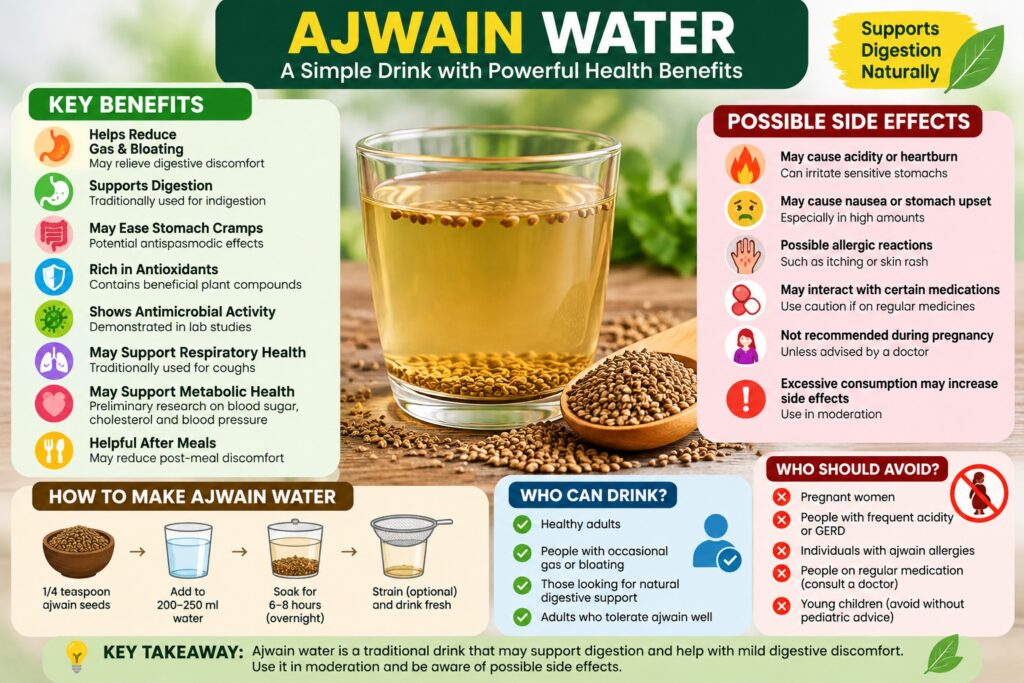
Ajwain Water Benefits: 8 Potential Health Benefits
Ajwain has a long history of traditional use, particularly for digestive complaints. Some of its compounds have also demonstrated biological activities in laboratory and animal studies.
The following are potential benefits rather than guaranteed health outcomes.
1. May Help Relieve Gas and Bloating
One of the most common traditional uses of ajwain water is for occasional gas and bloating.
Ajwain is traditionally classified as a carminative, meaning it is believed to help relieve intestinal gas and associated discomfort.
Some people consume ajwain water when experiencing:
- Mild abdominal bloating
- Occasional gas
- A feeling of fullness after meals
- Mild digestive discomfort
Certain ajwain constituents have demonstrated antispasmodic activity in experimental research, providing a possible explanation for its traditional digestive use.
However, clinical evidence that soaked ajwain water reliably relieves bloating in humans remains limited.
2. May Support Digestion
Ajwain has traditionally been used for indigestion and appetite-related complaints.
Experimental research has investigated its potential digestive stimulant properties and effects on gastrointestinal activity.
A mild ajwain infusion may be a traditional beverage option for adults experiencing occasional digestive discomfort, provided they tolerate it.
However, ajwain water is not a proven treatment for chronic indigestion, stomach ulcers, gallstones, or other underlying digestive disorders.
3. May Help with Mild Stomach Cramps
Some experimental studies have investigated the antispasmodic properties of ajwain extracts.
Antispasmodic activity refers to the ability of certain substances to influence smooth-muscle contractions.
This provides a possible explanation for the traditional use of ajwain in managing occasional abdominal discomfort associated with indigestion or gas.
However, drinking soaked ajwain water has not been established as an effective treatment for persistent or severe abdominal pain.
4. Contains Antioxidant Compounds
Ajwain contains naturally occurring phytochemicals, including thymol and other aromatic compounds, that have demonstrated antioxidant activity in laboratory research.
Antioxidants can help neutralize certain reactive molecules under experimental conditions.
However, laboratory antioxidant activity does not establish that drinking ajwain water prevents cancer, heart disease, premature ageing, or other chronic diseases.
5. Demonstrates Antimicrobial Activity in Laboratory Studies
Ajwain essential oil and extracts have demonstrated activity against certain microorganisms in laboratory experiments.
Researchers have investigated these properties as part of broader research into naturally occurring antimicrobial compounds.
However, laboratory antimicrobial activity does not mean that ajwain water can treat bacterial infections or replace prescribed antibiotics.
6. May Have Potential Respiratory Effects
Traditional preparations of ajwain have been used for coughs and respiratory complaints.
Some experimental research has investigated possible bronchodilatory and cough-related properties.
Nevertheless, there is insufficient clinical evidence to recommend ajwain water as a treatment for asthma, bronchitis, persistent cough, or respiratory infections.
7. May Influence Certain Metabolic Processes
Animal and laboratory studies have investigated the possible effects of ajwain extracts on blood glucose, blood lipids, and blood pressure.
These findings are preliminary and cannot establish that ordinary homemade ajwain water controls diabetes, reduces cholesterol, or prevents cardiovascular disease.
People with diabetes or hypertension should continue their prescribed treatment and should not replace medication with herbal beverages.
8. May Help with Occasional Post-Meal Discomfort
Ajwain is traditionally consumed after meals, particularly following heavy or rich foods.
Because it is traditionally associated with digestive support, some people find it useful as a mild post-meal beverage.
However, there is no strong evidence that ajwain water accelerates food digestion or prevents every type of acidity and indigestion.
Ajwain Water Benefits: What Does Research Actually Support?
Understanding the difference between traditional use and established clinical evidence is important.
| Claimed benefit | Current evidence |
|---|---|
| Gas and bloating relief | Traditional use; limited human evidence |
| Digestive support | Traditional use and experimental evidence |
| Mild stomach cramp relief | Experimental antispasmodic findings |
| Antioxidant activity | Laboratory evidence |
| Antimicrobial activity | Laboratory evidence |
| Respiratory support | Preliminary experimental evidence |
| Blood sugar control | Not established for ajwain water |
| Weight loss | Not established |
| Detoxification | No convincing evidence |
| Kidney stone removal | Not established |
| Fat burning | Not established |
The most reasonable traditional use of ajwain water is for occasional mild digestive discomfort. It should not be considered a proven treatment for chronic medical conditions.
Ajwain Water Side Effects: 7 Possible Disadvantages
Although ajwain is commonly consumed as a culinary spice, excessive consumption or concentrated preparations may cause unwanted effects.
1. May Worsen Acidity and Heartburn
Ajwain has a strong, pungent nature. Some individuals may experience digestive irritation after consuming it.
Possible symptoms include:
- Burning sensation in the stomach
- Heartburn
- Increased acid reflux discomfort
- Nausea
- Stomach irritation
People with gastroesophageal reflux disease (GERD), frequent acidity, or gastritis should be particularly cautious.
If ajwain water consistently worsens your symptoms, discontinue its use.
2. May Cause Nausea or Stomach Upset
Strong preparations or excessive consumption may cause gastrointestinal discomfort.
Possible symptoms include nausea, stomach upset, or vomiting.
Avoid concentrated ajwain preparations, especially if they cause irritation when consumed on an empty stomach.
3. May Trigger Allergic Reactions
People with known allergies to ajwain or related plants should avoid consuming it.
Possible allergic symptoms include:
- Itching
- Skin rash
- Swelling
- Breathing difficulty
Severe allergic symptoms, such as swelling of the lips or tongue or difficulty breathing, require immediate medical attention.
4. Possible Medication Interactions
Reliable clinical interaction data for ordinary homemade ajwain water are limited.
However, concentrated herbal preparations deserve additional caution in people taking:
- Blood-thinning medications
- Blood-pressure medications
- Diabetes medications
- Medicines with a narrow therapeutic range
Some experimental research has investigated antiplatelet, blood-pressure-related, and glucose-related effects of ajwain constituents.
These findings do not prove that a normal cup of ajwain water interacts with these medicines. Nevertheless, people taking regular medication should consult a healthcare professional before using concentrated preparations regularly.
5. Pregnancy-Related Safety Concerns
Pregnant women should be cautious about medicinal-strength ajwain preparations.
Traditional uses and limited experimental research have raised questions about possible reproductive effects at certain exposures.
Therefore:
- Avoid medicinal-strength ajwain water during pregnancy unless your obstetrician specifically approves it.
- Avoid concentrated ajwain extracts and essential oils during pregnancy.
- Normal culinary use is different from consuming concentrated herbal preparations.
Do not use ajwain to induce menstruation, abortion, or labour.
6. Excessive Consumption May Increase Side Effects
There is no well-established therapeutic dose for homemade ajwain water.
Drinking large quantities does not necessarily provide additional benefits and may increase the possibility of digestive irritation or other unwanted effects.
7. Concentrated Ajwain Essential Oil Can Be Harmful
Ajwain essential oil is significantly more concentrated than ordinary soaked seed water.
Never substitute concentrated ajwain essential oil for a homemade infusion.
Do not swallow essential oil unless specifically prescribed and supervised by a qualified healthcare professional.
Who Can Drink Ajwain Water?
For healthy adults who tolerate ajwain, an occasional mild preparation may be reasonable as a traditional beverage.
Adults with Occasional Gas or Bloating
Adults experiencing mild, occasional digestive discomfort may try a small quantity if they have no relevant medical conditions.
Adults Using Ajwain in Cooking
Normal culinary quantities of ajwain are different from concentrated medicinal preparations.
Adults Interested in Traditional Digestive Drinks
People who enjoy traditional herbal beverages may consume mild ajwain water occasionally, provided it does not cause discomfort.
Who Should Avoid Ajwain Water?
Certain individuals should avoid medicinal-strength preparations or seek professional advice before consuming them regularly.
1. Pregnant Women
Avoid concentrated or medicinal-strength preparations unless specifically approved by an obstetrician.
2. People with GERD or Frequent Acidity
Ajwain may aggravate heartburn or reflux symptoms in some individuals.
3. People with Known Ajwain Allergies
Avoid ajwain entirely if you have a confirmed allergy.
4. People Taking Regular Medication
Consult a healthcare professional before using concentrated preparations regularly, particularly if you take medication for diabetes, blood pressure, or blood clotting.
5. People with Persistent Abdominal Symptoms
Do not rely on ajwain water to delay medical evaluation for severe pain, recurrent vomiting, unexplained weight loss, or gastrointestinal bleeding.
Can Children Drink Ajwain Water?
Children require additional caution because the safety and appropriate dosage of medicinal ajwain preparations have not been adequately established for different age groups.
| Age group | Recommendation |
|---|---|
| Below 6 months | Do not give ajwain water |
| 6–12 months | Avoid medicinal ajwain water unless advised by a pediatrician |
| 1–2 years | Consult a pediatrician before giving it as a remedy |
| 2–5 years | Avoid routine medicinal use without pediatric advice |
| 6–12 years | Culinary use differs from medicinal dosing |
| Teenagers | Occasional mild use may be reasonable if tolerated |
| Adults | Occasional mild use may be reasonable if no contraindications |
For infants, breast milk or formula should remain the primary source of hydration and nutrition.
Ajwain water should not be used to treat colic, vomiting, diarrhoea, fever, or other childhood illnesses without pediatric guidance.
For young children experiencing vomiting, reduced urine output, or persistent abdominal pain, seek medical advice rather than relying on herbal water.
How to Prepare Soaked Ajwain Water
Preparing ajwain water at home is simple and requires only a small quantity of seeds and drinking water.
Ingredients
- Ajwain seeds: ¼ teaspoon initially
- Drinking water: 200–250 ml
- A clean glass or covered container
Preparation Method
- Measure approximately ¼ teaspoon of ajwain seeds.
- Rinse the seeds briefly with clean drinking water if needed.
- Add the seeds to a glass containing 200–250 ml of drinking water.
- Cover the glass and soak for approximately 6–8 hours or overnight.
- Strain the water if desired.
- Drink it fresh at room temperature.
Should You Consume the Soaked Seeds Too?
You may consume the soaked seeds as a culinary ingredient if you tolerate them.
However, there is no proven requirement to chew the seeds to obtain a health benefit.
Straining the water is perfectly reasonable.
Practical Recommendation
Start with a mild preparation rather than a strong concentrate.
If you experience burning, nausea, or digestive discomfort, discontinue it.
There is no established medical requirement to drink ajwain water every morning or on an empty stomach.
Best Time to Drink Ajwain Water
Many people consume ajwain water in the morning or after meals as part of traditional digestive routines.
However, there is no convincing evidence that drinking it at a particular time produces better health outcomes.
| Timing | Practical consideration |
|---|---|
| Early morning | No proven special advantage |
| Empty stomach | May irritate sensitive stomachs |
| After meals | Traditional use for digestive discomfort |
| Before sleeping | Avoid if it worsens reflux or heartburn |
| Daily consumption | No established requirement or validated therapeutic schedule |
If you have a sensitive stomach, avoid concentrated preparations on an empty stomach.
Soaked Ajwain Water vs. Boiled Ajwain Water
Ajwain water can be prepared either by soaking seeds in room-temperature water or by heating them in water.
These methods may produce different extraction profiles.
| Feature | Soaked ajwain water | Boiled ajwain water |
|---|---|---|
| Preparation | Room-temperature infusion | Heated infusion or decoction |
| Taste | Usually milder | Often stronger |
| Aroma | Mild to moderate | Often more pronounced |
| Extraction | Depends on soaking time | Heat can increase extraction of some constituents |
| Proven medical superiority | Not established | Not established |
Neither method has been demonstrated to be universally more effective for health.
Choose the preparation you tolerate and enjoy.
Frequently Asked Questions About Ajwain Water Benefits
1. Can I Drink Ajwain Water Every Day?
There is no established evidence-based daily dose or requirement for routine consumption.
Occasional mild use may be reasonable for healthy adults who tolerate it. Avoid making concentrated preparations a daily habit without medical advice.
2. Does Ajwain Water Reduce Belly Fat?
No convincing human evidence establishes that ajwain water directly burns belly fat or produces meaningful weight loss.
Healthy eating, physical activity, adequate sleep, and sustainable calorie management remain important for weight management.
3. Does Ajwain Water Reduce Acidity?
Not reliably.
Some people may find it soothing for digestive discomfort, while others experience increased burning or reflux.
People with frequent acidity should discontinue it if symptoms worsen.
4. Can Ajwain Water Cure Constipation?
Ajwain water is not an established treatment for constipation.
Adequate water intake, dietary fibre, physical activity, and medical evaluation of persistent symptoms are more appropriate approaches.
5. Can I Drink Ajwain Water with Lemon?
You can combine them as a beverage if tolerated.
However, lemon may aggravate acidity or reflux in some individuals. There is no established additional medicinal benefit from combining lemon and ajwain water.
6. Can Pregnant Women Drink Ajwain Water?
Pregnant women should avoid medicinal-strength ajwain preparations unless their obstetrician specifically approves them.
Normal culinary use is different from concentrated herbal consumption.
7. Is Ajwain Water Safe During Breastfeeding?
Reliable safety data for regular medicinal-strength ajwain water during breastfeeding are limited.
Discuss regular medicinal use with your healthcare professional.
8. Can Ajwain Water Dissolve Kidney Stones?
There is no reliable evidence that drinking ajwain water dissolves kidney stones.
People with suspected kidney stones should seek appropriate medical evaluation rather than relying on herbal beverages.
9. How Long Should Ajwain Seeds Be Soaked in Water?
A traditional preparation commonly involves soaking a small quantity of seeds for approximately 6–8 hours or overnight.
However, this is a preparation method rather than a clinically established therapeutic requirement.
10. Can Ajwain Water Be Consumed on an Empty Stomach?
Some people consume it in the morning, but there is no proven special advantage to drinking it on an empty stomach.
People with acidity, reflux, or sensitive stomachs may experience irritation.
When Should You Seek Medical Attention?
Do not rely on ajwain water for symptoms such as:
- Severe or worsening abdominal pain
- Repeated vomiting
- Blood in vomit or stool
- Persistent diarrhoea
- Fever accompanied by abdominal pain
- Unexplained weight loss
- Difficulty swallowing
- Signs of dehydration
These symptoms may require medical evaluation.
Final Verdict: Is Ajwain Soaked Water Worth Drinking?
Ajwain is a useful culinary spice with interesting biological properties and a long history of traditional use.
The most reasonable potential application of ajwain water is as an occasional traditional beverage for mild digestive discomfort.
However, strong clinical evidence for homemade soaked ajwain water remains limited. It should not be considered a proven treatment for chronic digestive disorders, diabetes, kidney stones, weight loss, or other medical conditions.
For healthy adults who tolerate it, a mild preparation may be reasonable to try occasionally.
Pregnant women, young children, people with allergies, individuals with frequent acidity, and those taking regular medication should exercise additional caution.
The key takeaway: Use ajwain water in moderation, understand its limitations, and seek medical advice for persistent or severe symptoms.
Medical Disclaimer
This article is intended for general educational and informational purposes only. It does not replace professional medical advice, diagnosis, or treatment. The potential benefits discussed are based on traditional use and preliminary research, and they should not be interpreted as proven medical outcomes. Consult a qualified healthcare professional before using herbal preparations regularly, particularly during pregnancy, breastfeeding, childhood, or when taking prescription medication.