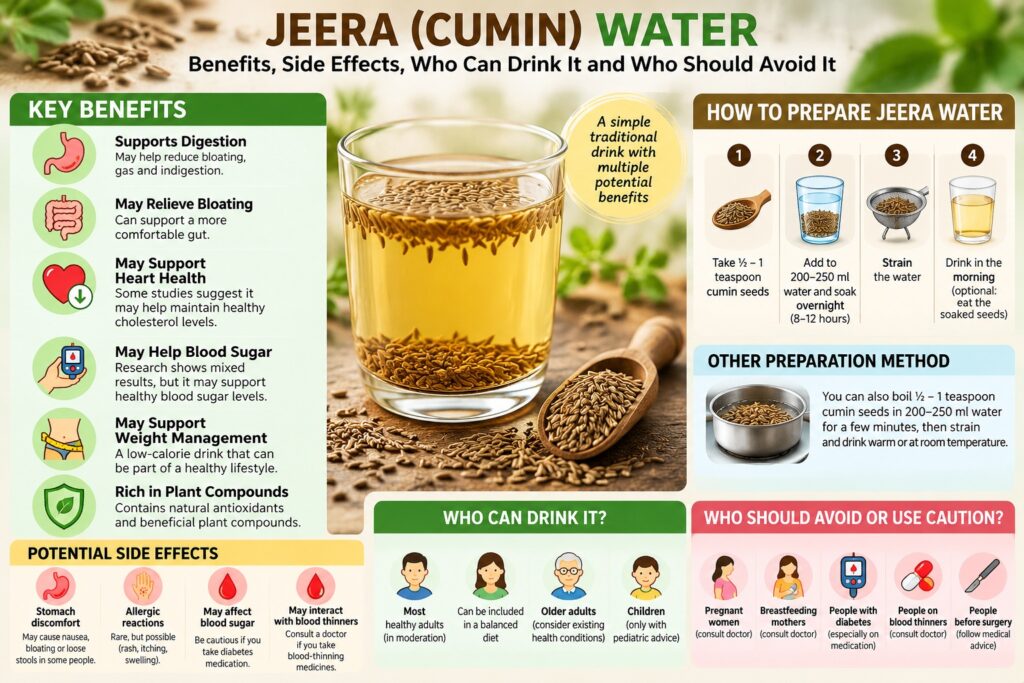
Jeera Water Benefits, Side Effects, and Who Should Avoid It
Jeera water benefits are often discussed in traditional Indian home remedies, especially for digestion, bloating, and weight management. Also called cumin water, this drink is usually prepared by soaking cumin seeds in water overnight or boiling them for a few minutes.
Many people drink jeera water in the morning or on an empty stomach. But what are the realistic benefits, what does scientific research say, and are there any jeera water side effects to consider?
This guide explains the potential benefits of jeera water, how to prepare it, whether soaked or boiled cumin water is preferable, and who should be careful—including people with diabetes, pregnant women, breastfeeding mothers, and parents considering it for children.
What Is Jeera Water?
Jeera water is water infused with cumin seeds (Cuminum cyminum), a spice commonly used in Indian cooking. The seeds contain aromatic oils and naturally occurring plant compounds. When soaked or heated in water, some of these compounds may transfer into the liquid.
People commonly prepare jeera water by soaking cumin seeds overnight. Others boil the seeds and drink the strained liquid warm or at room temperature.
There is no universally established medical dose for homemade jeera water. Importantly, many scientific studies on cumin have investigated powders, capsules, extracts, or measured supplements—not a typical glass of overnight-soaked cumin water.
Jeera Water Benefits: What Are the Potential Benefits?
Jeera water may be a pleasant, low-calorie beverage for people who enjoy its taste. Cumin has a history of traditional use for digestive discomfort, and research has investigated its possible effects on several health measures. However, evidence for cumin itself should not automatically be treated as proof that soaked jeera water produces the same effects.
1. Jeera Water for Digestion
One of the most common reasons people drink jeera water is to support digestion. Cumin has traditionally been used in food and home preparations for indigestion, gas, and abdominal discomfort.
Some people report that cumin beverages feel soothing after meals. However, clinical evidence specifically testing ordinary soaked jeera water for digestive symptoms is limited.
Jeera water may be worth trying as a food-based beverage if you tolerate it, but it is not a proven treatment for ongoing digestive problems.
2. May Help Some People With Bloating and Gas
Cumin is traditionally associated with digestive comfort. Some people find that cumin-infused drinks are pleasant when experiencing mild gas or bloating.
Persistent or severe bloating can have many causes, including constipation, food intolerance, acid reflux, irritable bowel syndrome, or other medical conditions. Do not rely on jeera water to manage symptoms that keep returning, worsen, or occur with severe pain, vomiting, blood in the stool, or unexplained weight loss.
3. Cumin May Influence Cholesterol Measurements
Some clinical studies of cumin supplementation have reported changes in blood lipid measurements, including total cholesterol and LDL cholesterol. Results vary between studies, and the preparations used are not necessarily equivalent to homemade cumin water.
Jeera water should not be considered a treatment for high cholesterol and should not replace prescribed medication or advice from a healthcare professional.
4. Possible Effects on Blood Sugar
Research investigating cumin and blood sugar has produced mixed results. Some studies report improvements in certain glucose-related measurements, while others have not found clear effects.
There is not enough evidence to recommend jeera water as a diabetes treatment. People taking insulin or other glucose-lowering medicines should be cautious about regularly consuming large or concentrated amounts of cumin and should not change their medication without medical advice.
5. Jeera Water for Weight Loss
Some studies involving cumin supplements have reported modest changes in body weight, body mass index, or waist measurements. These findings do not establish that a glass of soaked jeera water causes weight loss.
Jeera water is not proven to burn belly fat or produce rapid weight loss. It may be included in a balanced eating routine if you enjoy it, especially when it replaces a sugary drink, but it is not a substitute for sustainable nutrition and physical activity.
For weight management, the main factors remain overall food intake, adequate protein and fiber, regular movement, sleep, and consistency.
6. Contains Naturally Occurring Plant Compounds
Cumin contains aromatic compounds and other phytochemicals that have shown antioxidant activity in laboratory and experimental research.
Laboratory findings do not automatically demonstrate that drinking jeera water prevents disease or produces a specific health benefit in people. More research is needed to understand the effects of ordinary cumin-water preparations.
What Jeera Water Is Not Proven to Do
Online articles sometimes make strong claims about jeera water. The following claims should be treated cautiously because they are not established for ordinary homemade cumin water.
| Popular claim | What is currently established |
|---|---|
| Detoxes the body | Not established. The liver and kidneys perform major waste-processing and removal functions. |
| Burns belly fat | Not proven. Cumin supplements have been studied for weight-related outcomes, but this does not demonstrate targeted fat loss from jeera water. |
| Causes rapid weight loss | Not established. |
| Cures diabetes | Not established. Research on cumin and blood sugar is mixed. |
| Cures fatty liver | Not established for ordinary jeera water. |
| Prevents cancer | Not established in humans for jeera water. |
| Boosts immunity dramatically | Not established for ordinary soaked cumin water. |
Jeera Water Side Effects
Most healthy adults can generally tolerate cumin in normal food amounts. However, jeera water may not suit everyone, particularly when consumed in large or concentrated quantities.
Stomach Discomfort
Some people may experience nausea, abdominal discomfort, loose stools, or digestive irritation after consuming cumin preparations. If jeera water makes you feel worse, stop drinking it rather than forcing yourself to continue.
Allergic Reactions
Cumin allergy is uncommon but possible. Symptoms may include itching, rash, swelling, wheezing, or difficulty breathing. Anyone with a known cumin allergy should avoid it. Seek urgent medical help for breathing difficulty or swelling of the face, lips, tongue, or throat.
Can Jeera Water Affect Blood Sugar?
Because some research suggests cumin may influence glucose measurements, people with diabetes should be careful with large or concentrated amounts, especially if they use medicines that lower blood sugar.
Do not replace prescribed diabetes medication with jeera water. If you plan to drink concentrated cumin preparations regularly, discuss this with your doctor or pharmacist.
Jeera Water and Blood-Thinning Medicines
People taking medicines that affect blood clotting should ask their healthcare professional before using concentrated cumin preparations or supplements regularly. Examples of medicines that affect clotting include warfarin, apixaban, rivaroxaban, clopidogrel, and aspirin.
The potential risk from ordinary culinary use is not necessarily the same as the risk from concentrated supplements. Do not stop or change prescribed medication because of information about jeera water.
Jeera Water Before Surgery
If you are preparing for surgery, tell your healthcare team about herbal products, supplements, and concentrated cumin preparations you use regularly. Follow their instructions about whether and when to stop them before the procedure.
Can Pregnant Women Drink Jeera Water?
Cumin is commonly used as a culinary spice. However, the safety of regular medicinal or concentrated amounts of cumin during pregnancy has not been sufficiently established.
Pregnant women should distinguish between normal amounts used in food and concentrated preparations consumed regularly for a health purpose. Discuss regular use of concentrated jeera water or cumin supplements with an obstetrician or qualified healthcare professional.
Can Breastfeeding Women Drink Jeera Water?
Cumin is commonly consumed in normal food amounts, but there is limited information about the effects of regular medicinal quantities during breastfeeding.
Women considering concentrated cumin water every day or cumin supplements while breastfeeding should discuss this with their healthcare professional. Jeera water should not be relied upon as a proven treatment for increasing breast milk supply.
Can Children Drink Jeera Water?
Research specifically evaluating regular jeera water in young children is limited. There is no established standard dose for children of all ages.
For very young children, especially those under 2 years of age, do not routinely introduce medicinal-style herbal drinks without advice from a pediatrician. Normal culinary use of cumin in food is different from giving a child concentrated cumin water every day.
| Age group | General guidance |
|---|---|
| Under 2 years | Avoid routine medicinal use unless advised by a pediatrician. |
| 2–5 years | Regular jeera water should be discussed with a pediatrician. |
| 6–12 years | Evidence for routine daily use is limited; ask a healthcare professional if considering regular use. |
| Teenagers | Normal food amounts are generally different from concentrated medicinal use; large amounts are unnecessary. |
| Adults | Modest amounts are generally tolerated by many healthy adults, subject to allergies and medication considerations. |
| Older adults | Consider medication use and individual health conditions before using concentrated preparations regularly. |
Who Should Avoid Jeera Water or Use Caution?
Extra caution is appropriate for people who:
- Have a known cumin allergy.
- Have diabetes and take glucose-lowering medication.
- Take blood thinners or antiplatelet medicines.
- Have a bleeding or clotting disorder.
- Are preparing for surgery.
- Are pregnant and considering concentrated or medicinal amounts.
- Are breastfeeding and considering regular concentrated use.
- Experience stomach irritation or digestive symptoms after consuming cumin.
- Are considering giving jeera water regularly to a young child.
For these groups, the question is not necessarily whether cumin in food must be avoided. Rather, regular concentrated use should be discussed with a qualified healthcare professional.
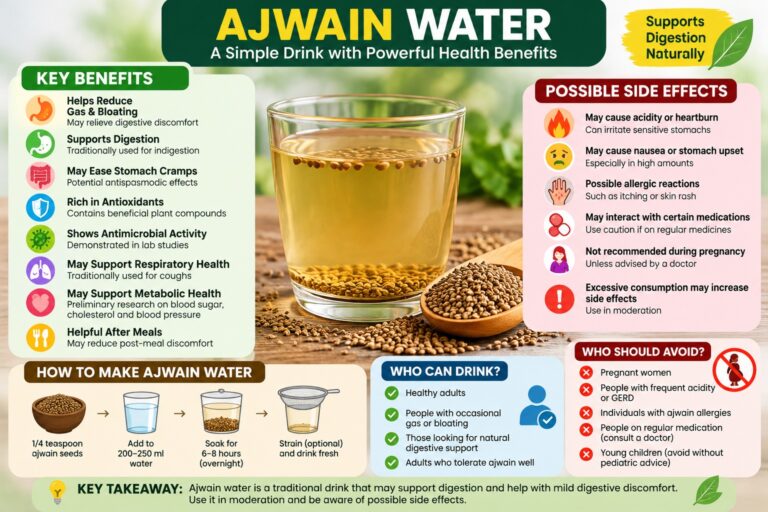
How to Prepare Jeera Water
Overnight-Soaked Jeera Water
- Take ½–1 teaspoon of cumin seeds.
- Add them to approximately 200–250 ml of clean drinking water.
- Cover the container and soak for about 8–12 hours.
- Strain the water in the morning.
- Drink it fresh if you enjoy it and tolerate it.
You may eat the softened seeds if you tolerate them, but this is not necessary.
Boiled Jeera Water
- Add ½–1 teaspoon of cumin seeds to approximately 200–250 ml of water.
- Bring the water to a gentle boil and simmer for several minutes.
- Allow it to cool to a comfortable temperature.
- Strain and drink.
Should You Drink Jeera Water on an Empty Stomach?
There is no strong evidence that jeera water on an empty stomach provides a special health advantage compared with drinking it at another time.
If you enjoy it and your stomach tolerates it, drinking it in the morning is a personal preference. If it causes nausea, acidity, burning, or discomfort, stop drinking it or consider having cumin as part of food instead.
Soaked Jeera Water vs. Boiled Jeera Water
Both methods are commonly used at home. Soaked jeera water is prepared by leaving cumin seeds in water for several hours, while boiled jeera water is prepared by heating the seeds in water and then straining the liquid.
There is no strong clinical evidence proving that one method is dramatically better than the other for general health. Research on cumin has often used powders, extracts, capsules, or other preparations rather than ordinary homemade soaked or boiled water.
How Much Jeera Water Should You Drink Daily?
There is no officially established therapeutic dose for homemade jeera water, and drinking more does not necessarily provide greater benefits.
For a healthy adult who enjoys it, a modest household preparation is approximately ½–1 teaspoon of cumin seeds infused in 200–250 ml of water. This is a food-style preparation, not a medically proven treatment dose.
Avoid making the drink highly concentrated or consuming large amounts several times a day unless a qualified healthcare professional has advised you to do so.
Should You Eat the Soaked Cumin Seeds?
You can eat the softened cumin seeds if you tolerate them. Whole seeds contain fiber and plant compounds that may not all transfer into the water. However, eating the seeds may cause digestive discomfort in some people.
If you have a sensitive stomach, you can simply strain the water and discard the seeds.
Frequently Asked Questions About Jeera Water Benefits
Is jeera water safe to drink every day?
Many healthy adults can tolerate modest amounts, but there is no established requirement to drink it daily. People with relevant medical conditions, medication use, or pregnancy-related concerns should ask a healthcare professional before using concentrated amounts regularly.
Does jeera water reduce belly fat?
No convincing evidence shows that jeera water specifically burns belly fat. Some studies of cumin supplements have reported modest weight-related changes, but this is not proof of targeted fat loss from cumin water.
Does jeera water help digestion?
Cumin has traditional use for digestive discomfort, and some people find cumin beverages soothing. However, evidence specifically testing soaked jeera water is limited.
Can people with diabetes drink jeera water?
Some people may be able to consume modest food-style amounts, but those taking glucose-lowering medicines should be cautious with concentrated or regular medicinal use. Jeera water must not replace prescribed treatment.
Can pregnant women drink jeera water?
Cumin is commonly used in food, but concentrated medicinal amounts have not been sufficiently studied during pregnancy. Discuss regular concentrated use with an obstetrician.
Can children drink jeera water?
Evidence is limited, particularly for very young children. Do not routinely give medicinal-style herbal drinks to children under 2 without pediatric advice.
Is boiled jeera water better than soaked jeera water?
There is no strong clinical evidence showing that either household preparation is clearly superior for general health.
Does jeera water detox the body?
There is no strong evidence that jeera water detoxes the body. The liver and kidneys perform major waste-processing and removal functions.
Can jeera water help with weight loss?
Some studies of cumin supplementation have reported modest changes in weight-related measurements, but ordinary jeera water is not an established weight-loss treatment. Overall diet, physical activity, sleep, and consistency remain important.
Bottom Line: Are Jeera Water Benefits Worth Trying?
Jeera water can be a reasonable traditional beverage for many healthy adults when consumed in modest amounts. People commonly drink it for digestive comfort, although strong evidence specifically supporting homemade soaked cumin water remains limited.
Research on cumin supplements has explored possible effects on cholesterol, blood sugar, and weight-related measurements. Those findings should not automatically be applied to a glass of overnight-soaked jeera water.
Claims that jeera water dramatically detoxes the body, rapidly burns belly fat, cures diabetes, or prevents disease are not established by strong human evidence.
People with diabetes who take medication, those using blood-thinning medicines, pregnant or breastfeeding women, people preparing for surgery, and parents considering regular use in young children should be especially careful with concentrated preparations.
Natural does not automatically mean risk-free, and more is not always better.
Medical Disclaimer
This article is provided for general educational and informational purposes only. It is not a substitute for medical diagnosis, treatment, or advice from a qualified healthcare professional. Herbal foods and beverages can interact with medicines and may not be appropriate for everyone. If you have a medical condition, take prescription medicines, are pregnant or breastfeeding, are preparing for surgery, or are considering giving herbal preparations to a child, consult your doctor or another qualified healthcare professional before using concentrated amounts regularly.