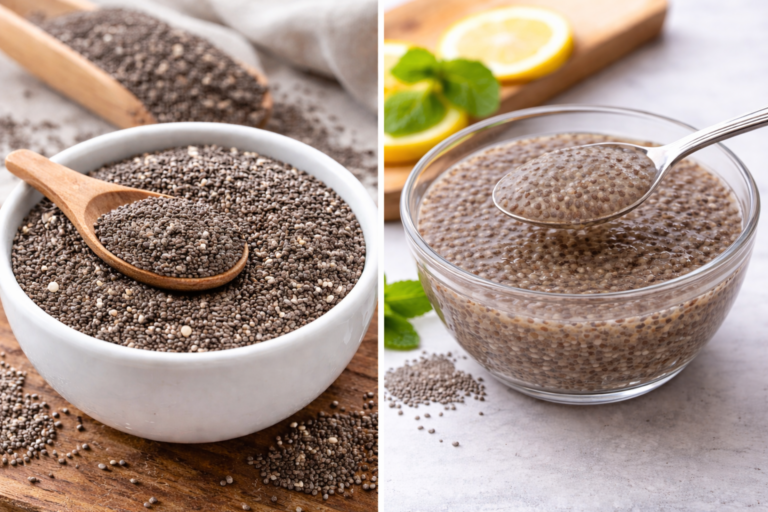
🌿 Basil Seeds (Sabja) Soaked in Water – Complete Guide
Basil Seeds (Sabja) are tiny black seeds derived from sweet basil (Ocimum basilicum). When soaked in water, they swell and form a gel-like coating, making them a powerful natural superfood for digestion, weight management, and overall health.
In this guide, you will learn the correct soaking method, nutritional value, benefits, side effects, and best way to consume sabja seeds daily.
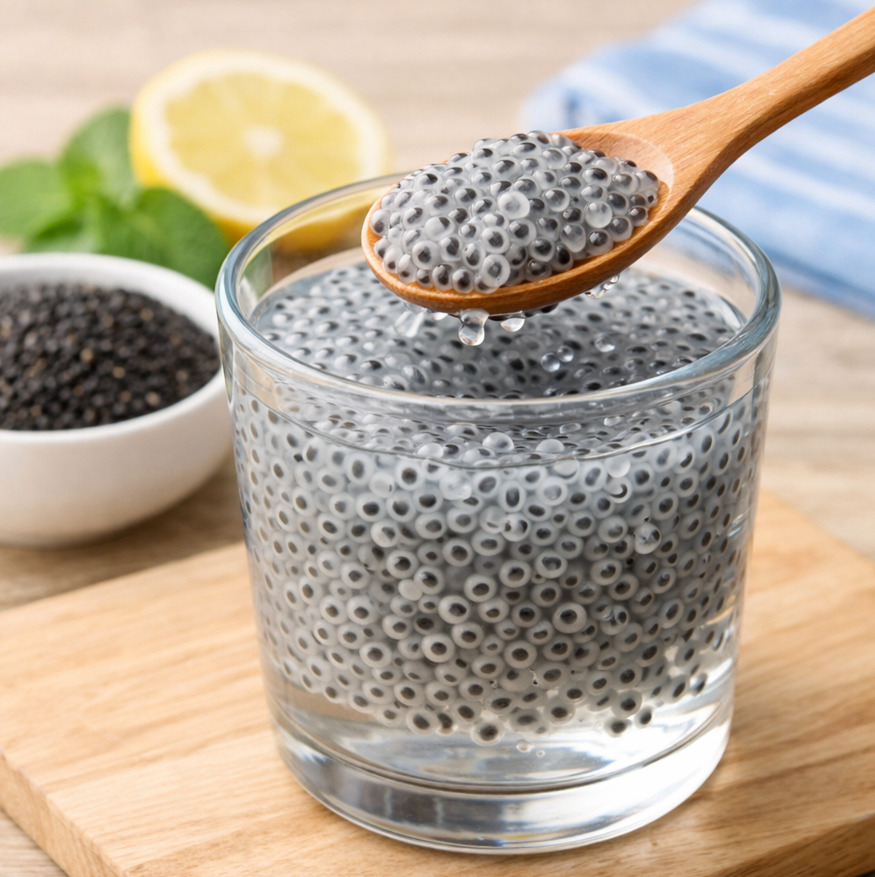
✅ Correct Method:
- Take 1 teaspoon sabja seeds
- Add to 1 glass water (200–250 ml)
- Soak for 10–15 minutes
- Seeds will swell and form a gel coating
- Consume immediately or mix into drinks
👉 Important: Never consume dry seeds directly
🧪 Nutritional Value of Basil Seeds
Basil seeds are rich in:
- Dietary Fiber (supports digestion)
- Plant Protein
- Healthy Fats (Omega-3)
- Minerals: Calcium, Magnesium, Iron
- Antioxidants & Polyphenols
👉 This combination makes sabja a functional superfood for daily use.
💪 Scientifically Supported Health Benefits
1️⃣ Improves Digestion
- High fiber helps prevent constipation
- Gel coating soothes the stomach lining
- Supports gut health
2️⃣ Helps in Weight Loss
- Expands in stomach → reduces hunger
- Keeps you full longer
- Helps control calorie intake
3️⃣ Supports Blood Sugar Control
- Slows carbohydrate absorption
- Helps prevent sudden sugar spikes
👉 Useful for prediabetes & diabetes support
4️⃣ May Improve Cholesterol Levels
- Some studies show reduction in:
- Total cholesterol
- Triglycerides
5️⃣ Natural Body Cooling Effect
- Widely used in summer drinks
- Helps reduce body heat
6️⃣ Anti-Inflammatory Effects
- Contains antioxidants
- May help reduce inflammation
⚖️ Soaked vs Raw vs Powder – Which is Best?
| Form | Best For | Recommendation |
|---|---|---|
| Soaked | Digestion, weight loss | ✅ Best |
| Raw | Not safe | ❌ Avoid |
| Powder | Cooking, baking | ⚠️ Limited use |
👉 Conclusion: Always use soaked sabja seeds
📏 Daily Dosage of Basil Seeds
✅ Recommended Intake:
- 1–2 teaspoons per day (5–10g)
🟢 Beginner Tip:
- Start with 1 teaspoon
- Increase gradually
⏰ Best Time to Consume
- 🌞 Morning (empty stomach) → digestion
- 🍽️ Before meals → weight control
- 🌙 Evening → cooling effect
⚠️ Side Effects & Risks
Although generally safe, excess intake may cause:
- Bloating
- Gas
- Loose motions
- Stomach discomfort
👉 Rare risk:
- Choking if eaten dry
🚫 Who Should Avoid Sabja Seeds?
- Pregnant women (consult doctor)
- Small children
- People with swallowing issues
- People with bowel disorders
💊 Medication Interactions
Sabja seeds may affect absorption of:
- Diabetes medicines
- Thyroid medications
- Heart medications
👉 Tip: Take sabja 1–2 hours apart from medicines
🧘 Ayurvedic Perspective
In Ayurveda, sabja seeds are known for:
- Cooling (Sheetal) effect
- Balancing Pitta dosha
- Supporting digestion and detox
🥤 Simple Daily Routine
Morning Routine:
- 1 tsp soaked sabja
- Mix with:
- Lemon water OR
- Honey water
Weight Loss Routine:
- Take before meals
- Helps reduce appetite
🔄 Duration of Use
- Safe for long-term moderate use
- Avoid excessive daily intake
- Take occasional breaks if needed
✅ Final Verdict
Basil seeds (Sabja) are a powerful natural superfood when used correctly.
✔️ Best Use:
- Soaked form
- 1–2 tsp daily
- Consistent moderate intake
⚠️ Avoid:
- Overconsumption
- Dry seeds
👉 While sabja seeds offer multiple health benefits, they should be used as a supportive dietary addition, not a medical treatment.