Fennel Water Benefits: 10 Uses, Side Effects & Safety
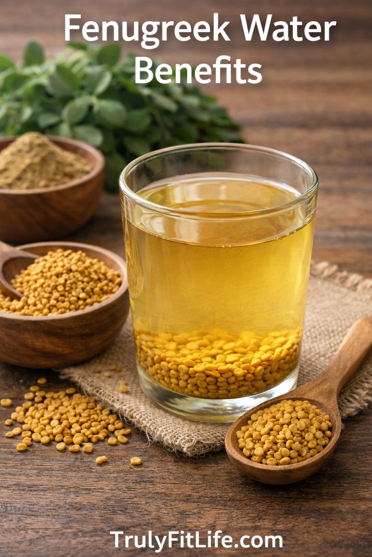
Fennel water benefits are widely discussed in traditional wellness practices, particularly for digestion, bloating, and general digestive comfort. Made by soaking fennel seeds (saunf) in water, this simple herbal beverage has a mild, aromatic flavor and is commonly consumed after meals or in the morning.
Fennel seeds contain naturally occurring compounds such as anethole, along with plant antioxidants and minerals. These compounds have been studied for their biological properties, although the health benefits of drinking fennel seeds soaked in water have not been extensively established in human clinical trials.
In this guide, we explore the potential benefits of fennel water, its side effects, how to prepare it, the best time to drink it, and important precautions for pregnant women, children, and people with existing medical conditions.
Important: Fennel water is a traditional beverage, not a proven treatment for medical conditions. Its effects may vary depending on the preparation, quantity consumed, and individual health circumstances.
Table of Contents
- What Is Fennel Water?
- Nutritional Components of Fennel Seeds
- 10 Potential Fennel Water Benefits
- Fennel Water Side Effects
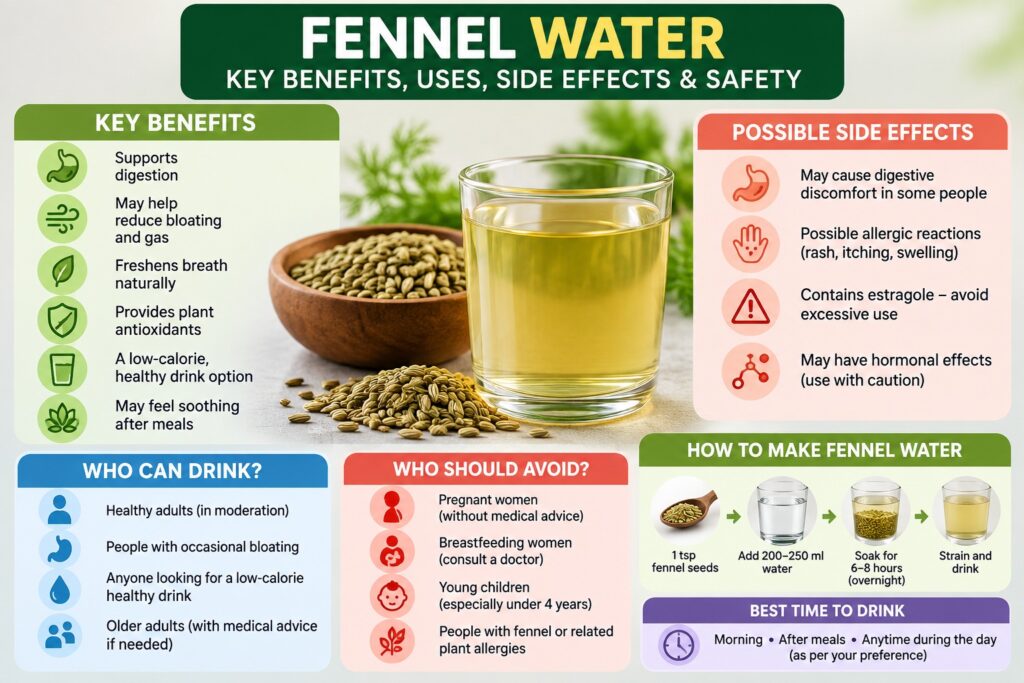
- Who Can Drink Fennel Water?
- Who Should Avoid Fennel Water?
- How to Make Fennel Water
- Best Time to Drink Fennel Water
- Can You Drink Fennel Water Every Day?
- Frequently Asked Questions
What Is Fennel Water?
Fennel water is an infused beverage prepared by soaking fennel seeds in drinking water for several hours. The seeds gradually release some of their aromatic and water-soluble compounds into the water.
Fennel is scientifically known as Foeniculum vulgare and belongs to the Apiaceae family, which includes celery, coriander, carrots, and cumin.
It is widely used in Indian cuisine, traditional herbal preparations, spice mixtures, and mouth fresheners.
Fennel Names in Different Languages
| Language | Name |
|---|---|
| English | Fennel seeds |
| Hindi | Saunf (सौंफ) |
| Telugu | Sompu (సోంపు) |
| Tamil | Sombu |
| Kannada | Badi Saunf |
| Malayalam | Perumjeerakam |
Fennel water is commonly prepared in two ways:
- Soaked fennel water: Seeds are soaked in room-temperature or refrigerated water for several hours.
- Boiled fennel water: Seeds are simmered in water to prepare a warm infusion.
Both methods produce fennel-flavored water, but their extraction characteristics may differ.
Nutritional Components of Fennel Seeds
Fennel seeds contain several naturally occurring compounds that contribute to their aroma and nutritional composition.
| Component | General Characteristic |
|---|---|
| Anethole | Aromatic compound responsible for much of fennel’s characteristic flavor |
| Fenchone | Naturally occurring aromatic compound |
| Estragole | Naturally occurring compound that requires exposure precautions |
| Flavonoids | Plant compounds with antioxidant activity |
| Dietary fiber | Present in whole fennel seeds |
| Potassium | Mineral present in fennel seeds |
| Calcium | Mineral present in fennel seeds |
| Magnesium | Mineral present in fennel seeds |
Important nutritional distinction: Eating whole fennel seeds provides dietary fiber and nutrients contained in the seeds. Strained fennel water does not provide the same nutritional composition because much of the solid material remains behind.
10 Potential Fennel Water Benefits
The following are potential benefits associated with fennel’s traditional use and known properties. Evidence specifically investigating homemade overnight fennel water is limited.
1. May Help Relieve Occasional Bloating
One of the most common traditional uses of fennel is for mild digestive discomfort, including gas and bloating.
Fennel contains aromatic compounds that have demonstrated smooth-muscle-relaxing effects in laboratory research. This provides a possible explanation for its traditional digestive use, but it does not establish that fennel water treats chronic digestive disorders.
Some people find a mild fennel infusion soothing when experiencing occasional abdominal fullness.
Practical consideration: Persistent bloating, severe abdominal pain, vomiting, or unexplained changes in bowel habits should not be managed solely with herbal drinks.
2. May Support Digestive Comfort
Fennel preparations have traditionally been used for mild spasmodic gastrointestinal complaints.
Drinking fennel-infused water may be a pleasant way to include this traditional ingredient in your routine, particularly after meals.
However, there is insufficient clinical evidence to establish that fennel water improves digestion in everyone or that drinking it on an empty stomach produces additional benefits.
3. May Help Freshen Breath
Fennel seeds are commonly chewed after meals in India because of their pleasant aroma.
Their aromatic compounds can temporarily improve mouth freshness.
Fennel water may provide a mild fennel flavor, but it should not replace regular oral hygiene.
For persistent bad breath, consider dental problems, gum disease, dry mouth, or other underlying causes.
4. Provides Plant Antioxidant Compounds
Fennel seeds contain naturally occurring phenolic compounds and flavonoids.
These compounds demonstrate antioxidant activity in laboratory studies.
Antioxidants are studied for their ability to interact with oxidative processes in biological systems. However, laboratory antioxidant activity does not establish that drinking fennel water prevents chronic diseases or produces measurable long-term health improvements.
5. May Be a Low-Calorie Alternative to Sugary Drinks
Unsweetened fennel water has a mild flavor and can be consumed as an alternative to sweetened beverages.
Replacing sugary drinks with plain or lightly infused water may help reduce added sugar intake.
However, fennel water itself has not been proven to burn fat, reduce belly fat, or directly cause weight loss.
6. May Feel Soothing After Meals
Some people prefer fennel water after lunch or dinner because of its mild aromatic flavor.
A warm or room-temperature infusion may feel comforting as part of a meal routine.
This is primarily a subjective comfort benefit rather than an established medical effect.
7. Has Traditional Use for Mild Digestive Spasms
Fennel has a history of traditional use for mild cramping-type digestive complaints.
Experimental research into fennel compounds provides some biological plausibility for this use, but the evidence is insufficient to recommend homemade fennel water as treatment for severe cramps, persistent abdominal pain, or diagnosed gastrointestinal conditions.
8. Provides a Hydrating Beverage Option
Fennel water contributes to daily fluid intake because its primary ingredient is water.
People who enjoy its mild flavor may find it easier to drink water regularly.
The hydration benefit comes primarily from the water itself rather than a special medicinal property of fennel.
9. Can Be Prepared Without Added Sugar
Homemade fennel water does not require sugar, honey, or artificial sweeteners.
For people trying to reduce added sugar, an unsweetened preparation can be a useful beverage choice.
If you add honey or another sweetener, remember that the beverage’s sugar and calorie content will increase.
10. Offers a Simple Traditional Herbal Preparation
Fennel water is easy to prepare using commonly available kitchen ingredients.
For healthy adults who tolerate fennel, a mild infusion can be an enjoyable addition to a varied diet.
Nevertheless, traditional use does not establish that fennel water is effective for every condition or safe in unlimited quantities.
Summary of Potential Benefits
| Potential Benefit | Evidence Assessment |
|---|---|
| Occasional digestive comfort | Traditional use; limited direct clinical evidence |
| Bloating and gas | Traditional use; effectiveness of soaked water uncertain |
| Fresh breath | Temporary aromatic freshness |
| Antioxidant activity | Demonstrated in laboratory studies |
| Hydration | Contributes fluid from water |
| Weight loss | Not established |
| Belly-fat reduction | Not established |
| Blood sugar control | Not established for fennel water |
| Detoxification | Not established |
| Hormonal balance | Not established |
Fennel Water Side Effects
Although fennel is commonly used as a culinary spice, medicinal preparations and concentrated extracts require additional caution.
1. Allergic Reactions
Some individuals may develop allergic reactions to fennel.
Possible symptoms include:
- Itching or skin rash.
- Swelling of the lips or tongue.
- Wheezing.
- Throat tightness.
- Difficulty breathing.
People with allergies to related plants, including celery, coriander, caraway, anise, or dill, should exercise caution.
Seek emergency medical care if you experience throat swelling, breathing difficulty, or other symptoms of a severe allergic reaction.
2. Possible Digestive Discomfort
Some individuals may experience unpleasant digestive symptoms after consuming fennel preparations.
These may include:
- Nausea.
- Abdominal discomfort.
- Loose stools.
- Unusual digestive sensations.
If symptoms repeatedly occur after drinking fennel water, discontinue it.
3. Estragole Exposure
Fennel naturally contains estragole, a compound that has raised toxicological safety concerns.
The European Medicines Agency recommends keeping exposure to estragole as low as practically achievable because of its genotoxic and carcinogenic potential.
This does not mean that occasional culinary use of fennel seeds is equivalent to consuming concentrated extracts or that a single glass of fennel water is known to cause cancer.
However, it is a reason to avoid excessive or highly concentrated medicinal preparations, particularly in vulnerable populations.
4. Possible Hormonal Effects
Fennel contains anethole, which has been investigated for estrogen-like activity.
However, laboratory observations do not establish that ordinary fennel water causes hormonal imbalance in humans.
People with hormone-sensitive medical conditions should discuss regular medicinal use with their healthcare professional.
5. Potential Concerns With Excessive Consumption
There is no established universal daily safe quantity for homemade overnight fennel water.
Using more fennel seeds does not necessarily produce greater benefits.
Avoid repeatedly preparing highly concentrated infusions or combining multiple concentrated herbal products without professional guidance.
6. Fennel Essential Oil Is Not the Same as Fennel Water
Fennel essential oil is much more concentrated than ordinary infused water.
Do not add fennel essential oil to drinking water or give it to children as a home remedy unless specifically directed by a qualified healthcare professional.
Who Can Drink Fennel Water?
The suitability of fennel water depends on age, health status, allergies, pregnancy, and the concentration of the preparation.
| Person | General Guidance |
|---|---|
| Healthy adults | Occasional mild infusion may be reasonable if tolerated |
| Adults with occasional bloating | May try a mild preparation for comfort |
| People with diabetes | Do not use it as a glucose-lowering treatment |
| People with high blood pressure | Do not replace prescribed treatment |
| Older adults | Consider medical conditions and regular medicines |
| Children | Follow age-specific precautions |
| Pregnant women | Avoid regular medicinal use without medical advice |
| Breastfeeding women | Consult a healthcare professional before regular medicinal use |
| People with fennel allergy | Avoid fennel |
| People with related plant allergies | Exercise caution |
Fennel Water for Healthy Adults
Healthy adults who tolerate fennel may choose to drink a mild, unsweetened preparation occasionally.
There is no established requirement to drink it every morning or consume it daily for general health.
Fennel Water for People With Diabetes
Fennel water should not be considered a proven treatment for high blood sugar.
People with diabetes should continue their prescribed medication and dietary plan.
Discuss regular medicinal use of herbal preparations with a healthcare professional, particularly when taking glucose-lowering medication.
Fennel Water for People With Digestive Discomfort
For occasional mild bloating, a mild fennel infusion may be worth trying if there is no known allergy or other contraindication.
Persistent digestive symptoms require medical assessment rather than repeated reliance on home remedies.
Who Should Avoid Fennel Water?
1. Pregnant Women
The safety of medicinal fennel preparations during pregnancy has not been adequately established.
The European Medicines Agency’s assessment does not recommend fennel medicinal use during pregnancy because of insufficient safety data.
Pregnant women should distinguish ordinary culinary use from regular medicinal consumption.
Avoid making strong fennel water or concentrated fennel preparations a daily routine without obstetric advice.
2. Breastfeeding Women
Fennel is traditionally used in some cultures to support breast milk production.
However, evidence supporting its effectiveness is limited, and safety information for medicinal quantities during breastfeeding is insufficient.
European regulatory information notes that trans-anethole, a compound associated with fennel, can pass into human breast milk.
Breastfeeding women should consult a healthcare professional before using concentrated fennel preparations regularly.
3. Babies and Young Children
Do not routinely give homemade fennel water to infants or toddlers as a remedy for colic, gas, constipation, or sleep.
European regulatory assessments identify insufficient safety data for medicinal fennel preparations in young children and advise against use in children under four years without appropriate medical guidance.
For infants, consult a pediatrician before giving herbal drinks.
For toddlers, do not replace age-appropriate fluids or milk with fennel water.
4. People With Fennel or Related Plant Allergies
People with a known fennel allergy should avoid fennel water and fennel-containing preparations.
Those with allergies to celery, anise, caraway, coriander, dill, or related plants should exercise caution and discuss potential cross-reactivity with a healthcare professional.
5. People Taking Regular Medication
There is insufficient information to establish the interaction profile of every homemade fennel-water preparation.
People taking regular prescription medication, especially for chronic conditions, should consult their doctor or pharmacist before using concentrated herbal preparations regularly.
How to Make Fennel Water
Preparing fennel water at home requires only fennel seeds and drinking water.
Ingredients
- 1 teaspoon fennel seeds (saunf)
- 200–250 ml clean drinking water
- 1 clean glass or covered container
This is a mild household preparation, not an established therapeutic dose.
Preparation Method
Step 1: Measure the fennel seeds
Take approximately one teaspoon of clean fennel seeds.
Step 2: Add drinking water
Place the seeds in a clean glass and add 200–250 ml of drinking water.
Step 3: Soak overnight
Cover the glass and allow the seeds to soak for approximately 6–8 hours.
In warm weather, refrigerate the covered container during soaking.
Step 4: Strain the water
Strain the seeds using a clean sieve.
Step 5: Drink the infusion
Drink the infused water fresh. You may discard the seeds or eat them if you tolerate them.
Should You Drink Fennel Water Warm or Cold?
Both are acceptable as beverage choices.
- Room-temperature fennel water is convenient for everyday consumption.
- Warm fennel water may feel soothing.
- Cold fennel water is suitable if preferred.
There is no strong clinical evidence that warm or cold fennel water produces different health outcomes.
Can You Soak Fennel Seeds Overnight?
Yes. Overnight soaking is a traditional preparation method.
Use clean drinking water, a clean covered container, and refrigeration when appropriate.
However, overnight soaking has not been established as more effective than other preparation methods.
Best Time to Drink Fennel Water
There is no scientifically established best time to drink fennel water.
| Time | Practical Consideration |
|---|---|
| Early morning | Convenient, but no proven special benefit on an empty stomach |
| After breakfast | Can be consumed as a flavored beverage |
| After lunch | Traditional timing for digestive comfort |
| After dinner | May feel soothing for some people |
| Before bedtime | No established sleep-enhancing effect |
For healthy adults who tolerate fennel, drinking a mild infusion after a meal is a reasonable option if they enjoy it.
There is no need to force yourself to drink it first thing in the morning.
Can You Drink Fennel Water Every Day?
There is no well-established evidence-based daily dose or long-term safety limit for homemade overnight fennel water.
For a healthy adult who enjoys it, a cautious approach is to:
- Start with a mild preparation.
- Avoid increasing the seed quantity to obtain stronger effects.
- Stop if you experience an allergic reaction or digestive discomfort.
- Avoid prolonged medicinal use without professional advice.
- Never use it as a substitute for prescribed medication.
The European Medicines Agency’s recommendations for specific standardized fennel medicinal products cannot be directly converted into a safe daily dose for homemade soaked water.
Fennel Water vs. Eating Whole Fennel Seeds
Although both preparations use the same ingredient, their nutritional composition differs.
| Feature | Fennel Water | Whole Fennel Seeds |
|---|---|---|
| Preparation | Seeds soaked in water | Seeds eaten directly |
| Dietary fiber | Very little if strained | Provides fiber |
| Nutrient content | Some compounds transfer into water | Contains the whole seed |
| Flavor | Mild aromatic flavor | Stronger flavor when chewed |
| Common use | Infused beverage | Cooking and mouth freshener |
| Concentration | Varies with soaking method | Depends on amount consumed |
Neither preparation has been conclusively demonstrated to be superior for general health.
Common Myths About Fennel Water
Myth 1: Fennel Water Burns Belly Fat
Fact: There is no reliable clinical evidence that fennel-infused water directly burns abdominal fat.
Myth 2: Fennel Water Detoxifies the Liver
Fact: No reliable evidence establishes that fennel water detoxifies the liver. The body already has organs responsible for processing and eliminating waste.
Myth 3: Fennel Water Cures Acidity
Fact: Some people may find it soothing, but fennel water is not a proven treatment for gastroesophageal reflux disease or persistent acidity.
Myth 4: Fennel Water Balances Hormones
Fact: Laboratory observations involving fennel compounds do not establish that drinking fennel water normalizes human hormone levels.
Myth 5: More Fennel Seeds Mean Greater Benefits
Fact: Increasing concentration can increase exposure to active compounds, including estragole. More is not necessarily better.
Myth 6: Every Natural Herbal Drink Is Safe for Children
Fact: Children have different safety considerations, and age-related precautions apply to medicinal fennel preparations.
Frequently Asked Questions About Fennel Water Benefits
1. What Are the Main Fennel Water Benefits?
Fennel water is traditionally used for mild digestive discomfort, occasional bloating, and breath freshness. It also provides a flavored, unsweetened beverage option. However, direct clinical evidence for homemade fennel water remains limited.
2. Can I Drink Fennel Water First Thing in the Morning?
Healthy adults who tolerate fennel may drink a mild preparation in the morning. However, there is no strong evidence that drinking it on an empty stomach provides additional benefits.
3. Does Fennel Water Reduce Belly Fat?
No reliable clinical evidence establishes that fennel-infused water directly reduces belly fat or burns body fat.
4. Is Fennel Water Good for Digestion?
Fennel has traditional use for mild digestive complaints, including bloating and gas. Some people find a mild infusion soothing, but its effectiveness is not established for every digestive condition.
5. How Do You Soak Fennel Seeds Overnight?
Add approximately one teaspoon of fennel seeds to 200–250 ml of clean drinking water. Cover and soak for 6–8 hours, preferably refrigerated in warm weather. Strain before drinking.
6. What Is the Best Time to Drink Saunf Water?
There is no scientifically established best time. Some people prefer it after meals for digestive comfort, while others drink it in the morning as a flavored beverage.
7. Can Pregnant Women Drink Fennel Water?
The safety of medicinal fennel preparations during pregnancy has not been adequately established. Pregnant women should consult their obstetrician before consuming fennel water regularly as a herbal remedy.
8. Can Children Drink Fennel Water?
Do not routinely give fennel water to infants or young children as a home remedy. Consult a pediatrician, particularly for children under four years of age.
9. Does Fennel Water Help With Bloating?
Fennel has traditional use for mild bloating and gas. A mild infusion may provide digestive comfort for some adults, but persistent or severe symptoms need medical assessment.
10. Can I Mix Fennel and Cumin Seeds in Water?
Fennel and cumin are both commonly used culinary spices. However, evidence for the combined medicinal benefits of their infused water is limited. Introduce one preparation at a time if you are unfamiliar with either ingredient.
11. Can I Add Lemon or Honey to Fennel Water?
Yes, if these ingredients suit your dietary needs. They are not necessary for the preparation. Honey adds sugar, and it should never be given to infants under 12 months.
12. Is Fennel Water Safe for People With Kidney Problems?
There is insufficient evidence to establish a universally safe medicinal quantity for people with kidney disease. Consult your treating clinician before making it a regular herbal drink.
13. Can Fennel Water Improve Sleep?
There is no strong clinical evidence that fennel-infused water is an effective sleep treatment.
14. Can I Drink Fennel Water With Other Soaked Seed Drinks?
It is generally sensible to introduce one preparation at a time so that you can identify any allergy or digestive reaction. Avoid combining multiple concentrated herbal preparations without medical advice.
Final Thoughts on Fennel Water Benefits
Fennel water is a traditional aromatic beverage that may provide mild digestive comfort for some adults. Its most reasonable use is as a simple drink rather than a treatment for multiple health conditions.
The potential fennel water benefits include traditional use for occasional bloating, a pleasant aromatic flavor, and an unsweetened alternative to sugary drinks. However, claims involving weight loss, detoxification, hormonal balance, and disease prevention are not established by reliable clinical evidence.
Healthy adults who tolerate fennel may enjoy a mild preparation occasionally. Pregnant women, breastfeeding women, young children, and people with allergies or relevant medical conditions should seek individualized medical advice before using it regularly.
Remember: Natural does not automatically mean risk-free. Use fennel water sensibly, avoid concentrated preparations without professional guidance, and seek medical care for persistent or severe symptoms.
Medical Disclaimer
This article is intended for educational and informational purposes only. It does not replace professional medical advice, diagnosis, or treatment. Herbal preparations can vary in concentration and safety depending on the preparation method and individual health circumstances. Consult a qualified healthcare professional before using fennel water medicinally, particularly during pregnancy, breastfeeding, childhood, or when managing an existing medical condition.